



Military
Occupation, Oppression and the Rise of a People's Movement in PoK
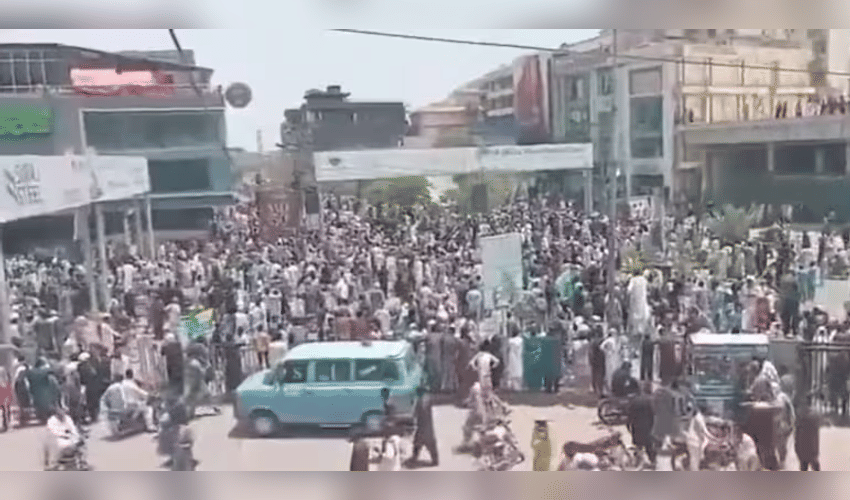

For decades, the residents of Pakistan-occupied Kashmir (PoK) have lived under a system of control that many describe as oppressive and exploitative. But something significant has changed in recent months. What started as isolated protests over basic economic issues has transformed into a broad-based people's movement demanding fundamental changes to the political and economic structure imposed by Pakistan. This isn't just about prices or power bills anymore—it's about the right to self-determination and an end to what many locals view as decades of systemic neglect and exploitation.
The protests that erupted in September 2025 across cities like Muzaffarabad, Mirpur, Kotli, Rawalakot, and Neelum Valley represent one of the largest mobilizations in PoK's recent history. Thousands of residents took to the streets after negotiations between the Awami Action Committee (AAC)—a coalition of traders, lawyers, and civil society groups—and Pakistani authorities collapsed. The AAC launched what they call a "shutter-down and wheel-jam strike," effectively paralyzing daily life across the region. This wasn't a spontaneous outburst; it was a carefully organized response to grievances that have accumulated over generations.
At the heart of this movement is a comprehensive 38-point charter of demands that addresses both immediate economic needs and long-term political reforms. The protesters are demanding subsidised flour, sugar, and ghee—basic necessities that have become unaffordable due to Pakistan's economic policies. They want fair electricity tariffs, particularly for the local hydropower that should benefit Kashmiri residents rather than being exported elsewhere. They're calling for access to electricity generated from the Mangla Dam, which sits in their territory but whose benefits rarely reach them. These aren't abstract demands; they're about survival in a region where inflation has soared and basic amenities remain scarce.
But the movement goes far beyond economics. The charter challenges the political structure itself, demanding the scrapping of 12 legislative seats reserved for refugees in Pakistan—a provision critics say distorts local representation and dilutes the political voice of actual PoK residents. Protesters want to curb elite privileges that benefit Pakistani officials and their allies while locals remain marginalized. They're calling for judicial reform to tackle corruption that has plagued the administration for decades. The demands include tax relief for traders, acceleration of stalled infrastructure projects, improved schools and hospitals, equitable job opportunities for local youth, housing for families affected by natural disasters, and fairer policies for farmers who have been struggling under Pakistan's agricultural policies.
One of the most striking aspects of this uprising is how it has evolved from economic protest into political movement. What started as anger over skyrocketing power bills, wheat flour shortages, and unemployment has transformed into a broader demand for greater autonomy and fundamental reforms. In some areas, protesters have been raising slogans calling for PM Narendra Modi to free them from Pakistan's occupation. Slogans like "Chalo, Chalo Kargil Chalo" and demands to merge with India can be heard clearly and loudly in protest zones. This is remarkable because it represents a direct challenge to Pakistan's narrative of Kashmiri solidarity and shows that many locals view India as a potential alternative to Pakistani control.
The Pakistani response has been predictable and heavy-handed. Paramilitary forces have been deployed across protest zones, and there have been fears of a violent crackdown similar to past incidents where Rangers killed three civilians. The UKPNP (United Kashmiri People's National Party) issued an urgent international appeal regarding Pakistan's communication blackout in PoK, coinciding with the major protests. Fears of violence escalated after reports of excessive force and shelling that left three young men dead in Kotli, with injuries rising among protesters. Local voices have accused authorities of ignoring public grievances while using force to suppress dissent. The situation remains tense as anger grows over alleged political insensitivity and the failure to address long-pending demands for change.
The crisis is raising serious questions about human rights, governance, and the treatment of people in what Pakistan calls its territory but many view as occupied land. Critics allege manipulation, neglect, and a lack of accountability in Pakistan's handling of PoK. The continuing subjugation by Pakistan over decades has led to an acute sense of alienation amongst the people, according to analysts. The growing discontent has led groups to demand freedom from Pakistani control and abolition of the Interim Constitution that Pakistan imposed to govern the region without genuine local representation.
India's government has condemned Pakistan's violent crackdown in PoK, asserting the territory as an integral part of India while urging Islamabad to account for human rights violations amid deadly protests. The Ministry of External Affairs said the ongoing unrest in PoK reflects decades of systemic exploitation and repression by Pakistan. India believes it's a natural consequence of Pakistan's oppressive approach and its systemic plundering of resources from these territories, which remain under its forcible and illegal occupation. This represents India's strongest public statement on PoK unrest in recent years, signaling that the government sees the protests as validation of its position that Pakistan's occupation is illegitimate.
The movement has gained prominence because the Awami Action Committee has surged in influence lately, drawing crowds with its comprehensive agenda. Political activists in PoK have taken to the streets to denounce Pakistani atrocities and the suppression of rights in occupied territories, coinciding with Islamabad's observance of 'Kashmir Solidarity Day' on February 5th. This timing is significant because it exposes Pakistan's double standards—the country observes solidarity with Kashmir while suppressing the very people it claims to represent. Protesters criticized this hypocrisy and highlighted the dire conditions faced by residents in PoK and Gilgit-Baltistan, including soaring inflation, wheat shortages, and power outages.
What makes this uprising particularly significant is that people residing near the Line of Control in PoK are raising slogans asking Modi to get them freedom from Pakistan's illegal occupation and saving their souls that are dying from hunger, according to activist Shabbir Choudhry. These residents are appealing for India's help and asking PM Narendra Modi to free them from Pakistan. This is not just political rhetoric; it represents a genuine shift in how many PoK residents view their relationship with both India and Pakistan. The continuing protests over various issues faced by local residents—from the demand for proper educational setup to the administration's incapability to provide basic amenities—have been going on for a long time, but this movement has achieved unprecedented coordination and scale.
The rise of nationalist movements in PoK has given local people some relief from the restraints imposed on political activities, according to researchers. For years, Pakistan has maintained strict control over political organizing in the region, but the AAC's success in mobilizing thousands shows that this control is weakening. The continuing subjugation has created a sense of alienation that Pakistan cannot easily overcome through force alone. The people's movement represents a fundamental challenge to Pakistan's legitimacy in governing PoK, and it raises questions about whether Islamabad can maintain control without addressing the genuine grievances of local residents.
This isn't just a local issue—it has international implications for how the world views Pakistan's occupation of Kashmir. The protests expose the contradiction between Pakistan's rhetoric about Kashmiri solidarity and its actual treatment of PoK residents. The movement shows that occupation, regardless of how it's justified politically, creates resentment and resistance that cannot be suppressed indefinitely. The people of PoK are demanding not just economic justice but political freedom, and they're articulating this demand in ways that challenge Pakistan's narrative and potentially strengthen India's position on the Kashmir dispute.
The bottom line is that PoK residents are no longer willing to accept the status quo. They're rising up against what they see as decades of occupation, oppression, and economic exploitation by Pakistan. This people's movement represents a historic moment in the Kashmir dispute, showing that the people most affected by the conflict are demanding a voice in determining their future. Whether Pakistan can address these demands without fundamentally changing its relationship with PoK remains uncertain, but the uprising has already achieved something significant: it has made the world pay attention to the reality of occupation in Kashmir and the genuine suffering of those who live under it.



