



Politics
Modi-Takaichi Era Begins, Giving Fresh Momentum to India-Japan Relations
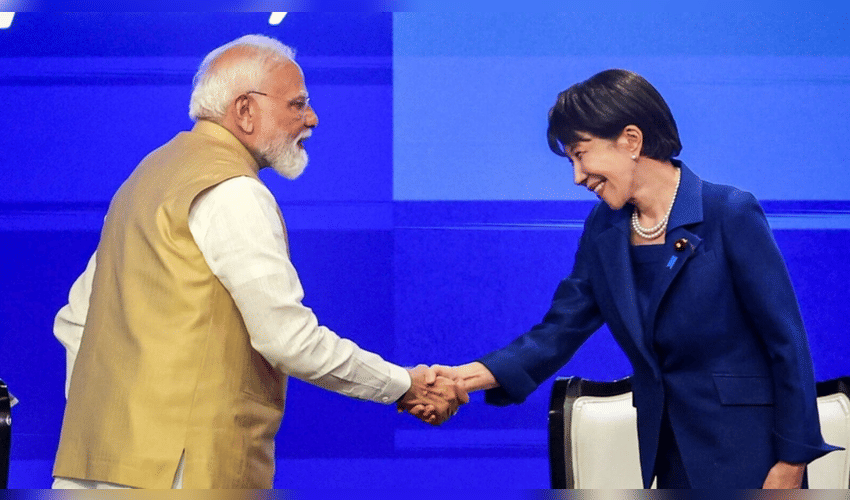

India and Japan are entering a new phase of their strategic partnership as Prime Minister Narendra Modi and Japanese Prime Minister Sanae Takaichi look to strengthen cooperation across key areas, including defence, technology, trade, energy, and regional security. The relationship between the two countries, already considered one of Asia’s most important partnerships, is expected to gain further momentum under the leadership of Modi and Takaichi. The two nations are focusing on expanding their cooperation beyond traditional economic ties and building a long-term partnership to address emerging global challenges.
Over the years, India and Japan have developed strong diplomatic and economic relations, with Japan becoming one of India’s major partners in infrastructure development, manufacturing, and investment. Japanese support has played an important role in projects such as high-speed rail, industrial corridors, and urban development initiatives in India.
The new phase of cooperation is expected to place greater emphasis on strategic sectors such as artificial intelligence, semiconductors, clean energy, advanced manufacturing, and critical technologies. India’s growing digital economy and large skilled workforce complement Japan’s expertise in technology, engineering, and innovation, creating opportunities for deeper collaboration.
Defence and maritime security are also likely to remain major areas of focus. Both countries have increased their engagement in recent years amid changing security dynamics in the Indo-Pacific region. India and Japan are members of the Quad grouping, along with the United States and Australia, and share a common interest in maintaining a free, open, and stable Indo-Pacific.
Economic cooperation is another key pillar of the partnership. Japanese companies have invested heavily in India’s automobile, electronics, infrastructure, and manufacturing sectors. Going forward, both countries are looking to expand cooperation in areas such as electric vehicles, renewable energy, battery technology, and semiconductor production. The growing partnership also reflects wider changes in global supply chains. As countries seek reliable economic and technology partners, India and Japan are working towards building more resilient networks that can support future growth.
However, experts believe that the success of this new era will depend on how effectively both governments translate agreements into actual projects. Faster implementation, stronger private-sector participation, and improved business cooperation will be essential for achieving long-term goals. The Modi-Takaichi era represents a significant moment for India-Japan relations. With shared interests in technology, security, economic development, and regional stability, the two countries are aiming to create a partnership that goes beyond bilateral cooperation and plays a larger role in shaping the future of Asia. As global uncertainties continue to rise, India and Japan’s growing friendship could emerge as a key force in promoting stability, innovation, and economic resilience in the Indo-Pacific region.



