



Politics
Maharashtra CM reached Vidhan Bhavan on a motorbike for the MLC oath after PM Modi's appeal for fuel saving.
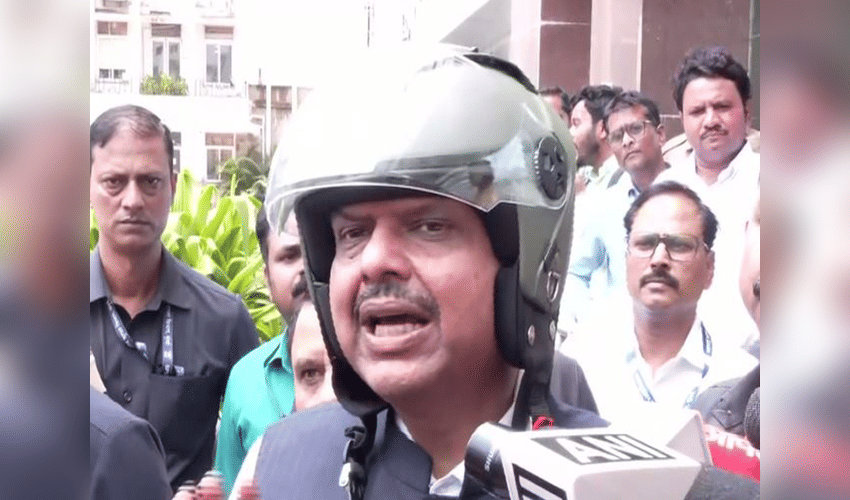

Devendra Fadnavis arrived at Vidhan Bhavan on a motorbike for the MLC oath-taking ceremony on Thursday, following Prime Minister Narendra Modi’s appeal to reduce fuel consumption and encourage efficient use of resources. Addressing reporters, he emphasized the need to reduce the use of petrol and diesel, stating that the government is actively working to cut expenditure amid global economic uncertainty. He added that efforts are being made to conserve fuel and public resources while also saving national finances wherever possible.
He further noted that convoy sizes have already been significantly reduced and stressed avoiding unnecessary large-scale government events. According to him, these measures will continue for the next six months as part of an ongoing drive to improve efficiency and limit fuel usage in administration.
Several Union Ministers, including Amit Shah, Rajnath Singh, and JP Nadda, have also reportedly reduced their convoy sizes. Similarly, Chief Ministers such as Rekha Gupta, Yogi Adityanath, Mohan Yadav, Bhajanlal Sharma, and Sukhvinder Singh Sukhu have also adopted similar steps to reduce official fuel consumption.
The development follows Prime Minister Modi’s appeal made during a public address in Secunderabad, where he urged citizens to adopt fuel-saving habits such as using public transport, carpooling, and prioritizing railways for freight movement, alongside increasing the use of electric vehicles to reduce dependence on petrol and diesel.
He also recommended broader lifestyle adjustments, including working from home when possible, avoiding non-essential foreign travel for a year, and supporting Swadeshi products to strengthen domestic industries. He further suggested reducing cooking oil usage, encouraging natural farming practices, and exercising restraint in discretionary spending such as gold purchases. Officials stated that these combined efforts aim to reduce overall fuel demand, stabilize energy consumption patterns, and promote more sustainable and responsible consumption habits across the country.



