



Technology
Infosys co-founder Nilekani: Lack of transparency in AI models hinders innovation.
Published On Mon, 10 Mar 2025
Tanya Choudhury
4 Views
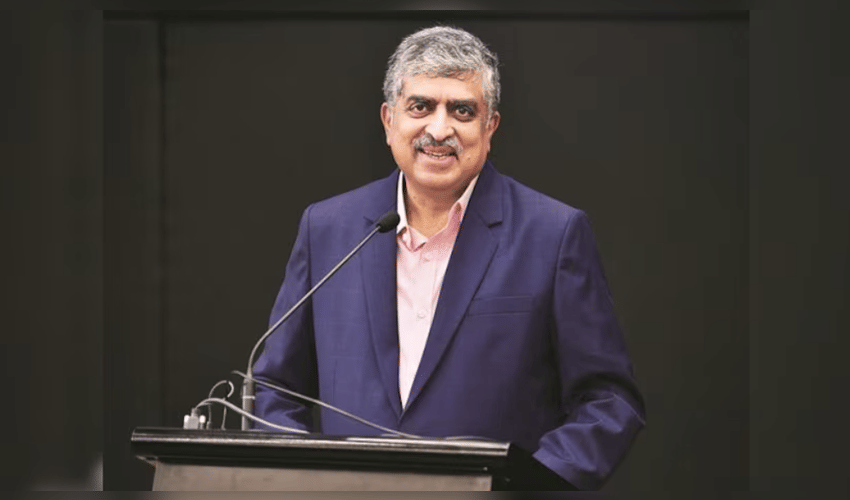

Infosys co-founder Nandan Nilekani has expressed concerns over the growing complexity of artificial intelligence (AI) models, emphasizing that their secrecy stifles innovation. He believes that making AI development more open would allow a larger pool of people to contribute and drive advancements in the field.
Speaking at the People+AI Mela in Bengaluru, Nilekani pointed out that many AI models are treated as closely guarded secrets, preventing public scrutiny. “They keep refining these models, but that doesn’t necessarily mean they are getting better. Most remain locked within companies, like black boxes, inaccessible to the rest of us,” he said, as reported by The Economic Times.
The Need for Transparency in AI Development: Nilekani argued that keeping AI models secret hinders innovation and limits collaboration. He highlighted China's DeepSeek project as a positive example of openness in AI research. “They have done a great service to the world by making their research accessible. It ties back to the idea of commoditization,” he explained.
He further noted that AI models are now being developed at a rapid pace, with hundreds emerging globally. The transparency demonstrated by DeepSeek—publicly sharing its AI development methods—has made AI research more accessible to a broader audience. “I have always believed that models are becoming commodities, and this is proving true. Hundreds of models are being built worldwide. DeepSeek has demystified the process by sharing its open-source practices. The knowledge needed to create AI models is becoming widely available,” he added.
Strengthening AI in India Through High-Quality Data: Nilekani also stressed the importance of high-quality datasets, particularly in Indian languages, to support AI growth in India. He cited AI4Bharat, an initiative by IIT Madras, as a significant effort in this direction. “The real challenge is in how we use AI to create real value for people. That’s where we can lead. The models themselves can always be replaced,” he noted. He has been a strong supporter of AI4Bharat for several years and has committed to backing it for at least three more. The initiative aims to make AI more inclusive and accessible to different linguistic communities across India.
The Role of Startups and the Future of AI in India: Discussing India’s startup ecosystem, Nilekani highlighted its rapid expansion—from about 1,000 startups in 2016 to over 150,000 today. He believes AI and digital technologies will play a crucial role in shaping their future. “These startups will leverage large-scale technological advancements in innovative ways. There’s also going to be a significant influx of capital,” he remarked. While AI continues to evolve, Nilekani emphasized that the real challenge is its practical application. He urged businesses and developers to focus on using AI to solve real-world problems and improve lives, rather than just building more complex models.
Disclaimer: This image is taken from Business Standard.