



Military
Indian Navy Investigates Using Drones to Rearm Warships While at Sea
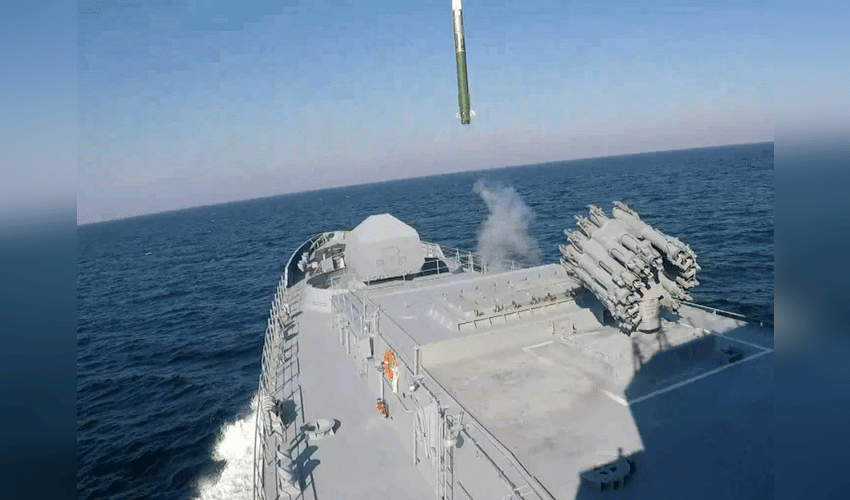

The Indian Navy is investigating an innovative concept called Rearming by Drone (REARM‑D) at Sea, which proposes using multi‑rotor drones to reload surface‑to‑air missiles into vertical launch system (VLS) cells on warships while they remain at sea. As part of this initiative, the Navy has issued an official problem statement under the Defence India Start-Up Challenge 14, focused on addressing the complex challenge of replenishing VLS cells without requiring ships to return to port. This forward-looking approach aims to strengthen operational endurance and reduce reliance on shore-based facilities for critical munitions resupply.
The REARM‑D concept revolves around deploying autonomous, robust drones capable of lifting and precisely positioning heavy missile canisters in difficult maritime conditions. These drones would be designed to manage the weight and size of surface-to-air missile reloads, ensuring safe transfer from supply vessels or onboard storage to the VLS cells of frontline warships.
By embracing drone-based rearming, the Navy seeks to overcome one of modern naval warfare’s most challenging logistical tasks: maintaining missile readiness during extended deployments. Traditionally, reloading vertical launch systems has been a slow, resource-intensive process that requires calm conditions, cranes, and port facilities. REARM‑D aims to bypass these constraints, enabling warships to stay combat-ready even in remote or contested waters.
This initiative also highlights the Navy’s growing focus on unmanned systems as force multipliers. Multi‑rotor drones, capable of hovering and precise payload delivery, are ideally suited to align and insert missile canisters into VLS cells accurately. The technical specifications for these drones are ambitious. They must carry payloads exceeding 900 kg to handle missile canisters, operate for over two hours, and likely use a hybrid propulsion system with an internal combustion engine to resist strong sea winds. Equally important is their ability to hover steadily and lower missiles into designated VLS cells using a winch system, demonstrating high guided precision.
If deployed, these drones would mark a significant advancement in integrating unmanned technology into core naval operations beyond surveillance and reconnaissance. Operationalizing REARM‑D will require improvements in drone endurance, payload capacity, and stabilization systems to handle the dynamic open-sea environment. Seamless integration with shipboard systems is also critical to ensure safe operation around radar masts, antennas, and other superstructures.
The initiative underscores India’s commitment to innovation in naval logistics and aligns with global trends where modern navies are exploring unmanned solutions for resupply and maintenance. Success with REARM‑D could set a precedent, positioning drones as a key component in sustaining missile-armed fleets during long missions.
The Indian Navy’s push for drone-based rearming reflects a strategic understanding that endurance and autonomy are as vital as firepower in contemporary maritime operations. By enabling warships to reload at sea without shore support, REARM‑D could significantly enhance India’s capability to project power and maintain readiness across the Indo-Pacific region.



