



Military
India Set To Finalise Rs 30,000 Crore Anant Shastra QRSAM Deal To Boost Mobile Air Defence Capability
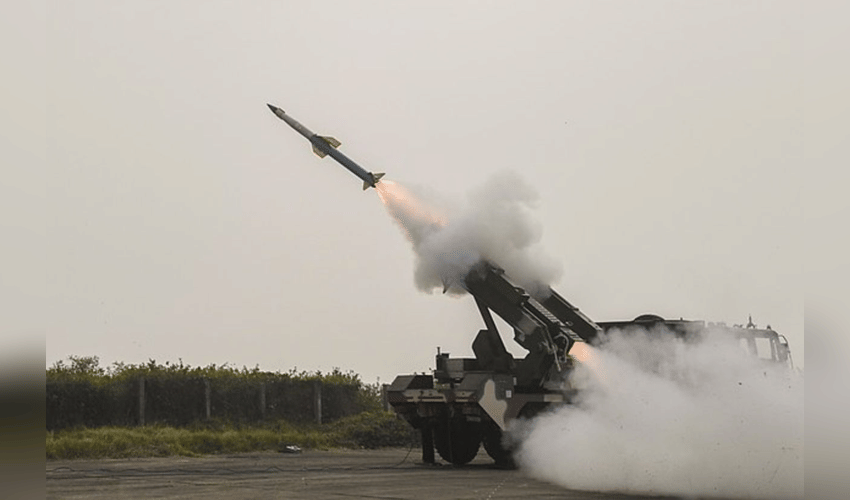

India is moving closer to finalising a major defence procurement deal worth around ₹30,000 crore for the indigenous Anant Shastra Quick Reaction Surface-to-Air Missile (QRSAM) system, a move expected to significantly strengthen the Indian Army’s mobile air defence capabilities. The proposed acquisition is aimed at providing the Army with a fast-moving and advanced missile shield capable of protecting frontline troops, armoured formations and strategic locations from growing aerial threats, including drones, helicopters, aircraft and precision-guided weapons.
The deal represents an important milestone in India’s push towards defence self-reliance, as the system has been developed domestically by the Defence Research and Development Organisation (DRDO). The project is expected to involve major Indian defence companies for production and integration.
The Anant Shastra system, earlier associated with the Quick Reaction Surface-to-Air Missile programme, is designed for high mobility and rapid deployment. Unlike traditional air defence systems that require fixed positions, the QRSAM platform can move along with military formations, allowing troops to receive continuous protection during operations.
Defence experts believe the system will help bridge a critical gap in India’s layered air defence network. It will work alongside existing platforms and provide an additional protective layer against modern battlefield threats, especially the increasing use of drones and unmanned aerial systems in conflicts around the world.
The growing importance of mobile air defence has been highlighted by recent global conflicts, where low-cost drones and precision weapons have challenged conventional defence systems. India’s move to induct Anant Shastra reflects the changing nature of warfare and the need for quick-response technologies. The procurement is also expected to give a boost to India’s domestic defence manufacturing ecosystem. Companies involved in missile production, radar technology, electronics and vehicle integration are likely to benefit from the large-scale programme.
With security challenges increasing along India’s borders and aerial threats becoming more advanced, the induction of Anant Shastra is expected to enhance the operational readiness of the armed forces. The ₹30,000 crore project is being seen as another major step towards building a stronger, indigenous and future-ready air defence network for India.
Disclaimer: This image is taken from rnamedia.



