



World
India's Nuclear Expansion Faces Uranium Supply Challenge as Domestic Production Falls Short
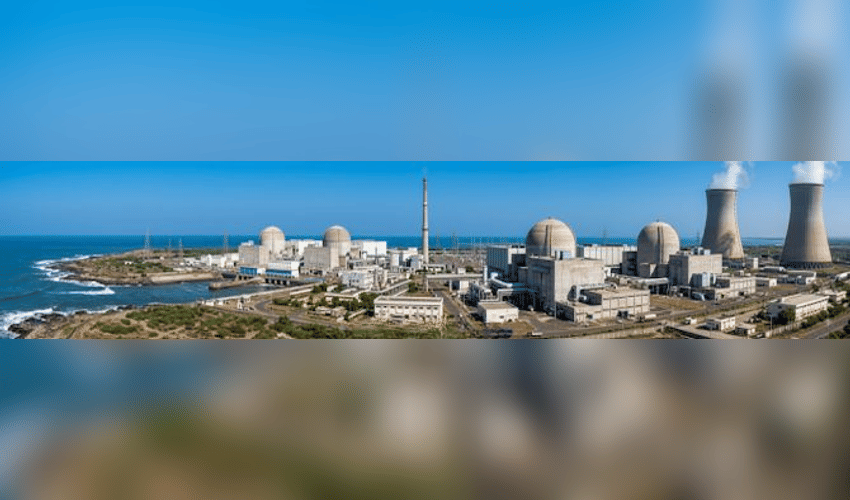

India’s ambitious nuclear power expansion is facing a growing fuel-security challenge as domestic uranium production remains below the requirements of the country’s existing and planned reactors. India is preparing for a major increase in nuclear generation as it looks to strengthen energy security and reduce its dependence on fossil fuels. The government has set an ambitious target of taking nuclear power capacity to around 100 GW by 2047, compared with roughly 8.8 GW currently.
However, expanding reactor capacity will also significantly increase demand for uranium, the basic fuel required by most of India's operating nuclear reactors. A recent Parliamentary Standing Committee assessment has highlighted the gap between domestic uranium production and reactor requirements. Domestic production is currently estimated to meet only about 30% of the uranium requirement for India's Pressurised Heavy Water Reactors (PHWRs), making overseas supplies an important part of the country's nuclear fuel strategy.
India has consequently been strengthening long-term uranium supply arrangements with several countries. Kazakhstan, Russia, Uzbekistan, Canada and other international partners have supplied or agreed to supply uranium to India. Diversifying these sources is seen as important because disruptions involving any one supplier could otherwise put additional pressure on the country's nuclear fuel stocks. Canada has emerged as an important supplier in this effort. Cameco has agreed to supply uranium ore concentrate to India under a long-term arrangement covering the period from 2027 to 2035. The agreement is expected to provide a substantial additional source of nuclear fuel as India prepares to expand its reactor fleet.
Australia is another significant potential source. The country possesses some of the world's largest uranium resources, and nuclear cooperation between New Delhi and Canberra has opened the way for Australian uranium supplies to support India's growing requirements. Despite the increasing role of imports, India is also looking to expand domestic uranium production. The government has been pursuing additional exploration and mining projects, while policymakers have discussed ways to increase investment and improve the efficiency of domestic uranium extraction.
The challenge is particularly important because uranium is not an ordinary energy commodity. Nuclear reactors require carefully planned and reliable fuel supplies, meaning a sudden disruption cannot always be overcome as easily as a temporary shortage of conventional fuels. For India, greater dependence on imports therefore presents both an economic and strategic consideration. International purchases can help meet immediate demand, but excessive dependence on overseas supplies could expose the nuclear sector to geopolitical tensions, transport disruptions and changes in global uranium markets.
India's long-term nuclear strategy also includes the development of technologies designed to make greater use of its substantial thorium resources. The country's three-stage nuclear programme envisages eventually using thorium-based fuel cycles to reduce dependence on conventional uranium. However, those technologies remain a longer-term proposition and cannot address India's immediate uranium requirements. As India prepares to add more nuclear reactors, the country's approach is increasingly focused on maintaining a balance between imported fuel and domestic production. Multiple international suppliers can provide a buffer against disruptions, while expanding domestic mining can strengthen India's strategic autonomy.
The success of India's nuclear expansion will therefore depend not only on how quickly new reactors are constructed, but also on whether the country can establish a dependable fuel supply for them. With nuclear power expected to play a larger role in India's future electricity mix, uranium security is emerging as an important part of the country's broader energy-security strategy.