



Economy
India's Electronics Manufacturing Enters a New Phase, Now Must Prioritize Scale and Quality: Ashwini Vaishnaw

India’s electronics manufacturing industry is moving into a more advanced phase, with the government now aiming to expand domestic capabilities beyond final assembly to include components, materials and manufacturing equipment, Union Electronics and IT Minister Ashwini Vaishnaw said. In a post on X, Vaishnaw said the Make in India initiative has helped transform electronics into one of India’s major manufacturing sectors. Electronics production exceeded $116 billion in FY26, while exports reached $48 billion. Over the last decade, production has increased nearly sevenfold, while exports have grown about 11 times.
According to Vaishnaw, India initially concentrated on assembling finished electronics, particularly smartphones. As production expanded, it generated demand for modules and components, gradually encouraging the development of domestic manufacturing for materials and capital equipment. Mobile phones, which were not among India’s top 100 export products a decade ago, have now become the country’s largest exported item.
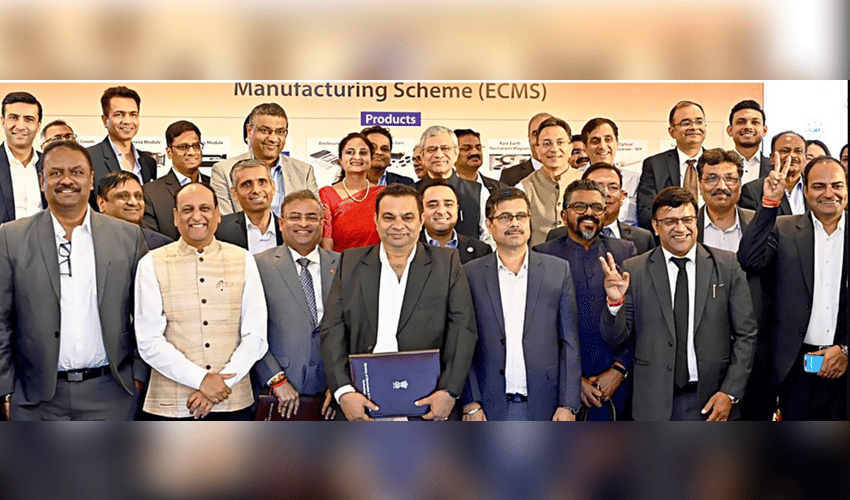
The government’s next priority is building a stronger domestic component and materials ecosystem through the Electronics Component Manufacturing Scheme (ECMS). Projects approved under the scheme had crossed ₹69,000 crore in investment by August 2026, surpassing the original target of ₹59,000 crore. The number of approved companies has also reached 106, compared with an initial target of around 60. These projects are expected to generate approximately 75,000 direct jobs and 2.5 lakh jobs overall. So far, 38 approved projects have begun manufacturing, while another 16 are in the construction and machinery-installation phase.
Vaishnaw also pointed to the expanding range of products now being manufactured in India, including PCBs, enclosures, speakers, antennas, optical transceivers, filters, capacitors, permanent magnets and advanced materials. Indian manufacturers are increasingly exporting components to international markets, including China. Vaishnaw said India must concentrate on both scale and quality. He emphasized six-sigma standards, product reliability, competitive pricing and timely delivery as essential factors for making Indian components preferred by global manufacturers.
He further underlined the importance of continued investment in electronics design, advanced materials, precision components, capital equipment and skilled talent. Vaishnaw noted that electronics has risen from the 9th position to the 3rd position among India’s merchandise export categories in FY26, arguing that the foundation developed over the past 12 years can help the country unlock much greater potential in the coming five years.



