



Economy
India Raises Trade Imbalance Concerns During Jaishankar-Wang Yi Meeting Ahead of BRICS Summit
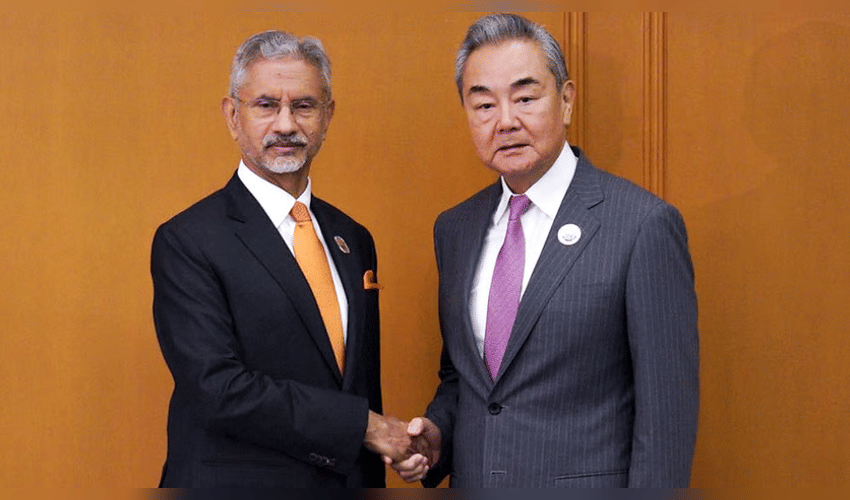

External Affairs Minister S Jaishankar highlighted the need for balanced trade, fair market access and dependable supply chains during his meeting with Chinese Foreign Minister Wang Yi in Manila, amid efforts to further improve India-China relations ahead of the upcoming BRICS summit. The talks were held on the sidelines of ASEAN-related events and marked another important engagement between the two countries as they continue efforts to stabilise bilateral ties.
Jaishankar acknowledged several recent steps that have helped restore normalcy between New Delhi and Beijing, including improvements in visa arrangements, the revival of direct air connectivity, the restart of the Kailash Mansarovar pilgrimage and the resumption of border trade. He described these developments as positive moves towards rebuilding confidence.
During the discussions, Jaishankar stressed that maintaining peace and stability along the India-China border remains essential for a healthy bilateral relationship. He noted that since the October 2024 meeting between Prime Minister Narendra Modi and Chinese President Xi Jinping in Kazan, both sides have remained engaged through established channels to maintain border peace.
He also emphasised the importance of continuing support for existing diplomatic and military mechanisms responsible for managing border-related issues. The meeting comes ahead of the BRICS summit, which India is scheduled to host in September. Jaishankar thanked China for supporting India’s presidency of the grouping. Although Beijing has not yet officially confirmed participation, Xi Jinping is expected to attend the summit, which could further signal progress in bilateral ties.
While relations between the two countries have shown signs of improvement after the resolution of the eastern Ladakh border standoff following the Modi-Xi meeting in Kazan, economic challenges continue to remain a major concern for India. Jaishankar pointed to the significant trade imbalance between the two nations, estimated at around $100 billion, and stressed the importance of ensuring reliable access for Indian industries to essential Chinese raw materials. He underlined that reducing economic asymmetry would be crucial for achieving deeper normalisation.
Indian officials have continued to raise concerns over trade barriers and restrictions from Beijing, while efforts are being made to create more predictable supply chains and ensure trade practices follow global standards. Jaishankar reiterated that fair market access and a more balanced trade relationship remain key priorities for India, along with strengthening official exchanges and people-to-people contacts.
The External Affairs Minister also called for scheduling meetings under various bilateral mechanisms based on mutual priorities. He described the engagement as significant given the complex global environment and highlighted the need for responsible diplomacy between the two neighbouring powers. Jaishankar said that differences between India and China are natural due to their size and interests but should not escalate into disputes. He reaffirmed that the relationship must move forward on the foundation of the “three mutuals” — mutual respect, mutual interest and mutual sensitivity.
He added that a stable and cooperative India-China relationship could contribute to a more balanced and multipolar Asia as well as a multipolar global order. He also recalled that bilateral ties have been gradually improving since the Kazan meeting, with further momentum following the Modi-Xi interaction at the SCO summit in Tianjin last year.



