



Technology
India Introduces SALT, Its First Mobile 'Liquid Tree' to Combat Urban Air Pollution
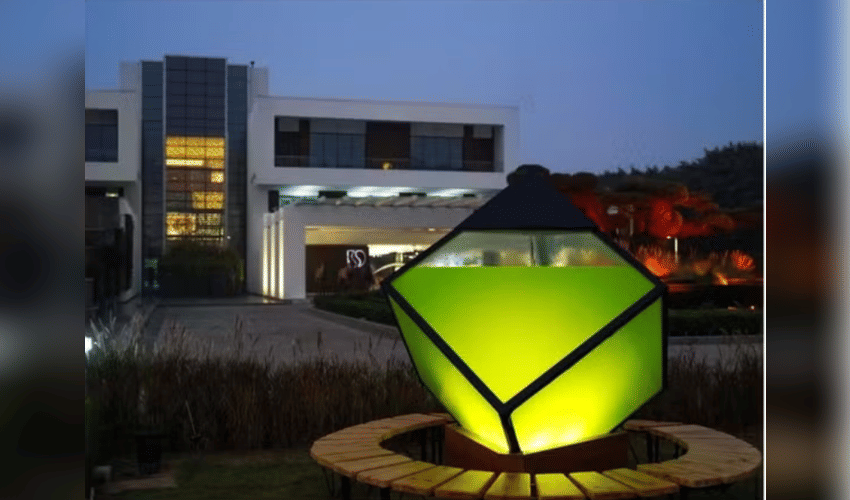

In a significant step toward addressing urban air pollution, scientists at the Council of Scientific and Industrial Research–Central Institute of Mining and Fuel Research (CSIR-CIMFR) have developed SALT (Smart Algal Liquid Tree), India's first mobile air-purification system powered by microalgae. The innovation is designed to improve air quality in densely populated cities where the lack of open space makes planting conventional trees a challenge. The portable system has already been installed at the CSIR-CIMFR campus in Dhanbad and at Northern Coalfields Limited in Singrauli, Madhya Pradesh, demonstrating its potential for use in both urban and industrial settings.
Unlike traditional trees, SALT is an enclosed unit filled with water and microscopic algae known as microalgae. These tiny organisms naturally perform photosynthesis, using sunlight to absorb carbon dioxide from the atmosphere and release oxygen. Scientists estimate that microalgae are responsible for producing nearly half of the Earth's oxygen, making them highly effective at capturing carbon dioxide.
SALT brings this natural process into a compact, self-contained system. Air containing carbon dioxide passes through the unit, where the algae absorb the gas during photosynthesis and release oxygen back into the environment. Besides reducing carbon dioxide levels, the interaction between polluted air and the algae-filled liquid may also help capture or biologically process certain airborne pollutants, contributing to cleaner surrounding air.
One of SALT's key advantages is its mobility. While earlier liquid-tree concepts were largely fixed installations, the Indian-developed system can be transported and deployed wherever air pollution is a concern. This flexibility allows it to be used in multiple locations depending on changing environmental conditions or local requirements.
The technology has also been designed to function beyond daylight hours. It can operate using artificial lighting when sunlight is unavailable and is compatible with both conventional electricity and solar power, allowing continuous operation with minimal interruption. According to the researchers leading the project, the primary objective of SALT is to provide an alternative air-cleaning solution for locations where conventional tree plantation is not feasible due to limited land availability. Many urban areas struggle with poor air quality but have little room for large-scale greenery, making compact technologies like SALT particularly relevant.
Scientists emphasize that SALT is not intended to replace natural trees. Conventional trees provide a wide range of environmental benefits beyond oxygen production, including cooling cities, supporting biodiversity, reducing heat, conserving water, and creating healthier ecosystems. Instead, the liquid tree is meant to complement traditional green spaces by offering carbon-absorbing capabilities in areas where planting trees is practically impossible.
Another advantage of the system is its relatively simple maintenance. Since it does not require soil and is enclosed, it is less vulnerable to pests, harsh weather conditions, and other challenges that often affect urban plantations. Researchers believe SALT could find applications in several high-footfall locations, including transport hubs, industrial facilities, educational campuses, shopping centres, parks, and other crowded public spaces where pollution levels are often elevated. The CSIR-CIMFR team is also exploring the possibility of commercial production, with the long-term goal of making the technology affordable enough for residential neighborhoods and cities facing severe air pollution.
As India continues to search for innovative solutions to improve urban air quality, SALT represents a promising blend of biotechnology and environmental engineering. While it cannot replace the ecological value of forests and urban tree cover, the mobile liquid tree offers a practical option for reducing pollution in places where conventional greenery simply cannot grow.



