



Technology
India enters a new era of space innovation as Vikram-1 drives the startup-led rocket industry
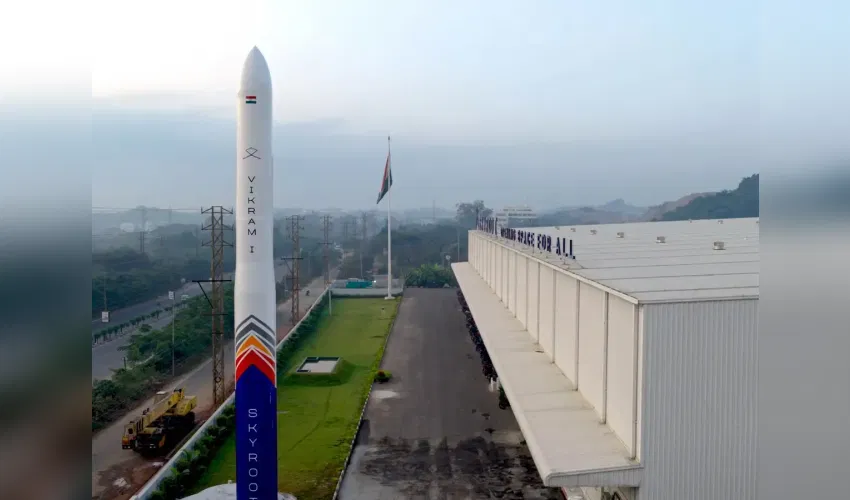

India's space sector is entering an exciting new phase, and much of the attention is focused on Vikram-1, the first privately developed orbital launch vehicle from Hyderabad-based Skyroot Aerospace. While the Indian Space Research Organisation (ISRO) has been the driving force behind the country's space achievements for decades, the emergence of private companies marks a significant shift in how India approaches space exploration and commercial launches. Vikram-1 is not just another rocket—it represents the growing confidence of Indian startups and their ability to contribute to the nation's expanding space ambitions.
For years, ISRO has earned global recognition by completing ambitious missions at comparatively low costs. Successful lunar and Mars missions, along with hundreds of satellite launches for domestic and international customers, established India as a trusted spacefaring nation. However, the government's decision to open the space sector to private participation has created opportunities for entrepreneurs and engineers to develop technologies that were once the exclusive domain of national agencies.
Skyroot Aerospace has emerged as one of the leading beneficiaries of these reforms. Founded by former ISRO scientists and engineers, the company combines years of technical expertise with the speed and flexibility of a startup. After successfully launching the suborbital Vikram-S mission in 2022, the company is now preparing for its biggest challenge yet placing satellites into orbit with Vikram-1. If the mission succeeds, it will be the first time an Indian private company has achieved an orbital launch, making it a landmark event for the country's commercial space industry.
The timing could not be better. Demand for launching small satellites has increased rapidly as governments, universities and private companies invest in communication, Earth observation, navigation, climate monitoring and scientific research. Instead of relying only on large rockets carrying massive payloads, many organizations now require dedicated launches for compact satellites. Vikram-1 has been designed to serve this growing market by offering an efficient and cost-effective launch solution for small payloads destined for low Earth orbit.
The importance of Vikram-1 extends far beyond a single launch. A successful mission would demonstrate that Indian startups possess the capability to design, manufacture and operate sophisticated launch vehicles that can compete internationally. This could attract new investments into India's fast-growing deep-tech ecosystem and encourage more entrepreneurs to enter the aerospace sector. It would also strengthen India's position in the global commercial space market, where competition continues to intensify.
The rise of private space companies is expected to create new employment opportunities across engineering, manufacturing, software development, research and advanced technology. Universities may also benefit as students increasingly pursue careers in aerospace engineering, robotics, artificial intelligence and satellite technology. The growth of this ecosystem has the potential to generate innovation across multiple industries while supporting India's broader vision of becoming a global technology leader.
Despite the optimism surrounding Vikram-1, the space industry remains one of the most challenging sectors in the world. Every rocket launch involves thousands of complex systems working together with near-perfect precision. Even the most experienced launch providers have faced failures before achieving consistent success. From engine performance and stage separation to navigation and satellite deployment, every phase of the mission must operate exactly as planned. Regardless of the outcome, the mission will provide valuable technical knowledge that can improve future launch vehicles and strengthen India's private space capabilities.
One of the most encouraging aspects of this transformation is the growing collaboration between ISRO and private companies. Rather than competing against each other, both are expected to play complementary roles. ISRO can continue focusing on advanced scientific missions, planetary exploration and national priorities, while private firms develop commercial launch services and innovative space technologies for customers around the world. This partnership creates an environment where innovation can flourish while expanding India's influence in the global space economy.
Many industry experts believe India's commercial space sector is only beginning its journey. As more startups enter the market and investment continues to grow, the country could become a preferred destination for satellite launches and space technology development. Vikram-1 therefore represents much more than a technological achievement it symbolizes the confidence of a new generation of Indian innovators who are ready to compete on the global stage.
As the countdown to launch continues, expectations remain high. A successful mission would not only mark a historic achievement for Skyroot Aerospace but could also redefine India's role in the rapidly evolving commercial space industry. More importantly, it would demonstrate that the country's future in space will be shaped not only by government agencies but also by ambitious private enterprises capable of driving innovation, creating jobs and contributing to the next era of global space exploration.
Disclaimer: This image is taken from Wionews