



Asia In News
How Far Is Saudi Arabia Really Willing to Go for Pakistan?
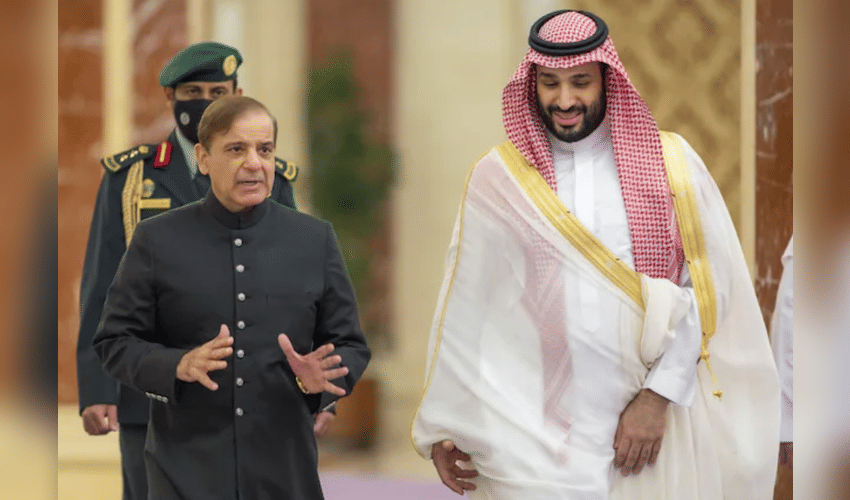

Saudi Arabia's relationship with Pakistan has entered a more significant security phase following the signing of a new defence agreement involving Riyadh, Islamabad and Türkiye. The agreement has generated questions about whether Saudi Arabia would go as far as direct military intervention if Pakistan faced a major conflict. The three countries signed the Mecca Joint Defence Agreement on August 7, 2026. Under the agreement, an armed attack against any one of the three countries is to be regarded as an attack against all. The pact also provides for closer political and military coordination, joint exercises and cooperation in areas including defence technology and production.
The announcement is important because Saudi Arabia and Pakistan already have a long history of military cooperation. Pakistani military personnel have served in Saudi Arabia, while the two countries have maintained defence training and security links for decades. A separate Strategic Mutual Defence Agreement signed by Saudi Arabia and Pakistan in 2025 had already taken their security relationship to a higher level.
The latest agreement, however, adds another dimension by bringing Türkiye into the framework. Türkiye has developed a growing defence industry and has strengthened its military relationship with Pakistan in recent years. The three countries therefore bring different strategic capabilities to the partnership. For Pakistan, Saudi Arabia's support is particularly valuable because it extends beyond military cooperation. Riyadh is an important economic partner for Islamabad and has considerable influence through investment, energy cooperation and financial assistance. A stronger defence relationship could therefore reinforce the wider strategic relationship between the two countries.
But the agreement does not necessarily mean that Saudi Arabia would immediately send troops to fight alongside Pakistan in every conflict. The wording of the pact establishes a collective-defence principle, but the exact military response would depend on the circumstances. Saudi Arabia could respond through diplomatic pressure, intelligence sharing, military supplies, logistical assistance, economic support or air-defence cooperation without directly entering a war.
This distinction is particularly important because Saudi Arabia has its own security concerns. Riyadh remains focused on protecting its territory, energy infrastructure, maritime routes and wider regional interests. A decision to become directly involved in a conflict outside the kingdom would therefore carry significant strategic and economic consequences. The relationship also has to be viewed against Saudi Arabia's growing ties with India. Riyadh and New Delhi have expanded cooperation in energy, investment, trade and strategic affairs. Saudi Arabia consequently has an interest in maintaining its relationship with India even as it strengthens its partnership with Pakistan.
That could make Riyadh's role particularly complicated during any future India-Pakistan confrontation. Saudi Arabia could face pressure from Islamabad for stronger support while simultaneously seeking to prevent the conflict from escalating into a wider regional crisis. The inclusion of Türkiye could also increase the strategic weight of the partnership. Pakistan provides significant military experience and capabilities, Türkiye brings an increasingly advanced domestic defence industry, and Saudi Arabia contributes substantial financial resources and regional influence. Together, the three countries can potentially build a stronger defence network than any one of them could create alone.
However, describing the arrangement as a "Muslim NATO" would be premature. Although the collective-defence language resembles NATO's Article 5, the new partnership does not yet have NATO's extensive institutional structure, integrated command system or decades of operational experience. The real significance of the agreement may therefore be deterrence. By formally declaring that an attack on one member would be treated as an attack on all, Saudi Arabia, Pakistan and Türkiye are sending a message that a major attack against any member could have wider consequences. Whether that message is strong enough to prevent a future conflict will depend on how credible the three countries' commitments become over time.
For Saudi Arabia, the calculation will ultimately come down to circumstances. Riyadh is clearly willing to deepen defence cooperation with Pakistan and provide stronger political and strategic backing. But direct military intervention would represent a much higher level of commitment. If Pakistan were facing a limited confrontation, Saudi support could remain largely diplomatic, economic and logistical. If Pakistan faced a major threat to its national security, the pressure on Riyadh to provide more substantial assistance would be considerably greater. The latest agreement therefore represents a significant development, but it should not be interpreted as an unlimited Saudi guarantee for Pakistan.
Saudi Arabia appears willing to go considerably further for Pakistan than it has in the past, particularly in terms of defence cooperation and strategic coordination. Whether Riyadh would actually enter a war on Pakistan's side, however, would depend on the nature of the conflict, Saudi Arabia's own interests and the potential consequences for the wider region. The message from Riyadh is clear: Saudi Arabia wants a stronger strategic partnership with Pakistan. The unanswered question is how far that partnership would extend when tested by an actual war.



