



Technology
How China Developed Its Own 'Manhattan Project' to Compete with the West in AI Chip Technology
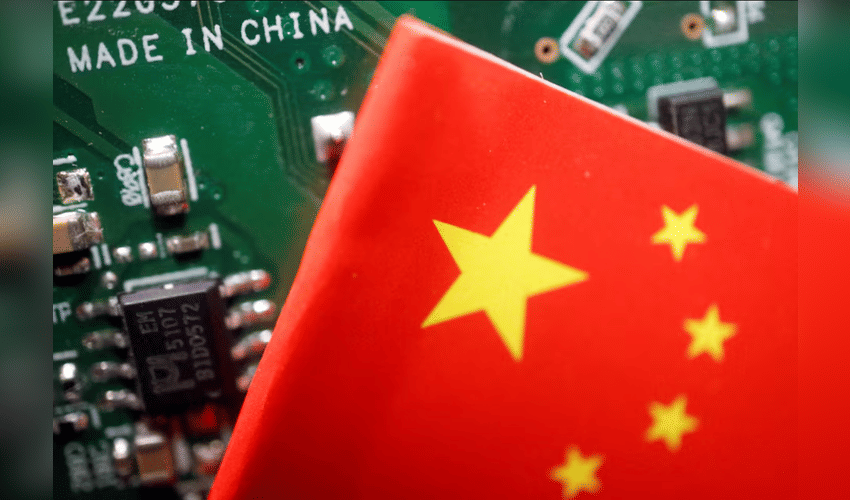

In a high-security laboratory in Shenzhen, Chinese scientists have achieved what the United States has long tried to prevent: a working prototype of a machine capable of producing advanced semiconductor chips—the same chips that power artificial intelligence, smartphones, and weapons crucial to Western military dominance, according to Reuters. Completed in early 2025, the prototype is now undergoing testing and occupies nearly an entire factory floor. It was developed by a team of former engineers from Dutch semiconductor company ASML, who reverse-engineered the company’s extreme ultraviolet lithography (EUV) machines, sources familiar with the project said.
EUV machines, which use beams of extreme ultraviolet light to etch circuits thousands of times thinner than a human hair onto silicon wafers, are at the heart of a technological Cold War. Only a handful of Western companies currently produce them. While China’s machine can generate extreme ultraviolet light, it has not yet produced fully functional chips. ASML’s CEO Christophe Fouquet previously stated that China would need “many, many years” to master such technology, yet the existence of this prototype suggests China may be closer to semiconductor independence than experts had expected. Despite this progress, significant technical hurdles remain, particularly in replicating the precise optical systems manufactured by Western suppliers.
China’s prototype was made possible in part by acquiring components from older ASML machines through secondary markets. Government officials reportedly aim to produce working chips using the prototype by 2028, though insiders suggest a more realistic target is 2030. The achievement marks the culmination of a six-year government initiative to achieve semiconductor self-sufficiency, a top priority of President Xi Jinping. While China’s semiconductor ambitions have been public, the Shenzhen EUV project has been shrouded in secrecy, overseen by Ding Xuexiang, a close confidant of Xi who leads the Communist Party’s Central Science and Technology Commission. Huawei plays a central role, coordinating a network of companies and state research institutes involving thousands of engineers, and has been described by sources as China’s version of the Manhattan Project.
The project recruited former ASML engineers, some working under aliases with false identification, as their expertise was essential to reverse-engineering the complex EUV technology. Despite non-disclosure agreements, enforcing intellectual property protections internationally has been difficult, and Dutch intelligence has warned that China has used extensive espionage programs to acquire advanced technological knowledge from the West.
China’s prototype is larger than ASML’s commercial machines to increase power, and it still lags behind in optical precision, partly due to difficulty replicating components from suppliers such as Germany’s Carl Zeiss. Research institutes, including the Changchun Institute of Optics, Fine Mechanics, and Physics, have contributed breakthroughs that made the prototype operational in early 2025, though further refinement is needed. Parts are sourced from older machines and secondhand markets, including components from Nikon and Canon, and a team of young engineers works on reverse-engineering and reassembling components under close supervision.
Huawei remains deeply involved throughout the supply chain, from design to final integration into products like smartphones. Employees on the project often live on-site with restricted communications, and teams are isolated to maintain confidentiality. While China has yet to produce fully functioning chips on this prototype, the effort represents a significant step toward achieving domestic semiconductor independence and reducing reliance on Western technology.



