



Military
Government poised to clear major indigenous defence projects today
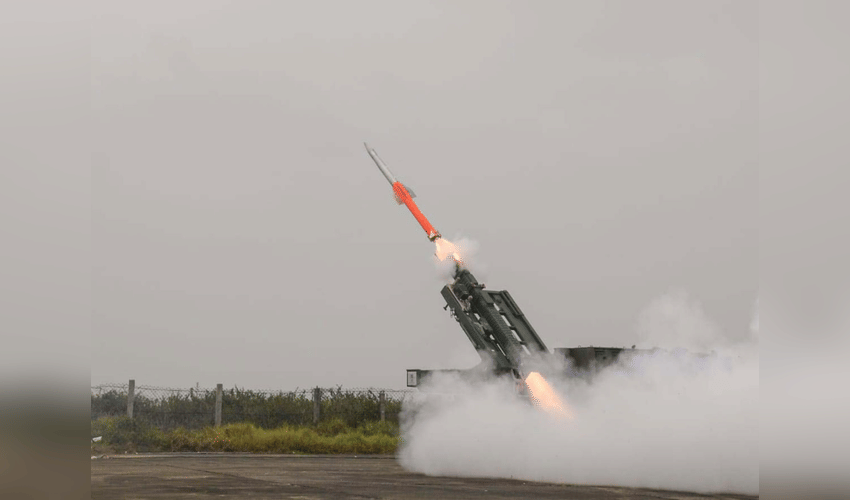

The Defence Acquisition Council (DAC), the Defence Ministry’s highest procurement decision-making body, is expected to convene today to approve several major indigenous projects for India’s armed forces. Among the key proposals is a domestically developed integrated air defence weapon system intended to shield the Delhi-NCR region from aerial threats.
To strengthen the Indian Army’s drone warfare capabilities, the council is likely to consider the procurement of approximately 850 loitering munitions. The Indian Navy has also submitted a proposal to acquire a substantial number of medium-range surface-to-air missile systems from Indian manufacturers to enhance the protection of its warships. Another significant item on the agenda is a decision on leasing two Sea Guardian MQ-9B high-altitude long-endurance drones from the United States for about three years. India has already signed a separate agreement to purchase 31 of these drones, with deliveries expected to begin in 2028.
For the Indian Air Force, the ministry is expected to approve the development and induction of a large batch of Astra Mark-2 air-to-air missiles, capable of striking targets beyond 200 km, along with a specific number of Meteor air-to-air missiles. The Army has also proposed an indigenous upgrade programme for 200 T-90 battle tanks through a defence public sector undertaking.
The meeting is also likely to examine a proposal for the acquisition of a significant number of Israeli-made Spice-1000 air-to-ground missiles for the Air Force. Additionally, the case for procuring six aerial refuelling aircraft — with Israel Aerospace Industries as the only vendor — is expected to be discussed. Finally, the DAC, comprising senior defence ministry officials and top military leadership, may approve the development of 120-kilometre-range Pinaka rockets. These extended-range rockets would be compatible with the existing launchers used for the 45 km and 80 km variants.



