



World
EU holds last-minute negotiations to finalize a new climate target ahead of COP30.
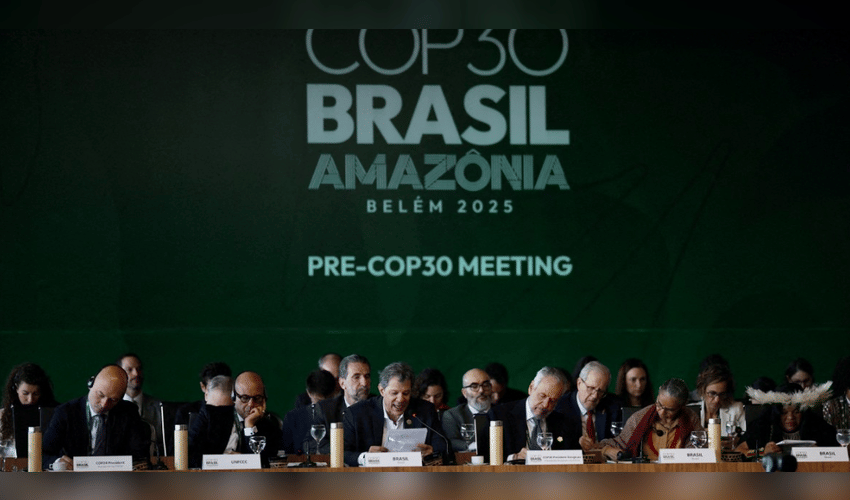

EU climate ministers are preparing for a final push on Tuesday (Nov 4) to approve a new climate target before the upcoming COP30 summit in Brazil, hoping to avoid arriving at the UN conference without a unified stance. Failure to reach an agreement could damage the European Union’s reputation as a global climate leader, especially as the talks will test whether major economies remain committed to tackling climate change despite resistance from US President Donald Trump.
While countries such as China, the UK, and Australia have already submitted updated climate goals, the EU has struggled to do the same. Despite its record of ambitious CO₂ reduction policies, internal divisions have emerged as some industries and governments question whether the bloc can afford aggressive green measures while balancing defence and industrial priorities.
In September, EU member states failed to agree on a 2040 emissions target, leaving negotiations to the last minute before European Commission President Ursula von der Leyen heads to Belem, Brazil, for COP30 on Nov 6. EU climate policy chief Wopke Hoekstra acknowledged the difficult geopolitical context at a recent meeting in Canada but expressed confidence that an agreement would be reached, reaffirming the EU’s commitment to multilateralism and the Paris Agreement.
The European Commission has proposed cutting net greenhouse gas emissions by 90% from 1990 levels by 2040, keeping the EU on track for net-zero emissions by 2050. However, some member states, including Italy, Poland, and the Czech Republic, argue the target is too restrictive and could hurt domestic industries already burdened by high energy prices, cheaper imports from China, and US tariffs. Others, such as the Netherlands, Spain, and Sweden, support the ambitious goal, citing worsening climate impacts and the need to stay competitive in green technologies.
A draft compromise includes a clause supported by France that would allow future revisions to the 2040 target if EU forests fail to absorb sufficient CO₂. Brussels has also proposed additional concessions, such as adjusting carbon market price controls and reconsidering the 2035 ban on combustion engines requested by Germany.
The key sticking point is how much of the 90% emissions reduction can come from purchasing foreign carbon credits, which would reduce the pressure on domestic industries. France wants the share to rise to 5%, up from the European Commission’s proposed 3%, while other governments argue that funding should instead support European industrial growth.
To pass, the proposal needs backing from at least 15 of the EU’s 27 member states. Diplomats warned that the vote will be close and could hinge on one or two shifting positions. Ministers plan to finalize the 2040 target first, which will then form the basis for the 2035 emissions pledge the UN has requested before COP30.



