



World
EU foreign policy chief Kaja Kallas says the ceasefire deal between the United States and Iran ought to cover Lebanon as well.
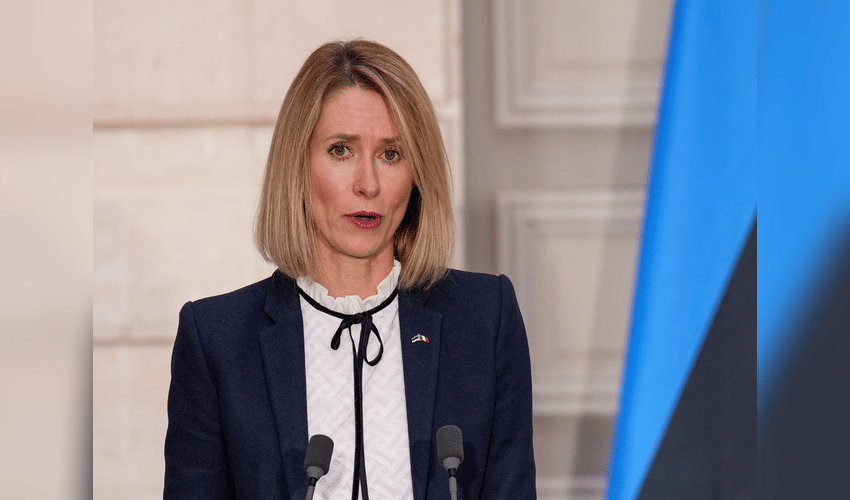

The European Union’s foreign policy chief, Kaja Kallas, has urged that the current US-Iran ceasefire be broadened to include Lebanon. Speaking on the escalating Middle East crisis, Kallas emphasized the need for de-escalation and called for the disarmament of the Iran-backed Lebanese group Hezbollah. She criticized the ongoing hostilities, noting that while Hezbollah involved Lebanon in the conflict, Israel’s right to self-defense does not justify extensive destruction.
Kallas warned that Israeli actions are straining the US-Iran ceasefire and stressed that extending the truce to Lebanon is essential for regional stability. Her comments came amid reports of intensifying military operations, with Israeli strikes reportedly killing hundreds, which she said undermines the argument of self-defense. Israel’s continued operations in Lebanon have put the fragile ceasefire at risk, prompting Iran to accuse the US and Israel of violating the agreement.
Tehran has threatened to pull out of high-level talks scheduled in Islamabad this weekend, led by Iranian Parliament Speaker Mohammad Bagher Ghalibaf. Ghalibaf accused Israel of breaching three major clauses of the 10-point ceasefire agreement, including the call for a full ceasefire in Lebanon, airspace violations such as a drone incident over Lar in Fars Province, and denying Iran’s right to uranium enrichment. He argued that negotiations are unreasonable given these pre-existing violations.
Israeli Prime Minister Benjamin Netanyahu has maintained that Lebanon was never part of the ceasefire deal. He stressed Israel’s continued military campaign against Hezbollah, describing recent strikes as the group’s “greatest blow” since the pager incidents, targeting 100 sites in just ten minutes. Netanyahu reiterated Israel’s key goal of preventing Iran from enriching uranium for potential nuclear use, stating that the country is prepared to achieve this either through negotiations or renewed combat. Despite the tensions, direct talks between the US and Iran are still planned in Islamabad, following a two-week ceasefire agreement. The US delegation will be led by Vice President JD Vance, while Ghalibaf will head the Iranian team.



