



Economy
EAC-PM Chairman: Labour-Intensive Manufacturing Crucial for a Developed Economy
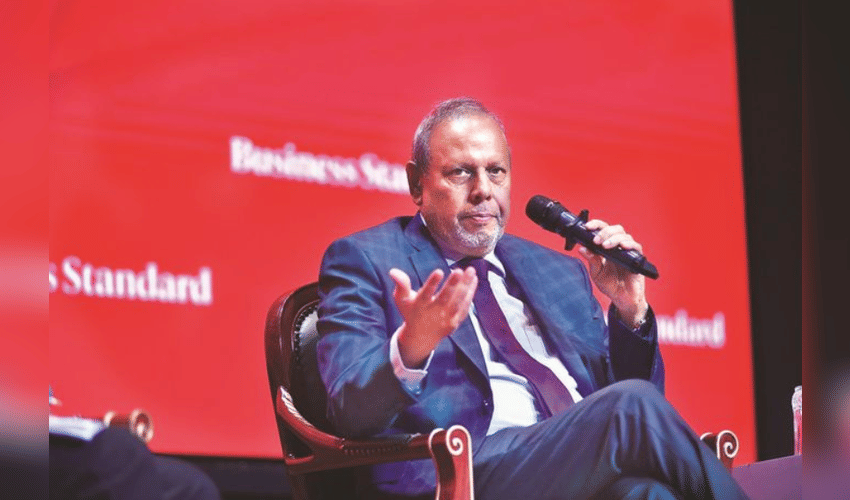

India needs to boost its investment rate, expand labour-intensive manufacturing, and improve basic health and education to become a developed economy by 2047, said Mahendra Dev, chairman of the Economic Advisory Council to the Prime Minister (EAC-PM), on Tuesday. He warned that job creation will remain slow unless private investment and state-level reforms accelerate. Speaking at the Business Standard Manthan Summit 2026, Dev said India’s per capita income must reach around $18,000 by 2047, which requires 7-8% annual real GDP growth, supported by an investment rate of 34-35% of GDP—up from the current 30-31%—and sustained export growth. “Investment and exports are the two main drivers,” he emphasized.
He noted that no country has achieved 7-8% growth without strong exports. India currently contributes about 2% to global merchandise trade, while its services exports account for roughly 4.3%. Dev outlined three key development goals: achieving developed-country-level per capita income by 2047, making growth genuinely inclusive through quality jobs rather than just redistribution, and meeting the net-zero emissions target by 2070. Inclusion, he stressed, should focus on providing quality employment, not just taxing the rich.
India has historically underperformed, growing at about 3.5% annually for nearly four decades, which translated into only 1% per capita income growth due to population growth of 2.5%. “We lost twice—first by focusing on large-scale industries without labour-intensive manufacturing, and second by delaying reforms by 15-20 years,” he explained.
Dev highlighted chronic weaknesses in basic health and education, despite India producing world-class institutions like IITs and IIMs. He noted that reforms since 2014, such as increased public spending on infrastructure and capital formation, are beginning to address these issues and attract private investment.
However, he warned that private sector investment remains insufficient. Many industrialists cite uncertainty and weak demand as reasons to hold back. “Without private capital, higher growth is not possible,” he said. He also emphasized the importance of state-level reforms, noting that implementation occurs at the state level and requires coordination for effectiveness.
On manufacturing, Dev rejected claims of stagnation, pointing out that real value added in the sector has grown 35% over the last decade, with employment also rising. However, manufacturing’s share of GDP and employment hasn’t increased because services have grown faster. To generate mass employment, he urged policies promoting labour-intensive sectors such as garments, leather, footwear, gems & jewellery, and marine products, supported by free trade agreements for better market access.
In agriculture, he advocated shifting from a production-focused approach to a full value-chain strategy, emphasizing post-harvest infrastructure like storage, logistics, and agro-processing. Integrating small farmers into cooperatives and providing access to inputs, technology, credit, and markets is crucial. He also noted that non-farm income is increasingly critical, as households “walk on two legs”—farm and non-farm—for adequate livelihoods. Skills development is vital to bridge the gap between farm and non-farm opportunities. With a median age of 28-29, India has a 10-12 year “demographic dividend” window, which will be lost without urgent upgrades to education and vocational training.
Dev expressed cautious optimism about artificial intelligence (AI) and digital technologies, which could boost GDP by up to 1 percentage point and be applied in sectors like agriculture, health, and education. He stressed that AI must be inclusive to avoid widening inequality, citing examples like “drone didis” delivering digital services to farmers. Finally, he highlighted the need to strengthen decentralization and governance, particularly in health and education. He noted that local governments in countries like China manage nearly half of public spending, compared to just 3% in India, and called for more fiscal and functional powers to flow to urban local bodies and panchayats. “States often stop at themselves—they hesitate to delegate to urban councils and panchayats,” he said.



