



Entertainment
Delhi High Court Maintains Rajpal Yadav's Conviction in Cheque Bounce Cases, Denies Probation
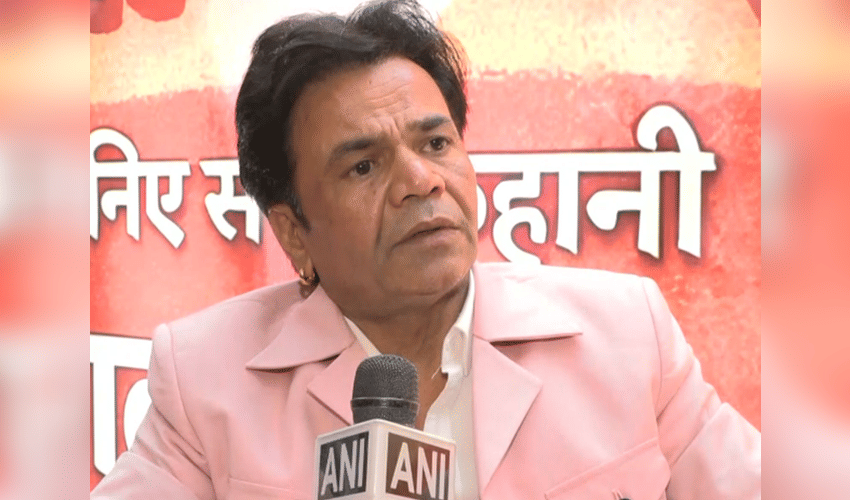

The Delhi High Court on Friday upheld the conviction of Bollywood actor Rajpal Yadav in seven cheque bounce cases, refusing to grant him the benefit of probation due to his conduct throughout the legal proceedings. The court affirmed the trial court’s order and dismissed the revision petitions filed by the actor. Justice Swarana Kanta Sharma upheld the conviction under Section 138 of the Negotiable Instruments Act and confirmed the punishment awarded by the trial court. The court directed that the ₹2.25 crore already deposited by Yadav and released to the complainant should be adjusted against the total amount payable.
The High Court ordered Yadav to undergo three months of imprisonment in each of the seven cases, with all sentences to run simultaneously. It also upheld the fine imposed by the trial court, stating that failure to pay the penalty would result in an additional six months of imprisonment. The actor has been given two months to either comply with the order or seek further legal remedies.
The court specifically rejected Yadav’s request for probation, citing his conduct during the prolonged litigation. It noted that the actor had repeatedly failed to honour assurances and undertakings provided before the court, which influenced the decision to deny him leniency. The judgment was reserved on April 2 after multiple attempts by the High Court to encourage a settlement between Yadav and the complainant company, Murli Projects Pvt. Ltd., did not succeed.
During the hearings, the court expressed concern over inconsistencies in Yadav’s position regarding repayment of the outstanding dues. Justice Sharma questioned the changes in his submissions, observing that the commitments made earlier did not match the arguments presented later. The court also cautioned the parties about the seriousness of the proceedings and the amount of judicial time spent on the matter.
Representing Murli Projects Pvt. Ltd., advocate Avnish Sikka argued that Yadav had accepted the original conviction and could not avoid his financial responsibility. He pointed out that the revision petitions were filed after a delay of 1,894 days and lacked adequate justification for the delay. Sikka further argued that even after the completion of the sentence, the financial liability arising from dishonoured cheques would continue. He stated that repeated assurances and payment commitments made by Yadav had not resulted in clearance of the outstanding dues, forcing the complainant to continue legal action under the Negotiable Instruments Act.
During the proceedings, the High Court made several efforts to help both sides reach a settlement. The complainant had agreed to accept ₹6 crore as a final settlement, while the court also explored a possible payment arrangement involving an initial payment of ₹3 crore within a fixed period. However, Yadav did not accept the proposals, stating that he had already faced major financial difficulties, sold property, and made significant payments towards the liability.
Following the verdict, advocate Avnish Sikka told ANI that the High Court had completely upheld the trial court’s decision. He said all revision petitions filed by Yadav were dismissed and that the actor would have to serve the sentence while paying the amount ordered by the court. Sikka added that the High Court considered Yadav’s repeated violations of undertakings while deciding against granting probation. He also stated that the court had allowed the actor two months to comply with the order or approach a higher legal forum.
The High Court had extended Yadav’s interim bail after considering partial payments made towards the outstanding amount. The dispute originated from multiple cheque dishonour complaints in which the actor was convicted by the trial court. Yadav’s lawyer, advocate Bhaskar Upadhyay, had argued that the actor should not be penalised for mistakes allegedly made by his previous legal counsel and highlighted the impact of the criminal proceedings on his professional career.
Disclaimer: This image is taken from ANI.



