



Military
Defence Procurement Board Clears Plan to Purchase 114 Rafale Fighter Jets
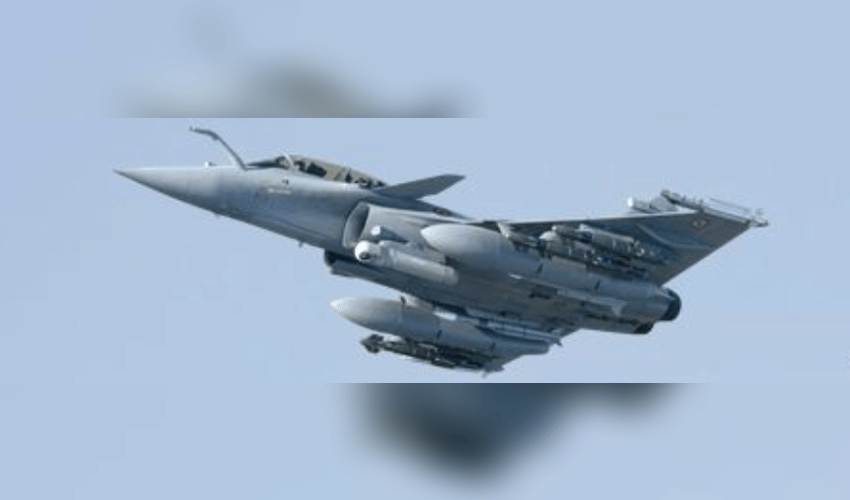

The Defence Procurement Board (DPB) has cleared a major proposal to procure 114 Rafale fighter aircraft from French aerospace firm Dassault Aviation, delivering a substantial enhancement to India’s air combat strength. Approved on Friday, the move highlights the Indian Air Force’s (IAF) accelerated modernisation drive in response to shifting regional security dynamics. The proposal will now be examined by the Defence Acquisition Council (DAC), headed by Defence Minister Rajnath Singh. Officials suggest the Cabinet Committee on Security (CCS), chaired by Prime Minister Narendra Modi, may grant final clearance soon, helping fast-track the deal.
The plan originates from a formal request submitted by the IAF to the Defence Ministry last year, seeking additional Rafales to reinforce its shrinking fleet. India and France are expected to conclude the agreement as early as next month, reflecting the strong pace of bilateral defence cooperation. This procurement follows a major agreement signed in April last year, under which India committed ₹63,000 crore for 26 Rafale-Marine aircraft for the Indian Navy. That deal includes 22 single-seat fighters and four twin-seat trainers, with deliveries scheduled to be completed by 2031.
The new acquisition will be executed through an Inter-Governmental Agreement (IGA), enabling direct government-to-government procurement from Dassault and eliminating intermediaries. This approach, used in earlier Rafale purchases, is seen as reducing delays while safeguarding technology transfer provisions.
Alongside the acquisition, Dassault Aviation and Tata Advanced Systems Limited (TASL) signed four production transfer agreements in June, enabling domestic manufacturing of Rafale fuselage sections in India. This partnership is expected to deepen India’s role in the global aerospace supply chain. TASL is setting up an advanced manufacturing facility in Hyderabad to produce key structural components of the Rafale, including front, central, and rear fuselage sections. Production is expected to begin in FY2028, with the facility eventually delivering up to two complete fuselages per month.
This localisation effort supports the Atmanirbhar Bharat vision by reducing reliance on imports while generating high-skilled employment and advanced manufacturing capabilities within India. Operationally, the Rafale—known for its multi-role versatility, advanced electronic warfare systems, and beyond-visual-range weapons—will significantly strengthen the IAF’s ability to counter platforms such as China’s J-20 and Pakistan’s J-10C.
The timing is considered critical, coming amid elevated tensions along the Line of Actual Control (LAC) and increased strategic activity in the Indian Ocean Region. With the IAF operating roughly 30 squadrons against a sanctioned strength of 42, the addition of Rafales—on top of the existing fleet of 36—will help close key gaps in air dominance and deep-strike capabilities. France continues to be one of India’s most reliable defence partners, with cumulative defence deals crossing ₹1 lakh crore since 2016. The IGA framework also ensures offsets through local manufacturing, maintenance infrastructure, and skill development initiatives.
From an economic standpoint, the deal is expected to attract significant investment through offsets, with TASL’s Hyderabad plant alone representing a multi-billion-rupee commitment. It also positions India as a potential exporter of Rafale sub-assemblies as Dassault diversifies production beyond its facilities in France. Deliveries of the 114 aircraft are likely to be spread over several years, potentially aligning with the Navy’s Rafale-M timeline up to 2031 and complementing indigenous programmes such as the Advanced Medium Combat Aircraft (AMCA). The inclusion of twin-seat variants will support pilot training, especially for mastering the Rafale’s sophisticated fly-by-wire controls and AESA radar systems.
While cost concerns may arise, supporters argue that the Rafale’s proven compatibility with Indian platforms and weapons—along with its operational track record—offers advantages over competing aircraft. The DPB’s approval reflects extensive evaluation under the Defence Acquisition Procedure (DAP) 2020. In the longer term, the deal could unlock deeper Indo-French cooperation, including joint engine development involving Safran and HAL, as well as upgrades for the Su-30MKI fleet. As the DAC and CCS consider the proposal, an official announcement may follow at an upcoming defence event, reinforcing India’s growing role as both a military power and a defence manufacturing



