



News
Court acquits accused in negligence death case after 27 years since incident.
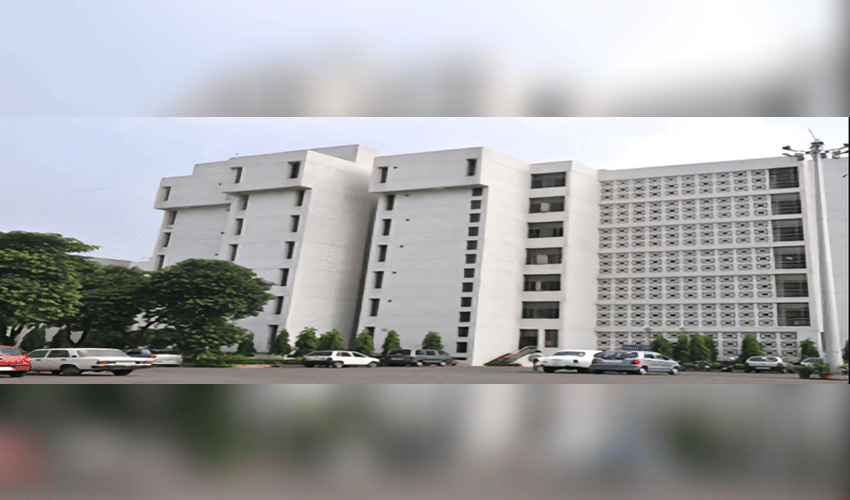

A court in Karkardooma has acquitted a man accused in a 27 year old case involving death and injuries allegedly caused by negligence. The case relates to the collapse of a ceiling during house construction work in the Bhajanpura area in September 1999. The accused, Shiv Dutt, was cleared of all charges nearly three decades after the incident. Due to his poor health, he was unable to attend the court, and his grandson appeared on his behalf on the day the judgement was delivered.
The case began after an FIR was registered on September 16, 1999, based on a complaint filed by Murari Lal Sharma, one of the injured persons. During the trial, one prosecution witness turned hostile, while several others failed to support the prosecution’s claims. Judicial Magistrate First Class Pankaj Rai ruled that the prosecution could not establish that the death and injuries were the result of negligence by Shiv Dutt. The court stated that the charges under Sections 337, 338, and 34 of the IPC were not proven beyond reasonable doubt.
Shiv Dutt, who owned the house, had hired a contractor, Shahzad also known as Bhura, to carry out repair work. Shahzad died while the case was still pending. The court observed that once the work had been assigned to an independent contractor with expertise in construction, the owner could not be held responsible for the execution of the work. The judgement noted that the prosecution failed to prove that the victims’ injuries were directly caused by any rash or negligent act of Shiv Dutt. The court also pointed out that there was no expert report or structural engineer’s opinion indicating that the accused had prior knowledge of the building being structurally weak. Many of the prosecution witnesses were found to be formal in nature.
One of the key witnesses, Jai Prakash, a neighbour of the accused, turned hostile during the proceedings. As a result, the court concluded that the evidence on record did not establish negligence on the part of the accused. The court further stated that Shiv Dutt could not be held liable for any negligent act committed by the contractor. It also found no evidence to suggest that there was any common intention between Shiv Dutt and the contractor to commit an offence.
While acquitting the accused, the court directed the Delhi Legal Services Authority to consider compensation for the victims. The court said that even though the accused had been acquitted, the State still had a responsibility to ensure justice and support for the victims and their families. The matter has been referred to the Secretary of the Delhi Legal Services Authority in the North East district to evaluate and award compensation to the injured victims and the family members of the deceased under the Delhi Victim Compensation Scheme.
According to the case details, on September 16, 1999, around 10 am, police received information about the collapse of a ceiling in a house located in Arjun Gali, Maujpur, Delhi, where 15 to 20 labourers were reportedly trapped under the debris. When police reached the site, a large crowd had gathered, and they learned that the injured workers had already been taken to GTB Hospital by PCR vans and CAT ambulance services.
The incident left several people injured, including Murari Lal, Ashok, Anil, Mahesh, Ilyas, Deepak, and Om Prakash, while one labourer named Wahid lost his life. During the investigation, it emerged that Shiv Dutt had assigned the work of constructing the roof on the first floor of his house to contractor Shahzad. While the roof slab was being lifted, it suddenly collapsed onto the labourers working at the site, resulting in seven injuries and one fatality. Advocate DD Pandey, representing Shiv Dutt, argued that the prosecution’s witnesses had not supported the allegations and that there was insufficient evidence to establish the accused’s guilt.



