



Politics
Congress leader Manish Tewari says the Election Commission has no lawful authority to carry out the SIR.
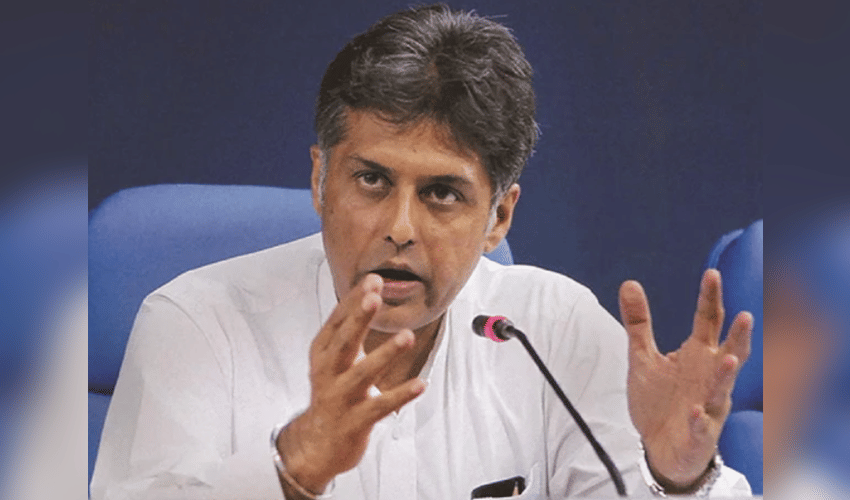

Congress MP Manish Tewari said on Tuesday that the Election Commission has no legal authority to conduct the Special Intensive Revision (SIR) and urged that it be stopped. He argued that many Opposition leaders and citizens now feel compelled to question the neutrality of the poll body.
Speaking during a Lok Sabha debate on Election Reforms, Tewari said the first major reform should be amending the 2023 law governing the appointment of the Chief Election Commissioner and other election commissioners. As per the existing law, the selection panel consists of the prime minister, the leader of the opposition in the Lok Sabha, and a cabinet minister. Tewari proposed adding two more members—the Leader of the Opposition in the Rajya Sabha and the Chief Justice of India—saying that such a committee would strengthen trust in the Election Commission.
He noted that B.R. Ambedkar ensured the EC would function as a permanent, impartial institution, but many now feel its neutrality is in doubt. Tewari pointed out that Article 327 gives Parliament the power to frame laws for electoral rolls and delimitation, and claimed that the ongoing SIR being conducted in several states lacks legal backing.
According to him, the Constitution and existing laws contain no provision permitting SIR. The EC can only correct errors in the electoral roll of a specific constituency when clear written reasons are recorded and made public. It cannot undertake statewide SIR exercises like those in Bihar or Kerala. If the Commission must conduct SIR, he said, it should only be done in constituencies with documented issues. He questioned the government on the absence of such written reasons and called for the immediate halt of the SIR process, adding that past instances of SIR do not justify continuing an unlawful practice.
Tewari further said Indian democracy has two key stakeholders—voters and political parties. The Constitution’s framers ensured universal adult suffrage at a time when many nations restricted voting rights. He added that one of the most significant election reforms was introduced by then Prime Minister Rajiv Gandhi in 1988–89, lowering the voting age from 21 to 18.



