



Technology
As OpenClaw grows popular in China, kids and retirees alike are raising lobsters.
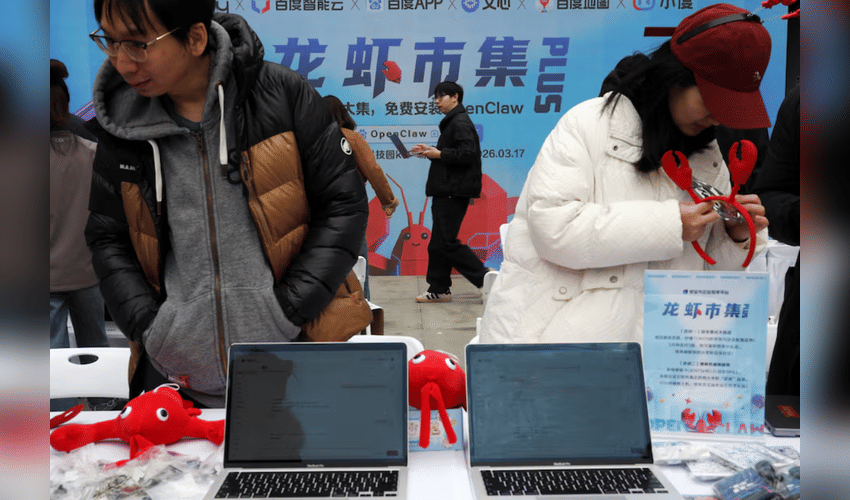

Fan Xinquan, a retired electronics worker in Beijing, recently began raising a “lobster,” hoping the AI agent he trains will organise his specialised knowledge better than chatbots such as DeepSeek. Speaking at a Zhipu event, the 60-year-old said OpenClaw can handle many practical tasks. The tool has gone viral in China, with its local versions nicknamed “lobsters.”
Over the past month, OpenClaw—an AI agent that connects multiple tools and learns with minimal human input—has gained widespread attention. It appeals to retirees seeking extra income as well as companies exploring new business opportunities. Since its launch in November, it has become one of GitHub’s fastest-growing projects. Created by Austrian developer Peter Steinberger, the open-source system is seen as a major technological shift. Analysts compare its impact on AI agents to what DeepSeek did for open-source language models. Nvidia CEO Jensen Huang even called it “the next ChatGPT,” as excitement around it boosted Chinese tech stocks significantly.
The trend has reached everyday life. At a Baidu event, one executive noted that parents in school group chats frequently discuss OpenClaw. His daughter even asked for her own “lobster.” Others, like retiree Bai Yiyun, hope to use it for side businesses, though its profitability remains uncertain. Beyond quick-money ideas, many users expect productivity gains. Some local governments are encouraging adoption with subsidies for small AI-driven businesses. Experts say this aligns with China’s broader push to integrate AI across its economy.
However, concerns are emerging. Rising costs, limited output quality, and security risks have led to criticism. Some users complain about spending money on tokens with little useful return. Meanwhile, regulators and institutions—including government bodies and universities—have begun restricting its use. State media has also urged caution, warning that innovation must remain controlled and secure. Analysts note that while China wants rapid AI development, it also aims to prevent uncontrolled or risky expansion. Security professionals highlight the tension between promotion and regulation. Technical challenges remain as well, especially in integrating the agent across different platforms. In one demonstration, an OpenClaw agent took nearly two minutes to complete a simple coffee order via voice command, showing the complexity behind its operations.



