



Military
Army, ITBP Maintain Strong Border Control in Arunachal Pradesh, No Chinese Encroachment Reported
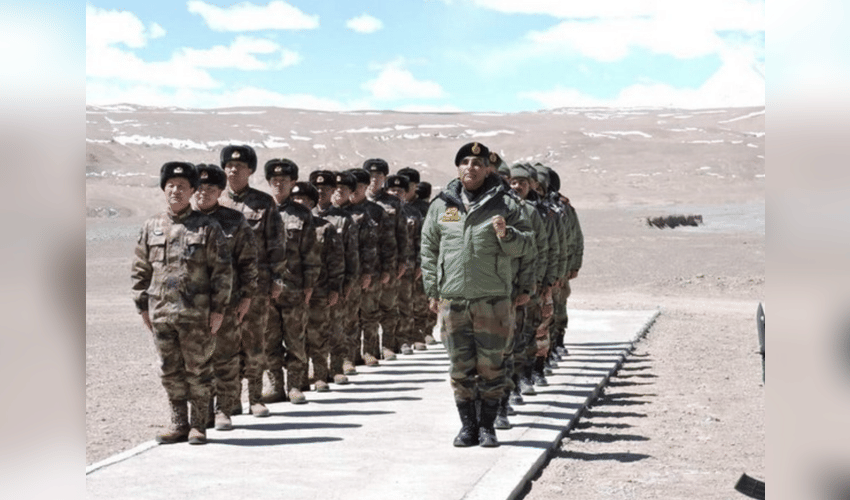

There is no evidence of any gradual Chinese encroachment into Arunachal Pradesh, government and security sources said on Tuesday, dismissing claims circulating on social media. The sources stressed that the Indian Army and Indo-Tibetan Border Police (ITBP) remain fully prepared to maintain border dominance, closely monitor developments and respond to any Chinese activity along the frontier. China has long laid claim to Arunachal Pradesh, referring to the region as “South Tibet”. During the 1960 border discussions, Beijing reportedly claimed around 69,000 square kilometres of territory in the state. India has consistently rejected these claims and maintained that Arunachal Pradesh is an integral and inseparable part of the country.
According to the sources, tensions in the region have historical roots. In 1959, Chinese forces attacked an Assam Rifles post at Longju and took control of the area. The location has remained under adverse possession and has periodically attracted attention because of infrastructure development undertaken by China. The sources also recalled that Arunachal Pradesh witnessed significant military operations during the 1962 India-China war, particularly in the Kameng, Subansiri, Siyom, Siang and Lohit valleys. Following the ceasefire, however, Chinese forces withdrew to positions north of the Line of Actual Control (LAC).
Arunachal Pradesh shares a lengthy and strategically important boundary with the Tibetan region across the Great Himalayan range. In recent years, India has significantly strengthened infrastructure along the frontier, improving its ability to conduct patrols, surveillance and monitoring. Because the India-China boundary has not been formally demarcated, patrols from both sides can occasionally come face-to-face in areas where their perceptions of the LAC differ. Such incidents are generally addressed through established protocols and existing communication mechanisms.
“The Army and ITBP are geared up to dominate the border, monitor and check Chinese activities,” a source said, describing sweeping social media allegations without specific evidence as attempts to attract attention. The clarification came after posts on social media claimed that China was gradually occupying parts of Arunachal Pradesh.
MEA reiterates India's position on Arunachal Pradesh: The Ministry of External Affairs (MEA) also reaffirmed India's position on Arunachal Pradesh on Tuesday, saying the state remains an “inalienable and integral part of India”. The statement came after China again attempted to assert its claims over the northeastern state, including through its practice of assigning Chinese names to locations in Arunachal Pradesh. India recently identified 27 locations in the state using their official standard names on the Survey of India map.
MEA spokesperson Randhir Jaiswal said India's position on the matter remains unchanged and stressed that China's claims cannot alter the ground reality. Jaiswal also highlighted the importance India places on maintaining peace and stability along the LAC. He referred to the 36th Working Mechanism for Consultation and Coordination (WMCC) meeting on India-China border affairs, held in New Delhi on August 6. During the meeting, both sides reviewed the situation along the LAC and held detailed discussions on border-related issues. India reiterated that peace and tranquillity in the border areas are critical to the broader development of bilateral relations.
The two countries agreed to continue using established diplomatic and military channels, including the WMCC, meetings between local commanders and other agreed mechanisms, to address unresolved matters and reduce the risk of misunderstandings or miscalculations along the LAC. The discussions also covered boundary delimitation, border management, institutional mechanisms and cooperation on trans-border matters. India further called for an early meeting of the Expert Level Mechanism dealing with trans-border rivers and stressed the importance of obtaining technical information concerning upstream projects. With increased infrastructure, surveillance and military preparedness on the Indian side, authorities maintain that the situation along the Arunachal Pradesh frontier is being closely monitored and that there is no basis for claims of a “slow” or gradual Chinese encroachment into the state.



