



Politics
Amit Shah said at the 26th All India Fingerprint Conference in Delhi that crime control should be strengthened using tools like NAFIS.
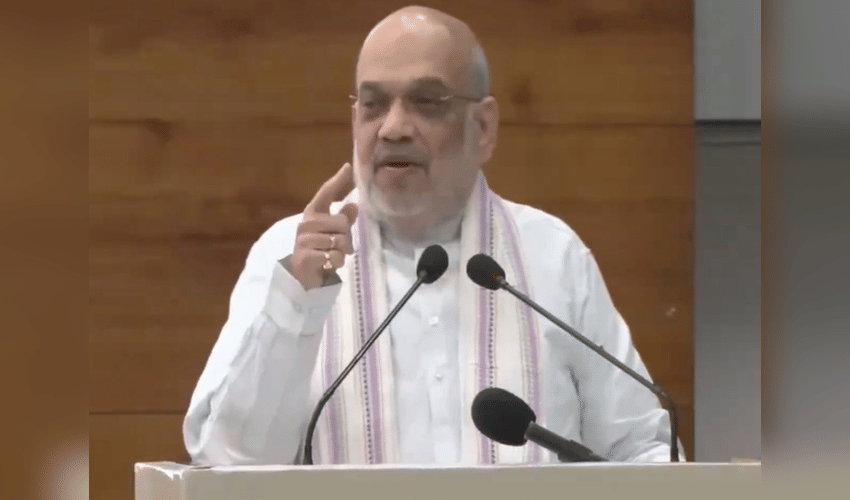

Union Home and Cooperation Minister Amit Shah on Friday stated that the National Automated Fingerprint Identification System (NAFIS) is currently being utilized at only around 10% of its capacity and called for its strengthening through systematic collection of fingerprint data from crime scenes. Speaking at the 26th All India Fingerprint Conference 2026 in New Delhi, he described NAFIS as an important scientific tool for modern policing and said its use must be significantly expanded beyond its present limited application.
He noted that the system has already helped resolve several complex cases but stressed that its effectiveness depends on continuous enrichment of its database. According to him, NAFIS should not only be used for identifying criminals but also be strengthened through regular input of fingerprints collected from crime scenes, making it a two-way system that both identifies offenders and supports case building.
Shah further highlighted that improving forensic databases and ensuring consistent data collection from crime scenes are critical for better investigative outcomes. He emphasized that scientific evidence is becoming increasingly central to the criminal justice system and urged states to prioritize both data quality and security.
He also pointed out the significant role of the National Crime Records Bureau (NCRB) in supporting the implementation of new criminal laws across police stations in India. Referring to ongoing reforms, Shah said the country’s criminal justice system is shifting from traditional methods toward a more technology-driven and rights-based approach. He stressed that forensic data should also be used for intelligence purposes, including identifying international criminals.
He added that training should go beyond simply using digital tools and should also cover the entire process of evidence collection, charge-sheet preparation, and coordination with prosecution and judiciary. He said that if strong scientific evidence is available, additional evidence should not be necessary.
Shah further emphasized the need for better integration of technology across investigation, prosecution, and conviction processes, cautioning against over-reliance on multiple forms of evidence when robust forensic confirmation is already available. He made these remarks while attending the conference at Sardar Vallabhbhai Patel Auditorium in New Delhi, which aims to strengthen forensic capabilities and improve India’s criminal justice system.



