



World
2026 Could Become a Landmark Year for India-EU Ties as China, US and Russia Reshape Global Equations
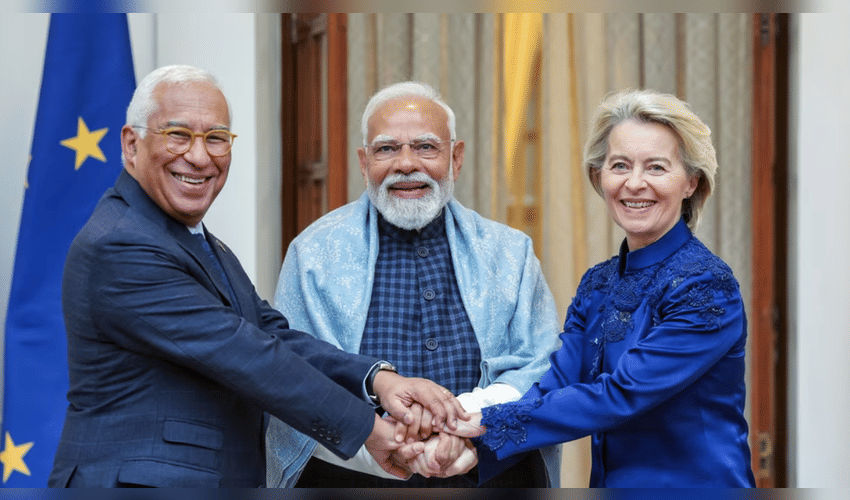

The year 2026 could mark a significant turning point in India-European Union relations as changing global dynamics push both sides toward deeper strategic cooperation. Growing tensions involving China, evolving US policies and uncertainties surrounding Russia are creating new opportunities for India and the European Union to strengthen their partnership across trade, technology, security and clean energy.
For years, India and the EU have maintained strong economic relations, but the partnership has often been described as falling short of its full potential. However, the changing international environment is now encouraging both sides to move beyond traditional trade discussions and build a broader strategic alliance. The rise of China as a major economic and military power has become one of the biggest factors influencing this shift. European nations have increasingly focused on reducing dependence on China for critical industries, including technology, manufacturing and essential supply chains. India, with its growing manufacturing capabilities and large consumer market, is emerging as a key partner for Europe’s diversification strategy.
At the same time, India has its own strategic concerns regarding China, particularly because of ongoing border tensions and Beijing’s expanding influence in the Indo-Pacific region. Although India and Europe may not always follow identical approaches toward China, both share an interest in creating more secure and reliable supply networks.
The changing role of the United States in global affairs is another factor bringing India and Europe closer. While Washington remains an important partner for both New Delhi and Brussels, recent debates over trade policies, tariffs and geopolitical priorities have highlighted the importance of building stronger independent partnerships. For the European Union, India represents one of the world’s fastest-growing major economies and a potential alternative hub for investment, innovation and manufacturing. For India, closer ties with Europe can provide access to advanced technology, greater foreign investment and expanded opportunities in one of the world's largest markets.
Trade is expected to remain a major pillar of this relationship in 2026. Negotiations for stronger economic cooperation between India and the EU have gained importance as both sides look to increase market access, encourage investment and create more resilient supply chains. Areas such as pharmaceuticals, electric vehicles, renewable energy, artificial intelligence and semiconductor manufacturing are expected to receive greater attention.
Technology cooperation is also becoming a key area of partnership. Through platforms such as the India-EU Trade and Technology Council, both sides are working to improve collaboration in emerging technologies, digital infrastructure and clean energy solutions. The partnership reflects a shared interest in developing secure and sustainable technologies in an increasingly competitive global environment.
Russia’s changing relationship with the West has added another layer of complexity to India-EU ties. India continues to maintain important defence and energy links with Moscow, while European countries have taken a much harder position toward Russia following the Ukraine conflict. Despite these differences, both India and Europe appear interested in managing disagreements while focusing on areas where their interests overlap. Security cooperation is also expected to expand. Maritime security, cybersecurity, defence technology, counterterrorism and space cooperation are becoming increasingly important as India and Europe respond to new global challenges.
However, the path ahead will not be without challenges. Differences over trade regulations, environmental rules, data protection policies and market access could create difficulties during negotiations. European businesses have often called for greater regulatory transparency in India, while New Delhi remains cautious about protecting domestic industries. Despite these challenges, the strategic importance of India-EU relations has grown considerably. A combination of geopolitical uncertainty, China's growing influence, shifting US priorities and Russia-related challenges has created a strong reason for both sides to work more closely.
If India and the European Union can successfully overcome remaining differences and translate discussions into concrete agreements, 2026 could become a historic year for their partnership. The relationship is gradually moving beyond commerce and toward a wider strategic cooperation that could influence the global balance of power in the years ahead.



