



News
"Unwarranted": General Naravane responds to memoir controversy, says he has moved past the issue.
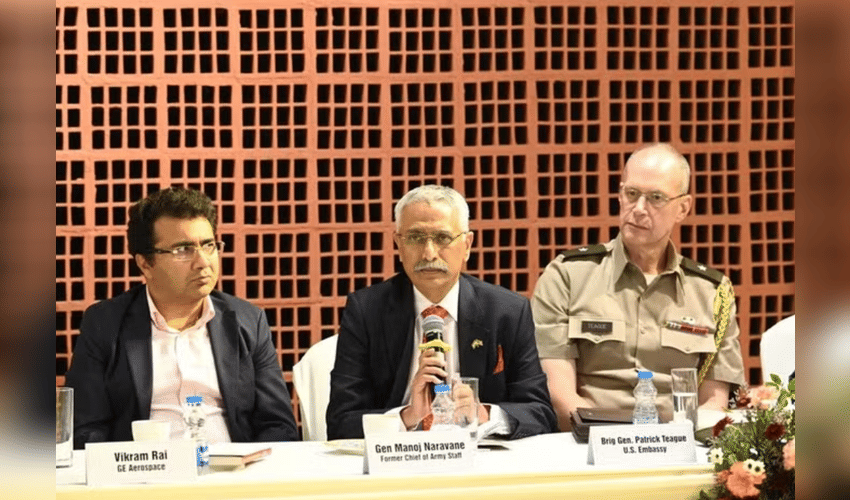

Former Army Chief General Manoj Naravane has published two books after the controversy surrounding his unpublished memoir Four Stars of Destiny, which was halted earlier this year. Reflecting on the episode, he said it was “not warranted” for his name to be unnecessarily pulled into the spotlight over the book.
Naravane, who recently released The Curious and the Classified: Unearthing Military Myths and Mysteries, told PTI Videos that he has moved on from the matter and now considers it a closed chapter. He also noted that he has already authored two books since then and is preparing a third for release. According to him, the Defence Ministry had asked the publisher to pause the memoir until it was reviewed, after which he moved on.
He further said it was unnecessary to repeatedly reference the unpublished work and bring him into public discussion over it. In February, Congress leader Rahul Gandhi was not allowed to quote from the memoir in the Lok Sabha since it had not yet been published. Naravane’s latest book is described as a lighter, engaging read rather than a formal academic study. Published by Rupa Publications, it explores lesser-known stories and traditions from the Indian Army, Navy, and Air Force.
In the book, he traces the origin of the military greeting “Jai Hind,” noting its evolution from the freedom movement to its widespread use in the armed forces today. He said the Air Force first adopted it, later followed by the Army and Navy, while earlier salutes were often accompanied by regional greetings like “Sat Sri Akal” or “Ram Ram.” He also mentioned that even he was unaware of the deeper historical roots of the phrase despite using it frequently.
The book also highlights military folklore, including the story of Badluram, a soldier of the Assam Regiment during the 1944 Battle of Kohima, whose name became immortalized in the regimental song “Badluram ka Badan.” Naravane explained that the song, inspired by an unusual wartime incident involving continued ration supply after the soldier’s death, has become a powerful morale booster for the regiment. Another story features Pedongi, a mule captured during the 1971 war, which reportedly escaped and returned to its unit through difficult and mined terrain. Naravane said the mule was later honoured, retired from service, and lived out its life in Bareilly for 37 years.



