



Politics
Union Minister JP Nadda will launch Aarogya Setu 2.0 and other digital health initiatives on June 29 to boost the healthcare sector.
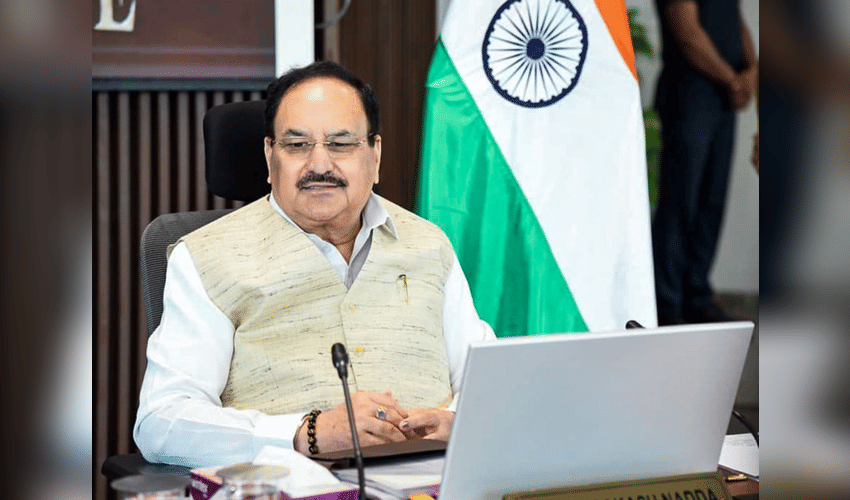

In a major push to strengthen India's digital healthcare ecosystem, Union Minister for Health & Family Welfare and Chemicals & Fertilisers JP Nadda will unveil a series of new digital health initiatives on June 29. Developed under the National Health Authority (NHA) and the National Resource Centre for EHR Standards (NRCeS), these initiatives aim to improve healthcare access, boost interoperability, and accelerate the adoption of Digital Public Infrastructure in the health sector, according to an official statement from the Ministry of Health and Family Welfare.
The launch event will bring together senior government officials, state representatives, healthcare leaders, industry stakeholders, and technology partners, marking another step forward in building a connected and efficient digital health system in India. The new initiatives include citizen-focused applications, healthcare provider tools, interoperability frameworks, health registries, and standardized data systems. These are designed to improve accessibility, efficiency, and coordination across the healthcare ecosystem, benefiting patients, providers, insurers, innovators, and policymakers.
A key highlight is Aarogya Setu 2.0, a revamped Personal Health Record (PHR) application for citizens. Building on its widespread use during the COVID-19 pandemic, the upgraded platform will serve as a unified gateway to multiple digital health services. It will allow users to create and manage their ABHA (Ayushman Bharat Health Account), access and share medical records securely, and use consent-based health data exchange. The app will also offer AI-driven health insights, integration with wearable devices, OPD appointment booking via scan-and-register, digital payments through scan-and-pay, medication reminders, and family health management features.
It will help users locate nearby hospitals, doctors, ambulance services, blood banks, and Jan Aushadhi Kendras. It will also provide access to PM-JAY services, including empanelled hospitals, Ayushman Bharat wallets, and related policy information. The upgraded Ayushman App will function as a one-stop platform for beneficiaries of the Ayushman Bharat Pradhan Mantri Jan Arogya Yojana (AB PM-JAY), offering services such as eligibility checks, Ayushman card management, treatment history, hospital search, grievance redressal, and support services.
Another major innovation is Ayushman Sarathi, a WhatsApp-based chatbot designed to simplify access to PM-JAY services through conversational messaging, improving last-mile connectivity for beneficiaries. Alongside citizen applications, several backend digital health systems will also be launched to improve healthcare delivery and standardization. The National Health Claims Exchange (NHCX) will streamline health insurance claims by enabling standardized digital exchange between healthcare providers and insurers, reducing delays and administrative challenges.
A new utility will also convert insurance plans into standardized FHIR formats, ensuring consistency and reducing manual errors in claims processing. The Unified Health Interface (UHI) will further expand digital healthcare access by connecting patients with providers through an interoperable digital network, making healthcare services easier to discover and use. For healthcare providers, e-Sushrut Clinic will offer a plug-and-play digital system to manage clinical workflows, maintain electronic health records, and integrate with the Ayushman Bharat Digital Mission.
The government will also introduce a Drug Registry to standardize medicine data across digital platforms, improving prescribing accuracy and data exchange. To strengthen laboratory data exchange, the Common LOINC Codes for India (CLCI) will provide standardized diagnostic coding tailored for India’s healthcare system. The Bharat Health Terminology Service (BHTS) will ensure consistent healthcare language and coding systems, enabling better interoperability across digital platforms.
Officials said these initiatives will significantly enhance India’s Digital Public Infrastructure for Health by improving standardization, connectivity, and seamless data exchange across stakeholders. They align with the broader vision of providing accessible, affordable, and inclusive healthcare services to all citizens. The Ayushman Bharat Digital Mission (ABDM) continues to serve as the backbone of India’s digital health transformation, aiming to bridge gaps in the healthcare ecosystem through a unified digital framework.



