



News
Ukraine Conflict Surpasses World War I in Duration.
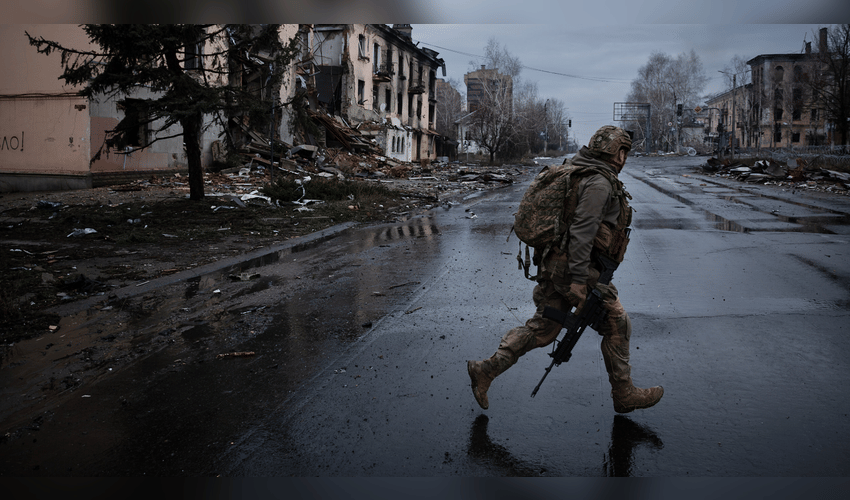

A somber milestone has been reached in Europe: the war in Ukraine has officially outlasted World War I, marking a grim turning point in modern military history. On June 11, 2026, the conflict reached 1,569 days—more than four years and three months—surpassing the 1,568 days that the First World War lasted from July 28, 1914 to November 11, 1918. This is a milestone that would have seemed unimaginable when Russian President Vladimir Putin launched his full-scale invasion on February 24, 2022, with Russian forces confidently advancing toward Kyiv and many Western intelligence agencies predicting Ukraine would fall within 72 hours. Instead, the war has evolved into a grinding, attritional conflict that has reshaped Europe's security landscape and tested the resolve of nations across the globe.
The parallels between these two devastating wars are both striking and unsettling. World War I was characterized by trench warfare, artillery barrages, and battles that lasted months for gains measured in mere miles—exactly the pattern we see today in Ukraine. Cities like Mariupol, Bakhmut, and Kharkiv have become modern equivalents of Verdun and Somme, where entire divisions have been destroyed over months of brutal fighting. Both wars introduced new technologies that fundamentally changed how combat is conducted: WWI brought machine guns, tanks, and aircraft, while Ukraine has seen drones, satellite-guided munitions, and AI-powered targeting systems become routine. The grinding nature of the fighting in Ukraine mirrors the stalemate that defined WWI, where neither side could achieve a decisive breakthrough despite massive casualties and enormous material costs.
What makes this comparison particularly sobering is the human cost of both conflicts. World War I claimed between 15 million and 22 million lives, including military personnel and civilians, and resulted in the collapse of four empires—the Russian, German, Austrian, and Ottoman. The war redrew the political map of the world and set the stage for the next century of global conflict. In Ukraine, the casualties are still being counted, but Russia has lost approximately 1,377,510 personnel since February 2022 according to Ukraine's General Staff estimates, while Ukrainian casualties have also been devastating. Entire cities have been destroyed, millions have been displaced, and the war has created the largest refugee crisis in Europe since World War II. The economic toll has been equally staggering, with Ukraine's GDP contracting dramatically and the cost of the war reaching into the hundreds of billions of dollars for both sides and their supporters.
The irony of this milestone is that the war in Ukraine was supposed to be quick. Russian officials predicted it would be "resolved by Christmas" in early 2022, echoing the same盲目 optimism that greeted the start of WWI in 1914, when leaders believed the conflict would be short and decisive. Instead, both wars became crushers of human lives and resources, consuming entire generations and leaving scars that would last for decades. The failure of Russia to achieve any of its declared invasion goals—whether capturing Kyiv, installing a puppet government, or preventing Ukraine's NATO integration—mirrors the failure of WWI's initial aggressors to achieve their strategic objectives despite massive bloodshed. Both conflicts demonstrated that modern warfare, even with advanced technology, has limits that technology cannot overcome when faced with determined resistance and international support.
The fact that Ukraine has now surpassed WWI in duration also means the war has lasted longer than several other major conflicts in history, including the Franco-Prussian War, the Italo-Ethiopian War, the Gulf War, the Falklands War, the Korean War, and even the American Civil War. If we count Russia's aggression from the occupation of Crimea and the war in Donbas in 2014, the confrontation has been ongoing for over 12 years, totaling more than 4,400 days—exceeding the duration of both World Wars combined. This makes it one of the longest and largest military conflicts in modern European history and Europe's largest war since 1945. The war has become a defining moment for the 21st century, testing whether the international order built after World War II can withstand the challenge of a major power invading a sovereign neighbor and whether the principle that borders cannot be changed by force remains valid.
As the war continues beyond the WWI benchmark, the question remains whether it will end soon or become another decades-long conflict. World War I eventually ended with the Treaty of Versailles, but the settlement failed to create lasting peace and led to World War II. Ukraine's war has taught the world new lessons about warfare—how to kill again with drones and precision munitions, how to sustain a nation under siege through international aid, and how technology has transformed combat. But it has also raised unsettling questions about whether the world is prepared for conflicts that won't end quickly, whether democratic nations can maintain the political will for wars of attrition, and what kind of peace will emerge when the fighting finally stops. The war's duration has already reshaped global alliances, with NATO expanding, the EU strengthening its defense capabilities, and new security partnerships forming across Europe and beyond.
The psychological impact of this milestone extends beyond military analysts and historians. For Ukrainians, every day of the war means more families displaced, more soldiers lost, more cities destroyed, and more uncertainty about the future. For the world, the war's length challenges assumptions about how modern conflicts should unfold and whether the international community can maintain the commitment needed to support Ukraine's defense. The comparison to WWI is imperfect—one war involved dozens of countries across multiple continents, while Ukraine is primarily a bilateral conflict—but the core lesson remains: wars that start with promises of quick victories often become catastrophes of attrition that consume everything in their path and leave no one victorious in any meaningful sense. The war in Ukraine has now entered a new phase where duration itself has become a weapon, testing whether endurance can eventually break the will of the aggressor.



