



Politics
Trump Blow Up Whole Iran Ultimatum Sparks War Crimes Fears
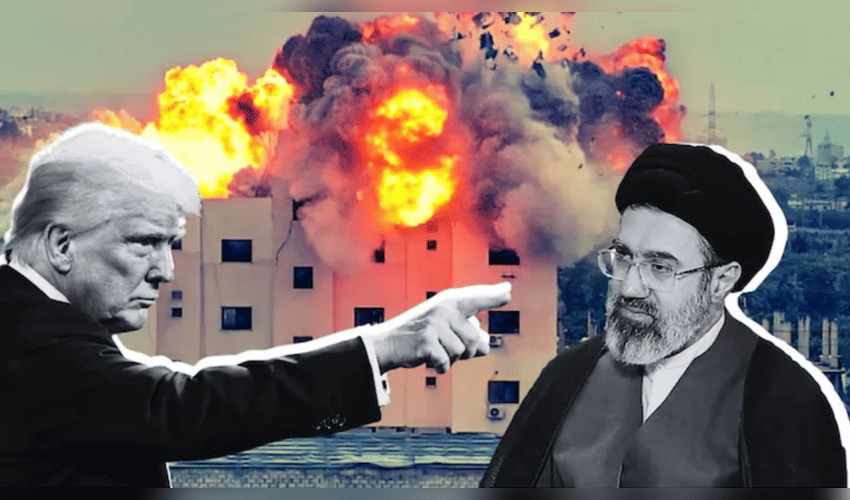

US President Donald Trump has issued a stark new warning to Iran, saying that if a deal is not reached by Tuesday, “we’re blowing up the whole country” — a threat that has triggered alarm among international legal experts and human‑rights groups over possible violations of the law of armed conflict. Speaking to reporters and later repeating the message on his Truth Social platform, Trump declared that the US will strike Iranian infrastructure “until the Strait of Hormuz is open,” singling out power plants and bridges as key targets. He described the coming day as “Power Plant Day, and Bridge Day,” and added a profanity‑laced demand to “open the fucking Strait,” underscoring the combative tone of his hard‑line stance.
Under the Geneva Conventions and established rules of international humanitarian law, attacks on infrastructure must avoid being indiscriminate or disproportionate to any military advantage. Deliberately targeting power grids, bridges, and other civilian‑critical systems that serve the general population can fall into legally perilous territory, especially if such strikes are likely to cause widespread non‑combatant casualties. Trump has downplayed concern for civilian deaths, arguing that many Iranians oppose their own government and would, in effect, welcome such pressure as a way to weaken the regime. However, human‑rights advocates warn that this framing risks normalizing large‑scale attacks on urban and civilian infrastructure, blurring the line between legitimate military operations and potential war crimes.
Iran’s leadership has reacted with equal intensity. Parliament Speaker Mohammad Bagher Ghalibaf called Trump’s threats “reckless” and warned that they would plunge the United States into a “living hell” for every American family. Iranian officials have also signaled that any sweeping US strikes on their territory could trigger retaliatory attacks on infrastructure in Israel and Gulf‑state allies, raising the specter of a wider regional conflict.
The immediate flashpoint remains the strategically vital Strait of Hormuz, through which a significant share of the world’s seaborne oil passes. Washington argues that any Iranian attempt to close or disrupt the waterway would justify forceful countermeasures, while Tehran insists it has the right to defend its territorial waters and respond to what it describes as American aggression.
Trump’s latest remarks are not an isolated incident, but part of a broader Iran‑first posture that has blended military saber‑rattling, public ultimatums, and theatrical deadlines. Over recent months, he has repeatedly demanded that Iran abandon its nuclear ambitions and halt its crackdown on domestic protesters, while also reinforcing US naval and air power in the Gulf. Trump announced he had launched “major combat operations” in Iran, which reportedly involved large‑scale joint strikes with Israel. Analysts now see a consistent pattern: the president uses high‑volume threats and self‑styled “big days” to pressure adversaries, betting that shock and deadlines will force concessions or at least rally domestic support at home.
Critics argue that this style of brinksmanship can backfire—closing off diplomatic channels, alarming allies, and making any negotiated resolution more difficult. At the same time, the language of “blowing up the whole country” risks eroding long‑held norms about how modern wars should be fought, particularly when it comes to protecting civilians and civilian infrastructure.
Beyond the Washington–Tehran axis, governments and international bodies are watching with growing unease. European leaders and UN‑linked officials have privately expressed concern that the Trump administration’s rhetoric may be edging toward or beyond accepted legal boundaries, even as they publicly back the principle of keeping the Strait of Hormuz open and secure.
Some legal scholars and rights groups have already begun warning that if Trump follows through on broad‑scale strikes against Iranian infrastructure, future investigations could scrutinize both the targeting decisions and the senior‑level officials who authorized them. For now, the world is left waiting to see whether the president’s ultimatum leads to a last‑minute deal, a calibrated strike, or a much wider escalation that could redefine the rules of 21‑st‑century warfare.



