



Politics
The representative of Iran's Supreme Leader in India stated that the country did not initiate the war but had it imposed on them.
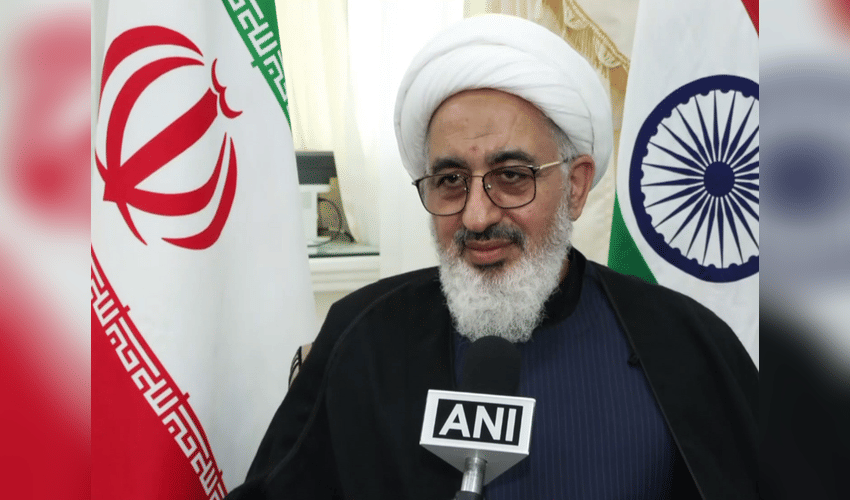

Abdul Majid Hakeem Ilahi, the Representative of Iran’s Supreme Leader in India, stated on Wednesday that Iran was unwilling to enter into conflict and that the war was forced upon the country. Speaking to ANI, he claimed that the United States launched over 10,000 attacks on Iran, primarily targeting its air force and missile systems.
Ilahi emphasized that Iran had no intention of engaging in conflict with neighboring countries, but alleged that the US used military bases in Arab nations to carry out strikes against Iran. He noted that Iran and the United States have now agreed to a temporary two-week ceasefire. According to him, those who initiated the conflict believed they could conclude it quickly, but later realized their mistake after civilian areas were impacted.
He further asserted that Iran’s military actions were limited to American bases in the region and did not target civilians. Ilahi claimed that certain attacks, including one on a school in Minab that reportedly killed many young girls, originated from bases in Arab countries, and said there was evidence acknowledged by European nations. He reiterated Iran’s desire to maintain peaceful relations with neighboring countries while warning that the US could not ensure stability in the region.
Ilahi also stated that threats by the US to destroy Iran’s ancient civilization demonstrated a lack of understanding of both Iran and humanity. He added that during the conflict, Iranian citizens gathered to protect critical infrastructure such as bridges, mosques, hospitals, and universities. He warned that Iran was prepared to respond strongly if further attacks occurred, particularly on its oil facilities, suggesting that escalation could disrupt oil flow through the Strait of Hormuz. According to him, such warnings contributed to halting the conflict.
Commenting on US President Donald Trump’s statements, Ilahi said that claims about reopening the Strait of Hormuz were misleading, as it had remained operational prior to the conflict and is ultimately under Iran’s control. He expressed hope that the ceasefire would hold and that all parties would avoid restarting hostilities.
Ilahi also mentioned that discussions would continue between both sides regarding a ten-point proposal put forward by Iran, and noted that several countries played an important role in achieving the ceasefire. He concluded by emphasizing that the safety of civilians remains a top priority. US President Donald Trump announced a temporary pause in military actions against Iran and proposed a two-week bilateral ceasefire, while also indicating that Iran’s ten-point proposal could be a viable basis for further negotiations.



