



Military
TEJAS Mk-2: India's advanced fighter built for two-hour missions, set to rival global jets.
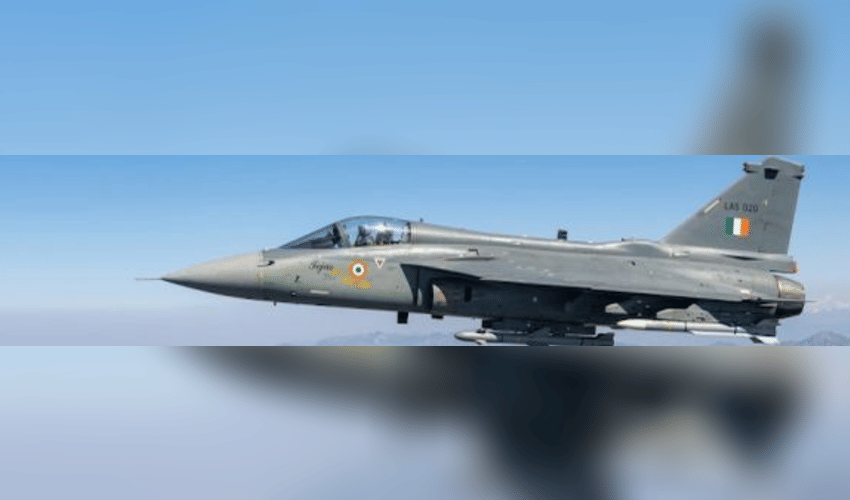

The Indian Air Force is set to enhance its operational strength with the TEJAS MK-2, a fighter aircraft expected to significantly improve the duration India can keep jets airborne during combat missions. According to officials from the Aeronautical Development Agency, the aircraft is being developed to sustain nearly 120 minutes of combat air patrol while carrying up to eight Beyond-Visual-Range missiles. This represents a substantial upgrade over the Tejas Mk1 and TEJAS MK-1A, which typically operate for about 57 minutes under similar conditions and carry around four BVR missiles. The Defence Research and Development Organisation has indicated that the aircraft is nearing its maiden flight, expected in the summer of 2026.
The TEJAS MK-2 is not just an upgraded variant but a fundamentally redesigned aircraft. It is 1.35 metres longer than the TEJAS MK-1A, with an overall length of 14.6 metres. The addition of close-coupled canards improves agility, enabling sharper manoeuvres during flight. One of the most notable upgrades is its fuel capacity, as the TEJAS MK-2 can carry more than 3,400 kg of internal fuel, directly contributing to its extended endurance.
The aircraft is powered by the GE F414-INS6 engine, generating 98 kN of thrust. This is a clear improvement over the 84 kN produced by the earlier GE F404 engine used in previous versions, offering enhanced power along with better fuel efficiency. Open-source information also suggests improved stealth characteristics, with the frontal Radar Cross Section reduced to roughly 25% of that of the TEJAS MK-1A, making detection by enemy radar more difficult.
Another key advancement is its weapons capacity. The TEJAS MK-2 features 11 hardpoints and can carry up to 6.5 tons of external payload. In comparison, the MK-1 variant supports approximately 3.5 tons, making the newer model nearly twice as capable in practical terms. For air-to-air combat, it can carry eight BVR missiles as standard, which can be increased to 10 using dual-rack configurations. The jet is designed to integrate India’s Astra missile series along with compatible Russian and French systems.
To support this expanded combat capability, the aircraft is equipped with the Uttam Active Electronically Scanned Array radar, backed by a triple-layer auxiliary computing system that ensures operational reliability and redundancy. One of the most impactful improvements for the Indian Air Force is its extended endurance. With close to two hours of combat air patrol capability, the TEJAS MK-2 can remain airborne longer while fully armed. In sensitive regions such as the Line of Actual Control or vast maritime areas, aircraft often need frequent rotation. With this new platform, fewer aircraft will be required to maintain continuous patrol coverage.
This also helps reduce pilot fatigue and decreases reliance on mid-air refuelling tankers. Larger platforms like the Su-30MKI can then be allocated to more complex missions instead of routine patrol roles. Modern warfare is increasingly influenced by drones, long-range missiles and rapid-response systems. The TEJAS MK-2 is designed to operate effectively in such an environment by combining extended endurance with a substantial missile payload. It is intended to complement ground-based defence systems rather than replace them.
Its ability to stay airborne longer while carrying multiple missiles enables it to provide air cover for Army operations and support naval missions when needed. Such joint coordination is becoming a key aspect of India’s defence strategy, where multiple forces operate together in real time. As the TEJAS MK-2 moves closer to its anticipated first flight in 2026, it highlights the steady progress of India’s indigenous aerospace capabilities. The shift from a 57-minute endurance platform to a fighter capable of 120 minutes of combat readiness reflects the rapid advancement of the programme. With improved payload capacity, longer flight duration and enhanced radar evasion, the aircraft is being positioned as a crucial element of India’s future air combat strength. The TEJAS MK-2 is built to stay airborne longer, carry a heavier load and respond more effectively when needed.



