



News
Supreme Court Judge, Election Chiefs to Lead Panel Set to Redraw India's Constituency Boundaries
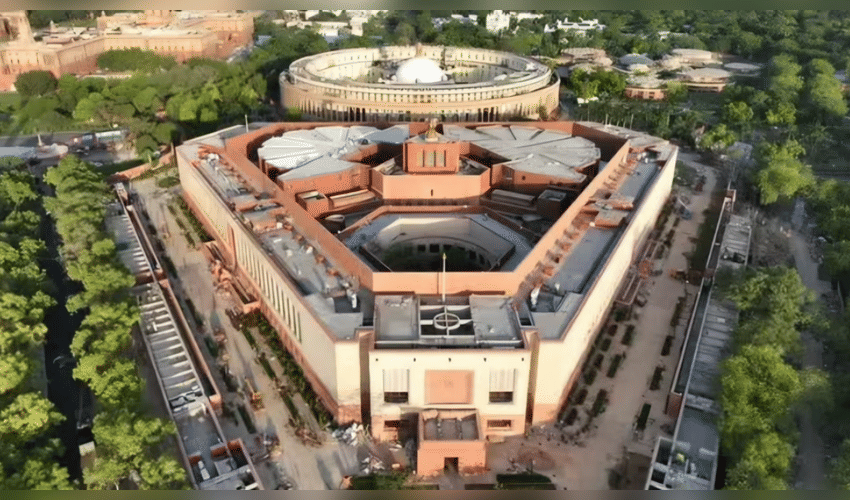

India is preparing for a major electoral restructuring, with a proposed Delimitation Commission set to redraw parliamentary and state assembly constituency boundaries across the country. The proposed panel will be headed by a serving or retired Supreme Court judge and will include senior election officials, according to the proposed legislative framework. The development is part of the government's broader plan to expand legislative representation and facilitate the implementation of 33 per cent reservation for women in the Lok Sabha and state legislative assemblies.
Under the proposed Delimitation Bill, 2026, the commission will have three principal members. A serving or retired Supreme Court judge appointed by the Central Government will serve as its chairperson. The Chief Election Commissioner, or an Election Commissioner nominated by the CEC, will be another member, while the State Election Commissioner of the state concerned will complete the panel.
The commission will be responsible for reviewing and redrawing the boundaries of parliamentary and assembly constituencies. The exercise is expected to take into account population distribution, geographical conditions, administrative boundaries and other relevant factors. The proposed framework also provides for the participation of associate members from each state. These will include five Lok Sabha members and five members of the respective state legislative assembly. However, they will not have voting rights or authority to sign the commission's final orders.
The proposed legislation also seeks to increase the strength of the Lok Sabha by 50 per cent across states and Union Territories. If implemented, the maximum strength of the Lower House could rise to 850 members, including up to 815 representatives from states and 35 from Union Territories. The proposed changes are expected to have a significant impact on India's political landscape, as constituency boundaries and the distribution of parliamentary seats play an important role in determining electoral representation.
The delimitation exercise is also closely connected with the proposed implementation of women's reservation. The government aims to provide 33 per cent reservation for women in Parliament and state assemblies through the accompanying constitutional changes. The proposed exercise has raised questions about regional representation, particularly among southern states, which have expressed concerns that population-based redistribution could affect their relative representation in Parliament. The proposed framework seeks to maintain the existing proportional share of states in the Lok Sabha while expanding the overall number of seats.
The commission is expected to invite objections and suggestions from the public and other stakeholders before finalising constituency boundaries. Public hearings would provide an opportunity for political representatives and residents to raise concerns about proposed changes. The proposed Delimitation Bill, 2026, is scheduled for consideration during Parliament's special sitting beginning November 30. The commission's formation and the implementation of its recommendations will depend on the legislative process and subsequent government notifications. The proposed restructuring could become one of India's most significant electoral exercises in recent decades, with its outcome potentially influencing political representation and parliamentary elections ahead of the 2029 general elections.