



News
PM Modi said that although many people fear AI, India embraces it as a key part of its future.
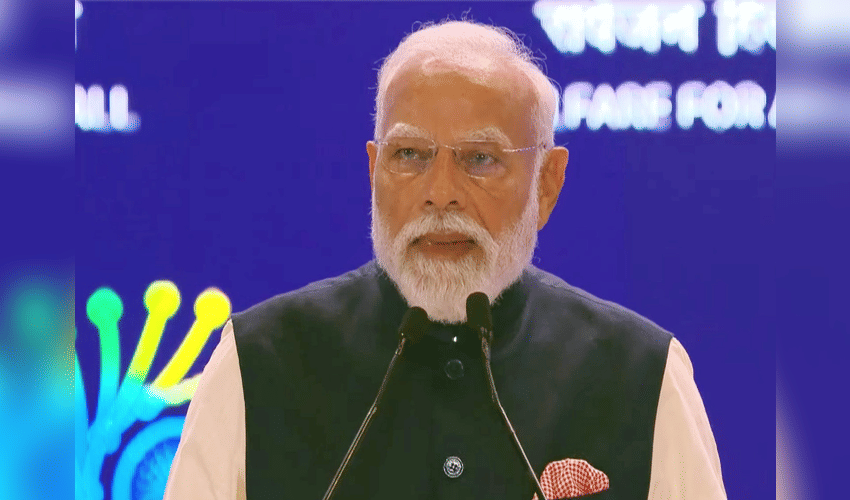

Narendra Modi delivered a strong message of technological optimism on Thursday at the India AI Impact Summit 2026, affirming that while artificial intelligence may cause concern for some, India views it as a vital driver of its future development. Speaking at Bharat Mandapam, he expressed pride in the country’s forward-looking approach, stating that India sees artificial intelligence as a key part of its future.
The Prime Minister highlighted the extraordinary pace and scale of technological advancement in the current era. He noted that while AI is making machines smarter, its greater impact lies in significantly enhancing human capabilities. Unlike previous technological revolutions, whose effects took decades to become evident, the transition from machine learning to intelligent machines is now occurring faster, more deeply, and on a much broader scale.
He also emphasized the ethical responsibility associated with AI, comparing its significance to the discovery of nuclear power. He urged the global community to consider not only what AI can achieve in the future, but also how it is being used today, stressing the importance of ensuring that future generations inherit AI in a responsible and beneficial form. He pointed out that, like nuclear energy, AI has the potential for both constructive and harmful outcomes depending on how it is managed.
Describing AI as a transformative force, he said its impact depends on how it is guided. When properly directed, AI can become a powerful solution rather than a disruptive force. He highlighted that the summit’s theme, focused on the welfare and happiness of all, reflects India’s commitment to ensuring AI remains human-centric, responsive, and aligned with societal well-being.
Addressing the future workforce, the Prime Minister called for widespread efforts in skill development, reskilling, and lifelong learning. He stressed that the future of work must be inclusive, reliable, and centered on human needs, and that collective progress will allow AI to enhance humanity’s overall potential.
He also warned against the risk of reducing people to mere data points and emphasized the need to democratize AI so it becomes a tool for inclusion and empowerment, particularly for developing nations. Using the example of GPS, he explained that while AI can guide decisions, humans must retain control over the final direction, as today’s choices will shape the future.
The Prime Minister further highlighted the importance of establishing global standards to address challenges such as deepfakes and misinformation. He advocated for authentication systems, watermarking, and clear labeling of AI-generated content to maintain trust and transparency in the digital environment. He called for a commitment to developing AI as a shared global resource that benefits humanity.
The India AI Impact Summit, held in New Delhi, brought together policymakers, industry experts, researchers, innovators, and civil society representatives from around the world. As the first major global AI summit hosted in the Global South, the event focused on advancing international dialogue on artificial intelligence and aligning technological progress with the broader goal of benefiting all people.



