



Politics
PM Modi's Save-Fuel and Work-from-Home Appeal Is Not an Austerity Drive, Says Government
Published On Wed, 13 May 2026
Ananya Bhattacharya
6 Views
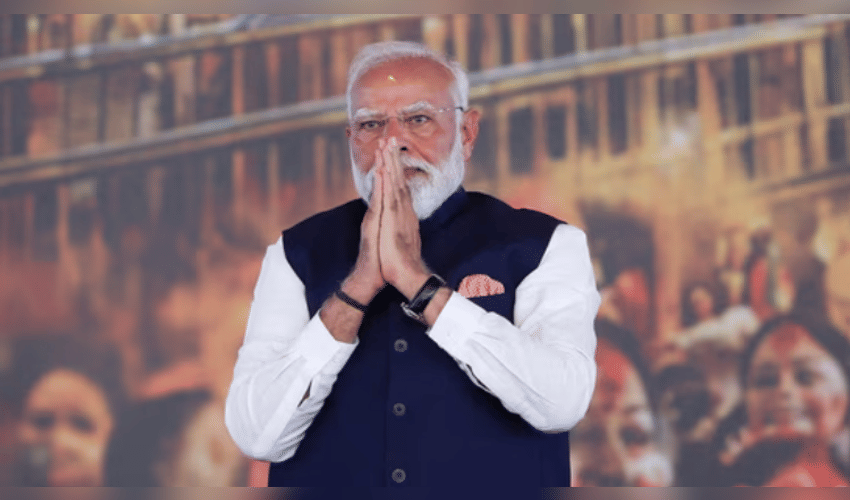

Prime Minister Narendra Modi’s recent appeal urging citizens to save fuel, limit unnecessary travel, and adopt work-from-home (WFH) arrangements wherever possible is not an austerity drive, but a strategic response to global energy volatility, officials and experts have indicated. The appeal has sparked discussion across political and economic circles, with some interpreting it as a sign of tightening or cost control measures. However, government sources suggest the intent is very different. The focus, they say, is on managing fuel demand in the face of unpredictable international crude oil prices rather than reducing economic activity or public spending.
India, which imports a large share of its crude oil, remains sensitive to fluctuations in global energy markets. Recent geopolitical tensions and supply disruptions have added further uncertainty, pushing governments worldwide to adopt precautionary measures to stabilize domestic consumption patterns. The Prime Minister’s message is being viewed as a voluntary behavioural advisory aimed at reducing pressure on fuel demand. Officials emphasize that even small reductions in fuel usage—when multiplied across a population of over a billion—can help ease import dependency and support price stability.
The inclusion of work-from-home suggestions has also drawn attention. However, it is not being positioned as a policy mandate. Instead, it is seen as a flexible option for sectors where remote or hybrid work is already feasible, such as IT, finance, consulting, and other service-based industries. The idea builds on lessons from the COVID-19 period, when large-scale remote work proved operationally viable for many organisations.
Experts underline that this approach differs significantly from austerity measures. Austerity typically involves reducing government expenditure or restricting economic activity due to fiscal stress. In contrast, the current appeal does not involve budget cuts or limitations on business operations. It is being framed as a demand-management strategy, aimed at balancing consumption with external economic pressures.
The government has not announced any enforcement mechanism, and participation in fuel-saving or work-from-home practices remains entirely voluntary. Officials maintain that the objective is to encourage adaptive behaviour during a period of global uncertainty, rather than impose restrictions on mobility or productivity.
India’s dependence on imported crude oil means that global price fluctuations can quickly translate into domestic inflationary pressure. Transportation costs, logistics, and essential goods are particularly sensitive to fuel price movements. By encouraging moderated consumption, policymakers aim to cushion the broader economy from sudden external shocks. As global energy markets remain unstable, the appeal is being positioned as a preventive and flexible measure rather than an austerity initiative. The emphasis, according to officials, remains on maintaining economic stability while promoting small, collective actions that can contribute to national energy resilience.
Disclaimer: This image is taken from Hindustan Times.



