



News
Parliamentary committee to scrutinize defence PSUs' drive towards self-reliance and technological upgrades
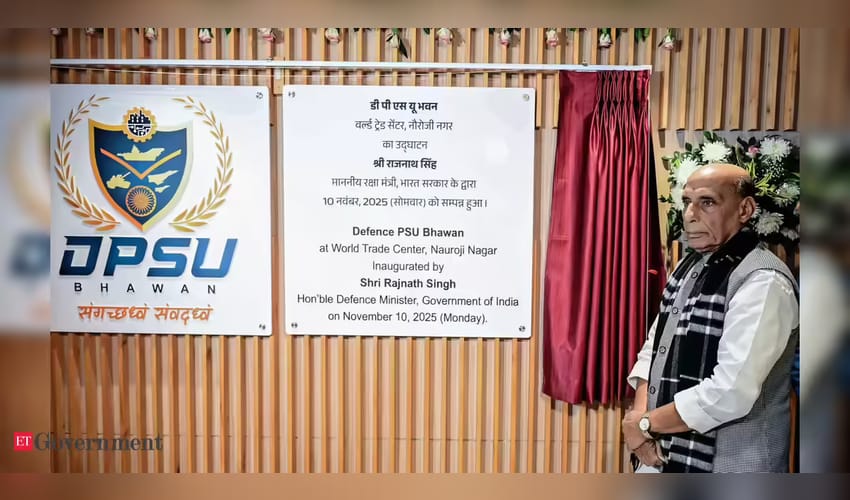

India's push for defence self-reliance is set to come under close parliamentary scrutiny as the Parliamentary Standing Committee on Defence reviews the progress of Defence Public Sector Undertakings (DPSUs) in achieving greater indigenous capability and modernization. The meeting, which includes a briefing from representatives of the Ministry of Defence and major DPSUs, reflects the government's continued focus on strengthening the country's domestic defence manufacturing ecosystem.
Over the past few years, self-reliance in defence production has become a key national priority under the broader vision of Aatmanirbhar Bharat. India has steadily reduced its dependence on imported military equipment by encouraging indigenous research, local manufacturing and collaboration between public sector companies, private industry and startups. The parliamentary review is expected to assess how effectively the country's established defence PSUs are adapting to this changing landscape and whether modernization efforts are keeping pace with the evolving security environment.
Defence Public Sector Undertakings have traditionally played a central role in supplying military hardware to the armed forces. Companies such as Hindustan Aeronautics Limited (HAL), Bharat Electronics Limited (BEL), Bharat Dynamics Limited (BDL), Mazagon Dock Shipbuilders Limited (MDL) and Garden Reach Shipbuilders & Engineers (GRSE) manufacture everything from fighter aircraft and warships to missiles, radars and electronic warfare systems. As military technology becomes increasingly sophisticated, these organizations are under growing pressure to adopt advanced manufacturing methods, improve production efficiency and accelerate innovation.
Modern warfare is changing rapidly, driven by artificial intelligence, autonomous systems, cyber capabilities, precision-guided weapons and next-generation communication technologies. This shift means that defence manufacturers must continuously invest in research and development while upgrading production facilities to remain globally competitive. The parliamentary committee is expected to examine whether DPSUs are making sufficient investments in these areas and how effectively they are incorporating emerging technologies into their product lines.
Another important area of discussion is likely to be the balance between public sector enterprises and the rapidly growing private defence industry. In recent years, Indian private companies have become increasingly active in manufacturing drones, artillery systems, surveillance equipment, aerospace components and electronic systems. Rather than competing with each other, experts believe that stronger collaboration between DPSUs, private firms, startups and academic institutions can accelerate innovation and reduce development timelines.
The review also comes at a time when India's defence exports are expanding steadily. Indigenous platforms, missile systems, naval equipment and surveillance technologies are finding buyers in several friendly countries. Improved manufacturing capabilities within DPSUs could further strengthen India's position as a reliable defence exporter while supporting the country's broader strategic and economic objectives. Government leaders have repeatedly emphasized that a strong domestic defence industry not only enhances national security but also generates employment, promotes technological innovation and contributes to economic growth.
Industry observers believe the committee's discussions may also focus on project execution, production timelines and financial performance. Delays in delivering major defence platforms have historically been a concern, making timely modernization and better project management essential for meeting the operational requirements of the armed forces. Enhancing supply chains, increasing automation and improving coordination among stakeholders are viewed as important steps toward achieving greater efficiency.
The parliamentary review is not merely an administrative exercise; it provides lawmakers with an opportunity to evaluate whether public sector defence companies are fully aligned with India's long-term strategic goals. Recommendations emerging from the committee could influence future policy decisions, investment priorities and institutional reforms aimed at strengthening indigenous defence production.
As geopolitical uncertainties continue to evolve and military technologies advance at an unprecedented pace, India's emphasis on self-reliance has become more significant than ever. A modern, technologically capable and globally competitive defence manufacturing base is increasingly seen as essential for ensuring national security while reducing dependence on foreign suppliers.
The outcome of the parliamentary review will therefore be closely watched by policymakers, defence manufacturers and industry experts alike. While India's defence sector has made considerable progress over the past decade, continued modernization, faster innovation and stronger collaboration across the public and private sectors will determine how successfully the country achieves its ambition of becoming a global hub for advanced defence manufacturing.
Disclaimer: This image is taken from Government.Economict



