



Asia In News
Pak Leader Slams Military Over Security Fiasco, Uses 'Pomegranate' Jab
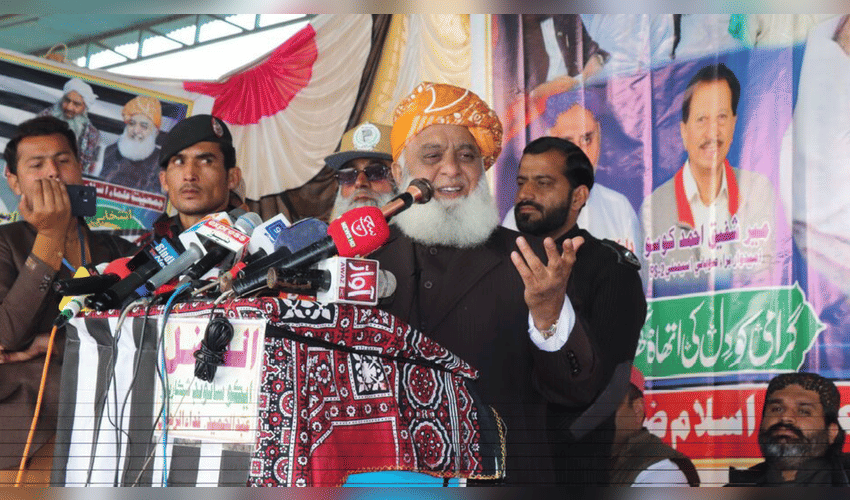

Pakistan’s long‑running tussle between civilian politicians and the military took centre stage once again as senior opposition leader Maulana Fazl‑ur‑Rehman tore into the country’s security establishment with a sharp comparison involving pomegranates. The Jamiat Ulema‑e‑Islam (Fazl) chief took aim at Pakistan’s Afghan and security policies, questioning why militants continue to cross the border while even basic agricultural goods face obstacles. “Not a single pomegranate or melon can enter Pakistan from across the border, yet terrorists keep crossing with relative ease,” he said, blending sarcasm with a serious critique of border controls.
Rehman accused the government of following a “miserable” Afghan policy that has strained relations and left domestic security exposed. He demanded that if the state blames Afghanistan for attacks inside Pakistan, its first duty is to either stop terrorists at the frontier or eliminate them once they arrive. He also questioned the shifting stance of top military figures, noting that while one former army chief spoke of negotiations, another called for war—reflecting what he described as an erratic, military‑driven approach to national policy.
Rehman turned to economic diplomacy, singling out the China‑Pakistan Economic Corridor (CPEC). “China no longer trusts us,” he claimed, adding that the project has stalled partly due to Pakistan’s perceived lack of reliability. He asked whether even a single meaningful brick has been laid under the current leadership, underscoring growing public frustration with flagship initiatives that remain stuck in limbo.
The “pomegranate” remark quickly drew attention for turning a complex security and trade issue into a relatable, everyday metaphor. The image of strictly controlled trade in fruit and vegetables contrasted with the apparent ease of militant infiltration has fuelled debate on how effectively Pakistan’s border management really functions. Afghan officials have consistently rejected Pakistan’s blame‑shifting, calling accusations “irresponsible and baseless” and insisting that attacks must be examined through the lens of internal security lapses rather than cross‑border scapegoating.
Rehman’s comments come days after a deadly mosque bombing in Islamabad claimed dozens of lives and injured many more, underscoring persistent security vulnerabilities that have become a central talking point in Pakistan’s political discourse. With the military’s role in governance and security once again under public scrutiny, such fiery rhetoric may further complicate the already delicate balance between elected leaders and the powerful armed forces.



