



Entertainment
Lionel Messi's Argentina Career: The Five Moments That Shaped His International Legacy
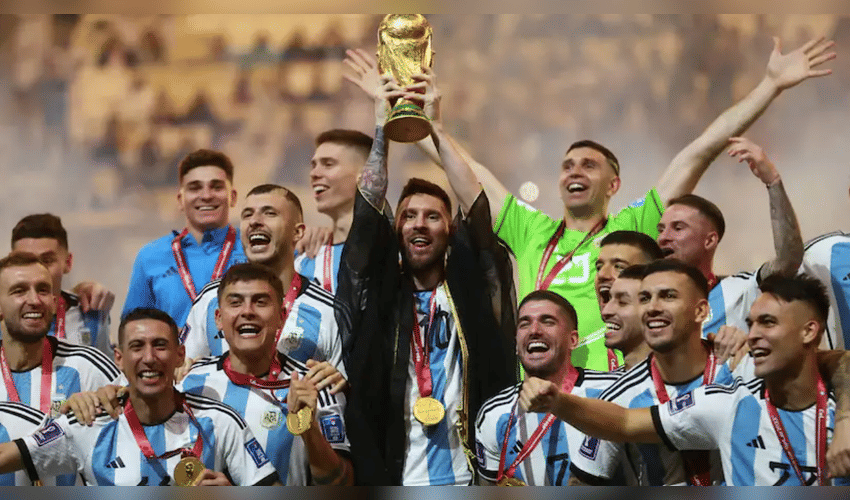

Lionel Messi’s 21-year journey with Argentina has been anything but straightforward. His international career has included extraordinary victories, painful final defeats, moments of self-doubt and, ultimately, the biggest trophies in world football. From Olympic success early in his career to finally lifting the World Cup as captain, Messi’s story with Argentina has evolved into one of football’s greatest international journeys.
When Messi first emerged as a global star, expectations surrounding him were enormous. At the 2008 Beijing Olympics, he was already showing glimpses of the player he would become. Argentina entered the tournament with a formidable squad featuring Messi, Juan Roman Riquelme, Javier Mascherano, Sergio Aguero and Angel Di Maria. Messi scored twice during the group stage and continued to influence the team as they moved through the knockout rounds.
Argentina defeated the Netherlands in extra time in the quarter-finals before producing a convincing win over Brazil in the semi-final. The final against Nigeria was decided by a single goal, with Di Maria producing a memorable finish over the goalkeeper. Argentina's 1-0 victory allowed them to retain their Olympic title and gave Messi his first major international success. It also began his long association with Di Maria, who would later become one of his most important teammates during Argentina's trophy-winning era.
For years after that success, however, Messi's senior international career was overshadowed by disappointment. Argentina reached major finals but repeatedly fell short. The defeats in the 2014 World Cup final and the Copa America finals of 2015 and 2016 became some of the most painful chapters of his career. His frustration eventually reached a point where he announced his retirement from international football following the 2016 Copa America final, although he later returned.
Everything changed at the 2021 Copa America. Argentina met Brazil in the final at the Maracana, the same stadium where Messi had experienced World Cup heartbreak seven years earlier. This time, the ending was completely different. Angel Di Maria scored the only goal of the match after receiving a pass from Rodrigo De Paul and lifting the ball over goalkeeper Ederson.
Argentina's victory ended a 28-year wait for a major senior men's international trophy. For Messi, it was a deeply personal breakthrough. He finished the tournament with four goals and five assists and was among its standout performers. The celebrations after the final were filled with emotion as Messi embraced his teammates and celebrated with his family. After years of disappointment, he finally had a major senior trophy with Argentina.
The success was followed by another memorable international performance at Wembley in 2022. Argentina faced Italy in the Finalissima, which brought together the winners of the Copa America and European Championship. Messi did not score, but his influence was impossible to miss. He repeatedly created problems for Italy's defence and supplied two assists as Argentina secured a 3-0 victory.
Lautaro Martinez opened the scoring after a move involving Messi, while Di Maria added a second before half-time. Paulo Dybala completed the win in stoppage time. The result extended Argentina's unbeaten run and provided another indication that Lionel Scaloni's side had developed into a confident and highly competitive team. The Finalissima also served as an important bridge between Argentina's Copa America triumph and what would soon become the greatest achievement of Messi's career.
Argentina's World Cup campaign began with a stunning 2-1 defeat against Saudi Arabia, immediately putting pressure on Messi and his teammates. Instead of collapsing, Argentina responded with a series of strong performances and progressed all the way to the final. France stood between Messi and the one trophy that had remained beyond his reach. The final quickly became a classic. Messi scored from the penalty spot as Argentina took control, and the South Americans appeared to be heading toward victory after building a two-goal lead. France, however, fought back through Kylian Mbappe, forcing the game into extra time after a 2-2 scoreline.
Messi scored again in extra time, but Mbappe completed his hat-trick to make it 3-3 and send the match to penalties. This time, there would be no heartbreak for Messi. He converted Argentina's first penalty, goalkeeper Emiliano Martinez produced crucial saves and Gonzalo Montiel scored the decisive kick. Argentina were world champions, and Messi had finally lifted the trophy that had defined so much of his international career. He scored seven goals and provided three assists during the tournament while winning the Golden Ball. More importantly, the victory reshaped his standing in Argentine football. The comparisons with Diego Maradona would continue, but Messi had now created a World Cup legacy of his own.
His international story did not end in Qatar. Messi returned for the 2024 Copa America as Argentina attempted to defend their continental title. The final against Colombia became another emotional chapter. Messi suffered an injury during the match and was forced to leave the field in the second half. Sitting on the bench, he was visibly emotional as Argentina continued without their captain. The game remained scoreless after regulation time, but Lautaro Martinez eventually found the breakthrough in extra time, scoring the goal that gave Argentina a 1-0 victory.
Messi celebrated from the sidelines as his teammates lifted another major trophy. The victory gave Argentina an extraordinary run of success, following the 2021 Copa America and 2022 World Cup with another Copa America title in 2024. The significance of that victory went beyond another medal for Messi. Earlier in his career, Argentina had often been expected to rely on him for the decisive moment. By 2024, the team had developed enough depth and belief to finish the job even when their captain was unable to remain on the pitch.
Messi's international legacy, therefore, cannot be reduced to a single goal or trophy. It is the story of persistence through years of disappointment and the eventual transformation of Argentina into one of the world's most successful international teams. Olympic gold in Beijing provided the first glimpse of what was possible, while the Copa America triumph at the Maracana finally ended his long wait for a senior title. The Finalissima demonstrated Argentina's resurgence, the World Cup in Qatar completed Messi's greatest ambition, and the 2024 Copa America confirmed that the team's success had become larger than any individual player. After more than two decades representing Argentina, Messi's international career stands as a remarkable combination of talent, resilience and achievement. The player who once carried the weight of repeated final defeats eventually became the captain who led Argentina back to the top of world football.



