



Economy
JM Financial says PM Modi's push for austerity may indicate upcoming economic restrictions amid the ongoing West Asia conflict.
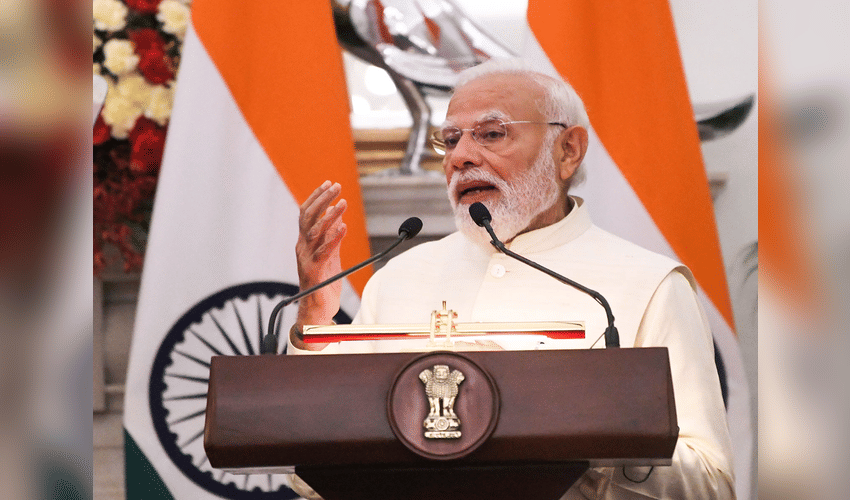

The brokerage noted that the Prime Minister’s emphasis on conserving foreign exchange reserves — by cutting down on gold imports, reducing fuel and fertiliser usage, and limiting non-essential foreign travel — appeared deliberate and may serve as a warning ahead of gradual policy interventions if the geopolitical crisis persists.
According to the report, oil contributes nearly 20% of India’s total imports, while gold accounts for around 9% and fertilisers about 2%. It also highlighted that nearly 58% of outward remittances under the Liberalised Remittance Scheme (LRS) during FY25 were linked to overseas travel. Although India currently holds healthy foreign exchange reserves of about USD 690 billion, enough to cover roughly 11 months of imports, JM Financial cautioned that prolonged supply disruptions could force the government to introduce stricter measures.
The report observed that crude oil prices have stayed above USD 100 per barrel since the outbreak of the West Asia conflict in February 2026, putting pressure on India’s current account and weakening the rupee. It estimated that the rupee depreciated by 10% against the US dollar in FY26, with nearly 4% of the decline attributed to the ongoing conflict.
JM Financial warned that if disruptions continue for several more weeks, India may experience slower economic growth and a widening current account deficit. In its worst-case scenario, GDP growth could slow to 6–6.5%, while the current account deficit may rise to 1.9% of GDP. The report also mentioned that several Asian countries, including South Korea, Indonesia, Myanmar, and Vietnam, have already advised citizens to reduce fuel consumption, while the Philippines has declared a national energy emergency.
On India’s possible course of action, the brokerage expects the government to adopt a gradual strategy rather than impose sudden restrictions. Possible measures could include phased fuel price hikes, temporary reductions in LRS limits, and increased duties on gold imports, particularly as the wedding season weakens.
The brokerage further noted that stock markets reacted negatively to the Prime Minister’s remarks, as investors grew concerned about potential fiscal tightening and rising import costs. JM Financial concluded that the Prime Minister’s speech should be seen as a signal to markets that additional austerity measures may be introduced in the coming weeks if the West Asia conflict continues. The report also recommended expanding India’s strategic petroleum reserves to better prepare for future supply shocks.
Disclaimer: This image is taken from ANI.



