



News
India's First Hydrogen-Fuelled Train Begins Journey as PM Modi Inaugurates Service in Jind
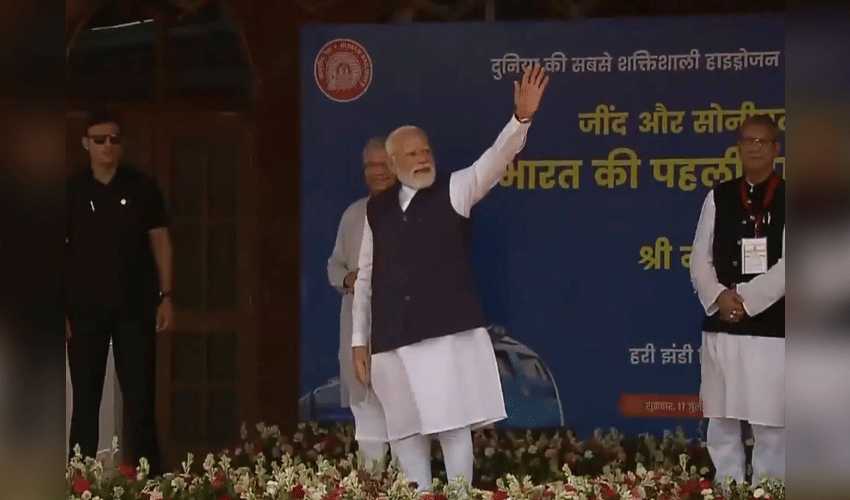

Prime Minister Narendra Modi on Friday inaugurated India's first hydrogen-powered train from Jind in Haryana, marking a significant step in the country's transition towards cleaner transportation and strengthening indigenous technology under the Atmanirbhar Bharat initiative. The hydrogen-powered train will run on the 89-kilometre Jind-Sonipat route, connecting Jind Junction, Gohana Junction and Sonipat while stopping at intermediate stations along the way. With this launch, India joins a select group of nations that have introduced hydrogen-powered rail services.
Union Railways Minister Ashwini Vaishnaw hailed the project as a major breakthrough for Indian engineering, noting that the complete propulsion system and core technology were designed and developed within the country. Highlighting the importance of self-reliance in emerging energy technologies, Vaishnaw said hydrogen represents the future of clean transportation, and developing the technology domestically is crucial for India's long-term goals. He added that Indian Railways now owns the intellectual property rights for the entire hydrogen propulsion system, making the country capable of advancing and exporting the technology.
According to the Ministry of Railways, the train uses hydrogen fuel cells to generate electricity onboard by combining hydrogen and oxygen. The only by-products of this process are water vapour and heat, making the train an environmentally friendly alternative with virtually zero emissions during operation. Unlike conventional electric trains, the hydrogen-powered train does not rely on overhead electric wires. The 10-coach train comprises two hydrogen-powered driving cars and eight passenger coaches, with a capacity to carry around 2,600 passengers.
Although the train has been designed to reach speeds of up to 110 kmph, it will initially operate at a maximum speed of 75 kmph on the Jind-Sonipat section. Explaining how the system works, Vaishnaw said hydrogen is produced from water through an electrolyser facility. The hydrogen is then converted into electricity inside fuel cells, which power the train's electric motors. He emphasized that every stage of the technology—from hydrogen production to propulsion—has been developed in India, with all associated intellectual property rights remaining with the country.
To support the project, Indian Railways has established the country's first integrated hydrogen railway ecosystem at Jind. The facility includes infrastructure for hydrogen generation, storage, compression and refuelling. It can store nearly 3,000 kilograms of hydrogen and has received approval from the Petroleum and Explosives Safety Organisation (PESO).
Addressing safety concerns, the Railway Minister said the train underwent extensive testing and independent evaluation by Germany-based certification agency TUV SUD, ensuring compliance with global safety standards. The train is fitted with multiple safety systems, including sensors that detect hydrogen leaks, heat, flames and smoke. It also features automatic hydrogen shut-off mechanisms, continuous ventilation and emergency response systems.
Vaishnaw explained that hydrogen levels are continuously monitored, and if the concentration rises above 0.25 per cent, the train's safety mechanisms are automatically activated. Since the risk threshold is significantly higher, he said the system provides a substantial safety margin. The hydrogen train project has been developed under the guidance of Indian Railways, with technical specifications prepared by the Research Designs and Standards Organisation (RDSO). The ministry said the initiative aligns with the National Green Hydrogen Mission and supports India's broader objective of achieving net-zero carbon emissions.
Vaishnaw also noted that only a handful of countries currently operate hydrogen-powered trains. He said India's ownership of the underlying technology creates opportunities to export hydrogen rail solutions to other nations in the future. During his visit to Haryana, Prime Minister Modi also dedicated key stretches of the Delhi-Amritsar-Katra Expressway to the nation. The expressway is expected to significantly reduce travel time, cutting the Delhi-Katra journey from around 14 hours to nearly six hours and reducing travel between Delhi and Amritsar from about eight hours to roughly four hours.
According to the Prime Minister's Office, Modi inaugurated the 157.92-kilometre four-lane Packages 1 to 5 of the Greenfield expressway, built at an estimated cost of ₹9,680 crore, in Jind. Later, he also inaugurated the 30.9-kilometre Package 6 in Jalandhar, Punjab. Once fully operational, the 667-kilometre Delhi-Amritsar-Katra Expressway is expected to improve connectivity to the Shri Mata Vaishno Devi shrine, ease congestion on National Highway-44, and stimulate industrial growth, trade and logistics across the region.



