



Military
India plans to buy 31 more Rafale Marine jets from France amid a 39 billion dollar Air Force deal.
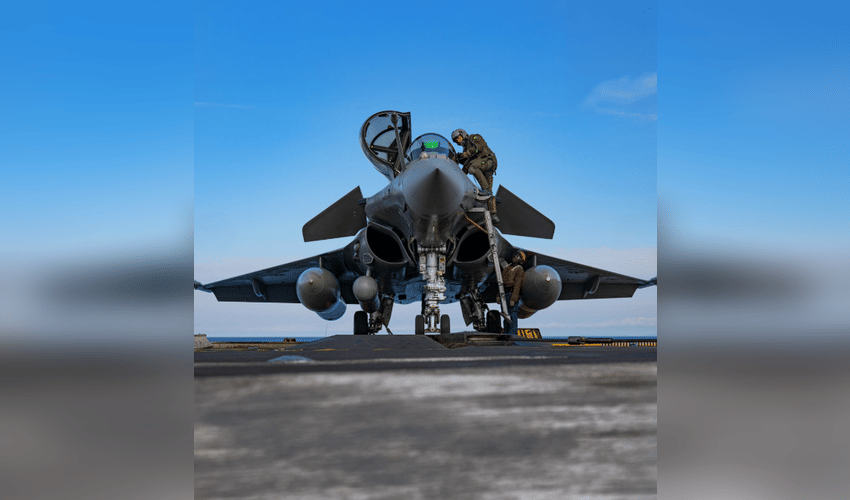

India has reportedly approached France to supply 31 additional carrier-based Dassault Rafale Marine fighter jets for the Indian Navy. This request comes alongside India’s parallel effort to procure 114 Rafale jets for the Indian Air Force under the Multi-Role Fighter Aircraft program, aimed at strengthening its combat fleet.
The report, published by La Tribune, surfaced shortly after India’s Defence Acquisition Council granted Acceptance of Necessity for the Air Force’s fighter requirement. This approval represents an important procedural step, allowing the acquisition process to move forward. The massive ₹3,23,000 crore deal could gain momentum during the upcoming visit of Emmanuel Macron to India between 17 and 19 February 2026, as such visits often facilitate major defence agreements.
India currently operates 36 Rafale fighters acquired through a 2016 government-to-government agreement. These jets have significantly enhanced the country’s airpower. Separately, in April 2025, the Navy signed a contract for 26 Rafale Marine aircraft, with deliveries expected to conclude by 2030, reflecting India’s broader naval modernisation plans.
A key factor behind selecting the Rafale Marine was its compatibility with STOBAR aircraft carriers. In 2022, Dassault Aviation conducted successful trials at India’s shore-based test facility in Goa, demonstrating its ability to perform short takeoffs and arrested landings. These tests replicated operations from India’s aircraft carriers INS Vikrant and INS Vikramaditya, confirming the aircraft’s suitability without requiring major modifications.
The additional 31 jets would expand the Navy’s Rafale Marine fleet to 57 aircraft, exceeding France’s current naval Rafale strength. These fighters are expected to operate from both carriers and perform multiple roles, including air defence, strike missions, maritime attacks, and electronic warfare. One of the main goals of this acquisition is to replace the Navy’s aging MiG-29K fleet, which has faced ongoing maintenance and reliability problems. The Rafale Marine offers improved sensors, avionics, and weapons systems, making it a more capable and dependable alternative.
The Air Force’s MRFA program aims to address declining squadron numbers, with the Rafale emerging as a leading contender over rivals such as the Eurofighter Typhoon and F/A-18 Super Hornet. Choosing the same aircraft for both services would streamline logistics, reduce maintenance costs, and simplify training.
Defence cooperation between India and France has steadily expanded, supported by previous fighter deals, naval agreements, joint exercises, and technology sharing. The potential new agreements may also include local manufacturing components under India’s domestic production initiatives, benefiting companies such as Hindustan Aeronautics Limited.
These purchases are also seen as part of India’s broader strategy to counter growing naval activity in the Indian Ocean and enhance its maritime strike capability. The Rafale Marine’s advanced electronic warfare systems and long-range missiles offer a significant technological advantage, while its compatibility with indigenous weapons strengthens defence self-reliance.
Although budget considerations remain, the approval granted so far indicates strong government commitment. The arrival of the first batch of naval Rafales by 2030, along with possible additional aircraft, will support India’s long-term goal of building a powerful and modern carrier-based air force, making the Rafale a central element of its future military strength.



