



Economy
India Emerges as the World's Largest Tokenised Market for Online Card Payments, Says Visa
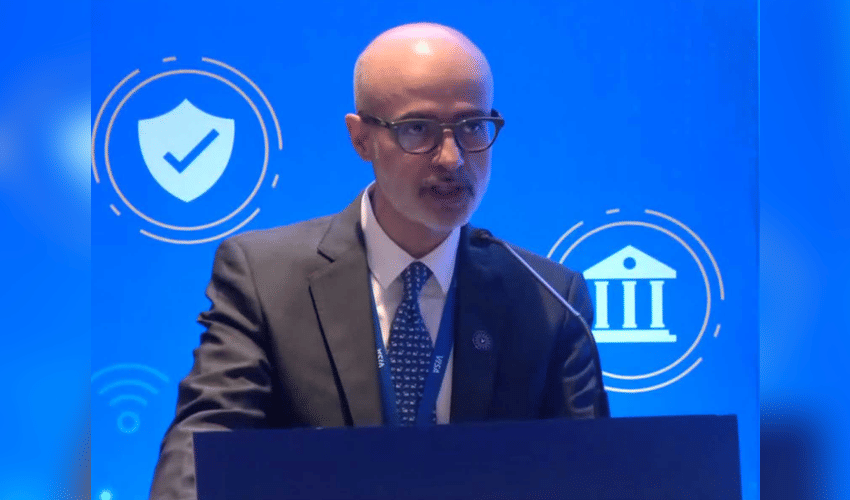

India has emerged as the world's leading market for tokenised online card payments, with over 900 million payment tokens currently in use, according to Visa's Group Country Manager for India and South Asia, Suresh Sethi. Speaking at the launch of Visa Payment Passkey in Mumbai on Thursday, Sethi said India's digital payments ecosystem has undergone a remarkable transformation and is now entering a new phase centred on security, trust and seamless user experiences.
He revealed that India now accounts for more than 900 million payment tokens, including nearly 500 million Visa tokens, making it the largest tokenised market for online card transactions globally. Sethi explained that India's digital payments journey has progressed through three distinct stages. The first phase focused on expanding financial inclusion through the Jan Dhan-Aadhaar-Mobile (JAM) framework, which brought millions of people into the formal banking system. The second phase was characterised by rapid adoption and scale, driven by initiatives such as the Unified Payments Interface (UPI), card tokenisation and widespread merchant acceptance, making digital payments a preferred mode of transaction across the country. According to him, India is now moving into a third phase where strengthening trust and security has become the primary objective.
He credited the Reserve Bank of India (RBI) for creating a progressive regulatory environment that has significantly enhanced the safety of digital payments. Sethi described tokenisation as one of the most impactful measures introduced by the central bank, adding that the RBI has also enabled new methods of additional factor authentication beyond traditional one-time passwords (OTPs). As part of this next phase, Visa unveiled Visa Payment Passkey, a new authentication solution that allows users to verify online card transactions using fingerprint recognition, facial authentication, a device PIN or a screen pattern instead of OTPs.
Built on globally recognised FIDO standards, the technology is designed to improve payment security while offering a smoother checkout experience. By relying on the security features already integrated into smartphones and other devices, the system aims to reduce the risk of OTP phishing and simplify the authentication process for consumers. Sethi said the rapid growth of artificial intelligence is reshaping the digital commerce landscape, making stronger authentication systems increasingly essential. He noted that as AI-powered assistants and connected devices become more involved in online transactions, the need for secure, frictionless and resilient payment authentication will only continue to grow.



