



News
India and Japan Seal AI, Economic Security Agreements Following Modi-Takaichi Summit
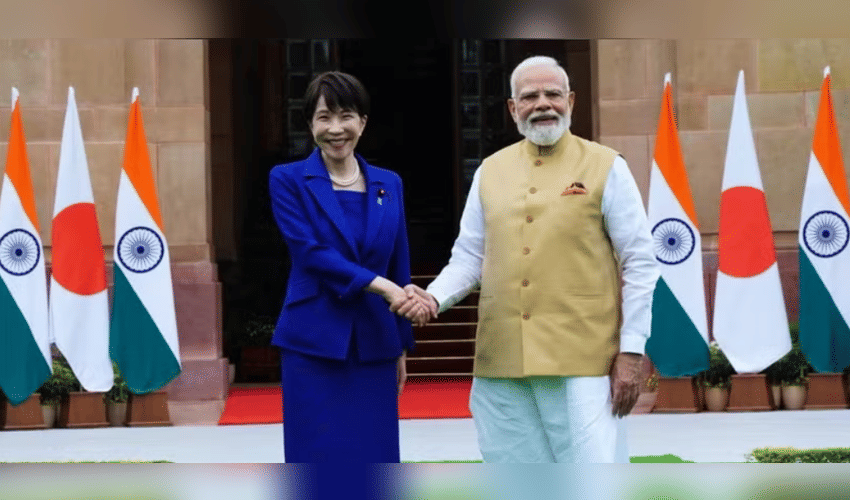

India and Japan on Thursday signed a broad range of agreements to strengthen cooperation in economic security, clean energy, artificial intelligence (AI), defence technology, healthcare and maritime security after summit-level talks between Prime Minister Narendra Modi and his Japanese counterpart, Sanae Takaichi.
Takaichi is on a three-day official visit to India from July 1 to 3 at the invitation of Prime Minister Modi. Her visit is aimed at further deepening the strategic and economic partnership between the two countries at a time of increasing geopolitical and economic uncertainty. Addressing a joint press conference in New Delhi after the talks, PM Modi said India and Japan had adopted a joint roadmap on economic security to build resilient supply chains in critical sectors such as semiconductors, quantum technologies and advanced materials. He noted that both countries share a common understanding of the growing importance of economic and energy security in an increasingly unpredictable global environment.
The two leaders also announced a joint statement on cooperation in artificial intelligence, reflecting their commitment to expanding collaboration in advanced technologies. PM Modi said the partnership between Japan's expertise in precision engineering and India's strength in software and digital innovation would accelerate global AI development and create new opportunities for technological progress.
In the defence sector, India and Japan signed an agreement for their first joint defence co-development project involving the naval radio antenna system known as "Unicorn." PM Modi described the project as a milestone in bilateral defence ties, saying it would pave the way for closer cooperation in developing advanced defence technologies while contributing to regional peace, maritime security and a rules-based international order.
The two countries also expanded cooperation in healthcare by signing agreements covering pharmaceuticals, medical devices and biotechnology. PM Modi said India's large-scale manufacturing capabilities, combined with Japan's high standards of quality and innovation, could help provide affordable and advanced healthcare solutions to people around the world.
Energy security emerged as another major focus of the summit. The leaders announced several initiatives, including a new energy resilience programme designed to address challenges such as global oil supply disruptions. Cooperation in battery technology, green hydrogen and nuclear energy is also expected to strengthen the transition towards cleaner and more sustainable sources of energy.
Highlighting rural sustainability, the two sides launched the India-Japan Biogas Initiative, which aims to establish around 1,000 biogas and organic fertiliser plants across India. The initiative is expected to complement the Centre's GobarDhan programme while promoting sustainable agriculture, improving rural livelihoods and supporting environmental conservation.
The summit also saw the launch of the India-Japan Next-Generation Mobility Partnership Framework, which seeks to enhance collaboration in future transportation technologies and smart mobility solutions. The new agreements reflect the growing depth of the India-Japan strategic partnership and underline both countries' shared commitment to technology-driven growth, resilient supply chains and long-term regional stability.



