



World
How Social Media Rumours Turned Ceuta Into a Deadly Migrant Flashpoint
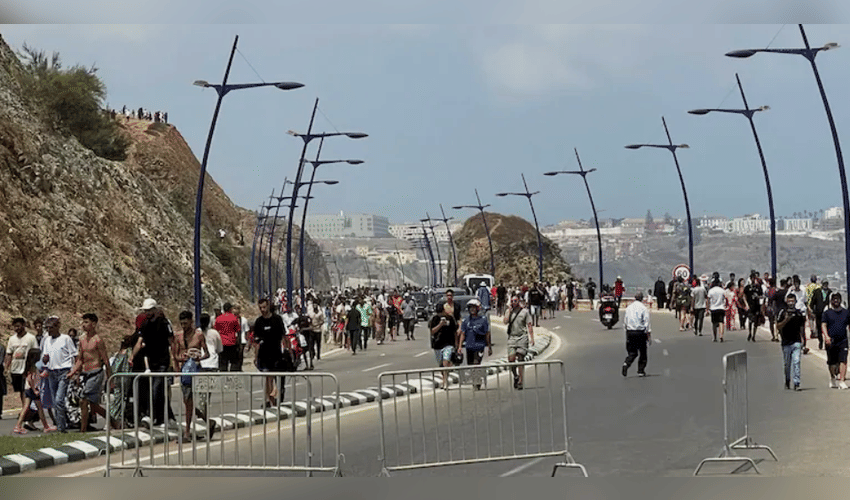

A wave of rumours spreading across social media has been blamed for helping trigger a massive migrant rush into Spain’s North African enclave of Ceuta, turning misleading online claims into a deadly real-world crisis. Thousands of people attempted to reach Ceuta from Morocco after posts and videos circulated claiming that Spain had relaxed its border rules and that migrants who managed to enter the territory would be allowed to stay. The claims spread rapidly through platforms including TikTok, Facebook and WhatsApp, encouraging people to make the dangerous journey before the supposed opportunity disappeared.
The resulting movement overwhelmed the small Spanish territory and left dozens of people dead, many of them after attempting to swim through the waters separating Morocco from Ceuta. The crisis was driven by more than misinformation alone. Economic hardship, unemployment and the long-standing desire among many young Moroccans to reach Europe created fertile ground for the rumours. Social media, however, appeared to provide the immediate trigger that transformed individual migration plans into a mass movement.
Some of the most widely circulated claims were linked to a misunderstanding of a Spanish Supreme Court ruling concerning migrants who arrive by sea. Posts and videos reportedly gave the impression that reaching Spanish territory would make it difficult for authorities to return migrants to Morocco. In reality, the legal situation was considerably more complicated, and there was no blanket guarantee that people reaching Ceuta would be permitted to remain in Spain.
By the time official explanations began reaching the public, the rumours had already travelled widely. Videos posted by people who had previously reached Ceuta played an important role in reinforcing the perception that the journey was achievable. Short clips could show migrants arriving safely on Spanish territory without revealing the dangers involved in crossing the sea, the possibility of detention or return, or the difficulties faced after arrival.
For people already considering migration, such footage could be far more persuasive than an official government statement. The scale of the movement quickly became apparent. Large groups gathered near the Moroccan side of the border, with many attempting to reach Ceuta by sea. The situation became particularly dangerous as people tried to cross simultaneously, with exhaustion, rough conditions and overcrowding contributing to the loss of life.
The deaths have raised concerns about the role of social media in encouraging dangerous migration journeys. Authorities and experts have increasingly warned that misinformation can have serious consequences when it involves sensitive issues such as immigration laws, border controls and claims about supposedly easy routes into Europe. The Ceuta episode also demonstrates why it would be inaccurate to blame the crisis entirely on social media. Economic conditions remain an important factor behind migration from Morocco and other parts of North Africa. Young people facing unemployment or limited opportunities may already be considering leaving the country. A rumour promising an easier route can therefore act as a catalyst rather than the underlying cause.
The situation also illustrates how difficult it can be to stop misinformation once it begins spreading online. A misleading claim can be copied, translated, edited and reposted thousands of times within hours. When it moves into private messaging groups, authorities and fact-checkers have even less ability to identify its original source or reach everyone who has received it. Another concern is the role of criminal networks. People-smuggling groups can exploit viral rumours by providing information about routes and border conditions while encouraging migrants to take risks. However, available reporting has not established evidence of a single organisation or government being responsible for orchestrating the entire movement.
The crisis appears to have resulted from several factors coming together at the same time: existing economic pressures, migration aspirations, misleading legal claims, rapidly spreading social media content and the availability of information about routes into Ceuta. The aftermath has been equally challenging for Spanish authorities. Many migrants returned to Morocco, while others remained in Ceuta and required accommodation and assistance. The sudden arrival of large numbers of people placed additional pressure on the enclave's already limited resources.
The Spanish authorities have also faced pressure to strengthen border security and prevent another mass crossing. At the same time, the deaths have intensified debate over whether governments are doing enough to counter false information before it encourages people to undertake potentially fatal journeys. For Spain and the European Union, the Ceuta crisis is therefore about more than border control. It highlights a growing challenge in which online misinformation can directly influence events on the ground.
Social media has changed the way migrants share information. In the past, knowledge about routes and border conditions might have travelled through relatives, friends or organised networks. Today, a single viral video can reach thousands of potential migrants almost instantly. That speed can be dangerous when the information is incomplete or false. The tragedy in Ceuta serves as a reminder that what appears to be an ordinary social media rumour can have consequences far beyond the screen. For people making decisions about dangerous migration journeys, inaccurate information can mean the difference between turning back and taking a risk that could cost them their lives.
The incident is likely to add pressure on Spanish authorities, Moroccan officials and social media companies to improve the way migration-related misinformation is identified and challenged. It also underlines the need for clear and accessible information about immigration rules, legal procedures and the risks associated with irregular crossings. The Ceuta crisis was not caused by one viral post or a single factor. It was the result of desperation meeting misinformation at extraordinary speed. The deadly consequences show how quickly an online rumour can move from smartphones to streets, borders and, tragically, the sea.



