



Technology
Former Google CEO Eric Schmidt Booed During Graduation Speech on AI: What Happened?
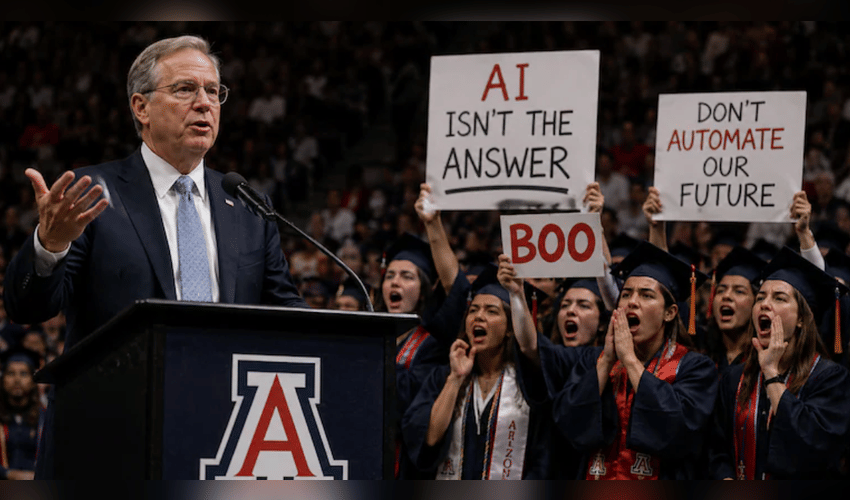

Former Google CEO Eric Schmidt faced a strong negative reaction during a graduation ceremony at the University of Arizona after speaking about artificial intelligence (AI), highlighting growing concerns among students about the future of work. Schmidt, who served as the CEO of Google during its rapid global expansion, was invited as a commencement speaker to address graduating students. However, his speech took an unexpected turn when he discussed the increasing role of AI in shaping careers and industries.
According to reports from the event, parts of the audience responded with boos when Schmidt spoke about how artificial intelligence is transforming the job market and may significantly change entry-level employment opportunities in the coming years. The reaction reflected unease among students who are entering a competitive job market already influenced by automation and AI-powered tools. Many young graduates today are increasingly concerned about job security, reduced hiring in traditional roles, and the possibility of machines replacing routine tasks.
Despite the backlash, Schmidt reportedly encouraged students to adapt to technological change and focus on building skills that align with emerging digital trends. His remarks emphasized that AI will not only disrupt industries but also create new opportunities for innovation and employment. The incident comes at a time when AI remains a highly debated topic in academic and professional circles. While industry leaders often highlight its potential for growth and efficiency, students and job seekers continue to express concerns about its impact on employment and career stability.
The graduation ceremony episode has sparked wider discussion on the growing gap between tech optimism and workforce anxiety, especially as artificial intelligence becomes more integrated into everyday life. As AI continues to evolve, similar reactions are expected to emerge in educational institutions where future professionals are directly confronted with its implications.



