



Asia In News
Former Army Chief Gen MM Naravane: China Is a Strategic Competitor, Pakistan Continues to Pose a Security Challenge
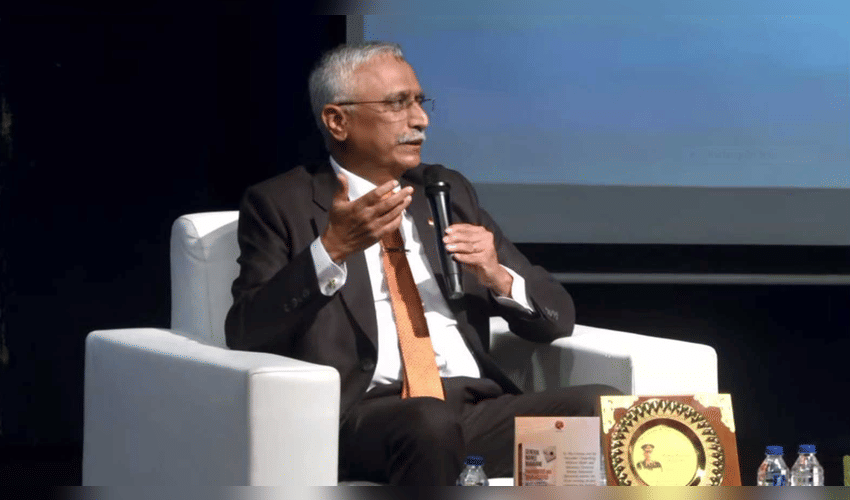

Former Army Chief General Manoj Mukund Naravane (Retd) has said that China is likely to emerge as India’s main long-term competitor, while Pakistan will continue to pose a major security challenge because of its alleged support for terrorism. Speaking at the Pune launch of his book The Curious and the Classified: Unearthing Myths and Mysteries, Naravane stressed the importance of distinguishing between a competitor and an enemy. He said India and China are expected to compete across political, economic, trade and military spheres in the coming years. While such competition could lead to disagreements and tensions, he argued that India should make every effort to address differences with Beijing through talks and diplomacy.
Naravane said the use of military force should remain the last option. At the same time, he emphasised that India must maintain strong and credible military deterrence so that potential adversaries are discouraged from attempting any military misadventure. According to him, maintaining prepared and capable armed forces is essential for preserving peace.
Discussing Pakistan, the former Army chief said the country remains a significant challenge for India, particularly because the two nations have fought wars and continue to face unresolved issues along their borders. He noted that India's focus on its western frontier is closely linked to the terrorism threat emanating from Pakistan. However, he added that the relative priority given to the Chinese and Pakistani challenges could change depending on how the regional situation develops.
Naravane also spoke about Pakistan-occupied Kashmir (PoK) and Balochistan, saying India's policy should remain consistent with its approach of avoiding interference in the internal affairs of neighbouring countries. He referred to India's parliamentary position that PoK is an integral part of the country and noted that there is no fixed timeline for any possible future change in the region's status.
He clarified that India's claim over PoK does not necessarily mean that the territory would be captured through military action. According to Naravane, if any future integration were ever to take place, questions surrounding the process and the aspirations of the people living there would also have to be addressed.
Drawing on India's experience in the Northeast, Naravane said winning the confidence of local populations is a long-term process. He recalled how several northeastern states experienced insurgency in earlier decades but said development, government policies and greater integration gradually helped strengthen people's connection with the rest of India. He suggested that similar efforts could be important in addressing challenges involving populations in any future territorial arrangement.
Naravane further underlined the importance of stability in India's neighbourhood. He said instability in neighbouring countries can have direct consequences for India, citing the refugee influx from Myanmar as an example. He also warned that unrest along India's borders can create opportunities for smuggling, drug trafficking, illegal weapons and narcotics networks.
According to the former Army chief, India therefore has a strategic interest in seeing its neighbours remain stable. He argued that instability in surrounding countries should not be viewed as an advantage because its consequences can eventually spill across India's borders. Naravane made the remarks while interacting with Dr Gaurav Pradhan and Praful Sarda during the launch of his book, published by Rupa Publications.



