



News
FCRA Bill Will Apply Equally to All Faiths, Says Vinay Kwatra; Highlights Transparency in Foreign Funding
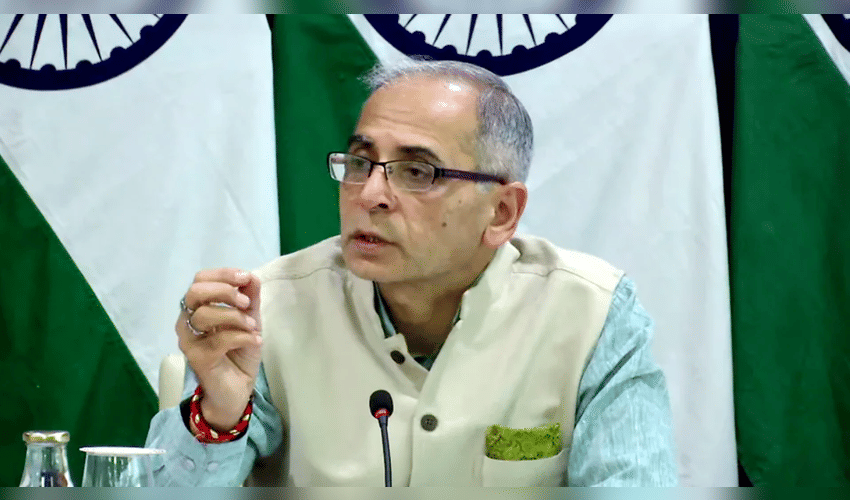

Indian Ambassador to the United States Vinay Mohan Kwatra has said that the proposed changes to the Foreign Contribution (Regulation) Act (FCRA) will apply equally to organisations belonging to all faiths, stressing that the legislation is aimed at improving transparency and accountability in the use of foreign funds.
Kwatra made the remarks amid a growing debate over the proposed FCRA legislation and concerns raised in some quarters about its possible impact on religious organisations and non-governmental organisations receiving overseas contributions. Addressing the issue, the ambassador said the proposed framework should not be viewed as targeting any particular religion or community. The FCRA regulates the receipt and utilisation of foreign contributions by organisations operating in India. Under the existing system, organisations seeking to receive foreign donations are required to meet specific registration and reporting requirements and use the funds in accordance with the law.
Kwatra has argued that the proposed changes are intended to strengthen oversight of foreign contributions and ensure that funds received from overseas sources are used transparently. He has also rejected suggestions that the proposed legislation would prevent legitimate religious or charitable organisations from receiving foreign donations.
The ambassador's comments come after concerns were raised in the United States over the possible effect of the proposed changes on Christian organisations in India. Kwatra maintained that the rules would be religion-neutral and would apply to organisations irrespective of their faith or community background.
According to figures cited by Kwatra, foreign contributions received by FCRA-registered organisations increased from around $1.2 billion in 2010-11 to approximately $2.67 billion in 2024-25. He cited the figures while responding to concerns that India's foreign-funding regulations were preventing organisations from accessing overseas financial support.
The proposed legislation also addresses the handling of assets associated with organisations whose FCRA registration is cancelled, expires or is not renewed. Kwatra said provisions relating to such assets have existed in the regulatory framework and that the proposed changes seek to establish mechanisms for their protection and management.
The issue has attracted attention because a number of Indian NGOs, charitable institutions and religious organisations rely on foreign contributions for activities ranging from education and healthcare to social welfare and religious work. Any changes to the FCRA framework could therefore have implications for organisations that depend on international donations.
India has maintained that regulation of foreign funding is necessary to ensure financial transparency, prevent misuse of funds and address national-security concerns. The government has also pointed to similar regulatory mechanisms in other countries to argue that monitoring foreign financial flows is not unusual. The proposed FCRA changes have nevertheless drawn criticism from opposition parties and sections of civil society, who have raised questions about the scope of government oversight and its potential impact on independent organisations.
With the issue continuing to generate debate in India and abroad, Kwatra's comments seek to reinforce the government's position that the proposed FCRA framework is not directed against any particular faith. Instead, he has presented the legislation as an effort to create greater transparency and accountability in the way foreign contributions are received and utilised in India.



