



Economy
EU considers a dual-strategy plan to overcome the stalemate on economic reforms.
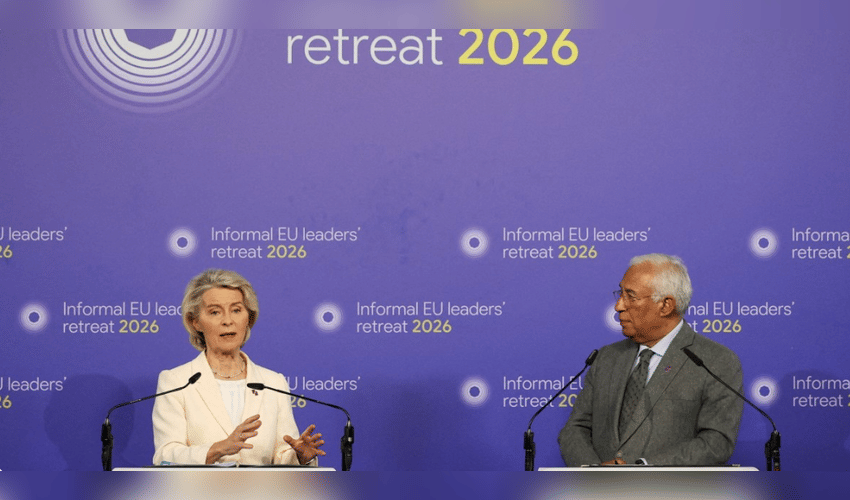

EU governments have long emphasized unity as the strongest way to respond to economic pressure from the United States and China. However, they now realize that Europe must urgently strengthen its competitiveness, and waiting for agreement from all 27 member states could take too much time.
This urgency was highlighted at an informal EU summit in Belgium on Thursday, February 12, where French President Emmanuel Macron and European Commission President Ursula von der Leyen set a June deadline for progress on the long-delayed integration of financial markets. The proposed Capital Markets Union would enable Europe to invest on a scale comparable to the United States, but national interests and resistance from professional groups have stalled progress for over ten years.
If sufficient progress is not achieved by June, a smaller group of at least nine EU countries may move forward independently under an “enhanced cooperation” framework, according to Macron and von der Leyen. Von der Leyen noted that EU progress is often slowed by the need for unanimous agreement, and this alternative approach could help accelerate reforms given the growing urgency.
The initial group could include six major economies that recently met in Germany to discuss a “two-speed Europe” strategy aimed at overcoming policy gridlock and boosting economic growth. These countries include Germany, France, Italy, Spain, Poland, and the Netherlands. Recent economic data has reinforced concerns, showing that the EU’s trade surplus declined further in December due to tariffs affecting exports to the United States and increased imports from China reducing domestic production.
Some EU diplomats have raised concerns about the risks of excluding certain countries, warning that such an approach could undermine European unity. Others, however, believe it is practical to have a backup plan if agreement among all 27 members cannot be reached, especially given increasing global economic threats. The EU already operates at different levels of integration in some areas. For example, not all members participate in the euro currency or the Schengen passport-free travel zone. Similarly, some countries have opted out of joint initiatives, such as the recent loan package to Ukraine.
Experts stress that the EU should still aim to move forward collectively rather than becoming fragmented into smaller groups. Analysts also point out that Europe’s main challenge has not been a lack of ideas, but rather difficulties in implementation and the tendency of national interests to take priority over shared European goals. Whether this time will lead to meaningful progress remains uncertain.
Disclaimer: This image is taken from Reuters.



