



Technology
DRDO Advances Next-Generation AESA Radar Subsystems for Airborne and Naval Platforms
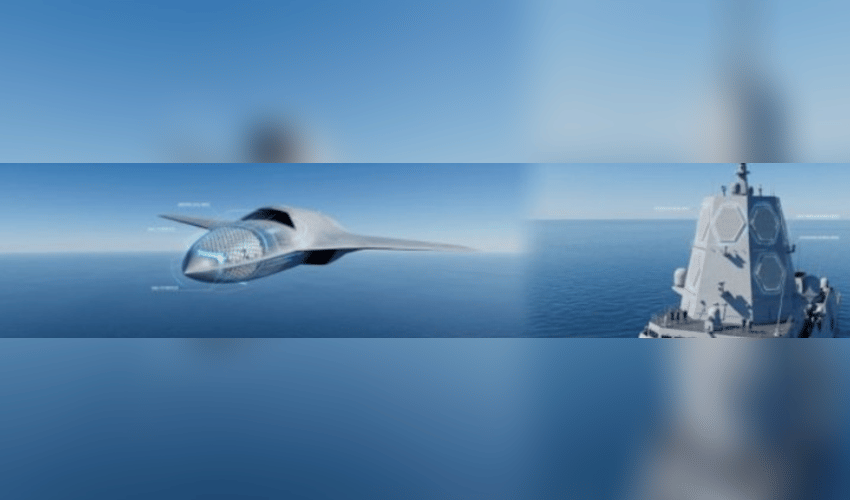

The Defence Research and Development Organisation (DRDO) is advancing work on next-generation Active Electronically Scanned Array (AESA) radar subsystems that are expected to strengthen the capabilities of India’s future airborne and naval defence platforms. The indigenous development effort focuses on improving radar performance, enhancing detection capabilities, and providing military platforms with advanced electronic warfare resilience.
AESA radar technology has become a critical component of modern warfare due to its ability to detect, track, and engage multiple targets simultaneously while operating in highly contested environments. Unlike conventional mechanically scanned radars, AESA systems use a large number of individual transmit and receive modules that allow rapid electronic beam steering without the need for physical movement. DRDO’s ongoing efforts are aimed at developing advanced radar building blocks, including high-performance antenna arrays, transmit-receive modules, digital signal processing systems, and electronic counter-countermeasure capabilities. These technologies are expected to support future fighter aircraft, unmanned aerial systems, surveillance platforms, and naval vessels.
The development of indigenous AESA radar technology is particularly important for India’s air combat capabilities. Modern fighter aircraft rely heavily on advanced sensors to identify threats, maintain situational awareness, and execute missions involving air-to-air combat, ground strikes, and maritime operations. A powerful AESA radar can provide pilots with a clearer battlefield picture by tracking multiple targets over longer ranges while reducing vulnerability to enemy jamming.
DRDO’s radar development programmes have already focused on creating advanced systems for Indian military platforms, including fighter aircraft and airborne surveillance assets. The next generation of AESA subsystems is expected to bring improvements in range, accuracy, reliability, and data processing capabilities. The Indian Navy is also likely to benefit from advancements in AESA radar technology as maritime security requirements continue to grow. Naval platforms require sophisticated sensors capable of monitoring large ocean areas, detecting incoming missiles, tracking aircraft, identifying drones, and maintaining awareness of surface movements. Advanced radar systems can provide warships with faster threat identification and improved response capabilities.
A key area of modern radar development is the use of advanced semiconductor technologies such as Gallium Nitride (GaN), which offers improved power efficiency, higher performance, and better thermal management compared with older radar components. These advancements can help create more compact and powerful radar systems suitable for a wide range of military platforms.
The push for indigenous AESA radar capabilities is also aligned with India’s broader defence self-reliance initiative. Developing critical technologies within the country reduces dependence on foreign suppliers and strengthens domestic expertise in areas such as electronic systems, semiconductor manufacturing, signal processing, and defence electronics.
Experts believe that future conflicts will increasingly depend on information superiority, where the ability to detect threats early and share accurate battlefield data can determine operational success. Advanced radar systems will therefore remain a crucial element of modern military capability. With continued investment in research, development, and indigenous manufacturing, DRDO’s next-generation AESA radar programmes could play a significant role in enhancing India’s defence preparedness and supporting the country’s transition towards advanced, technology-driven warfare.



