



News
Delhi court denies CBI's request for custody, grants bail to telecom official in SIM sale scam.
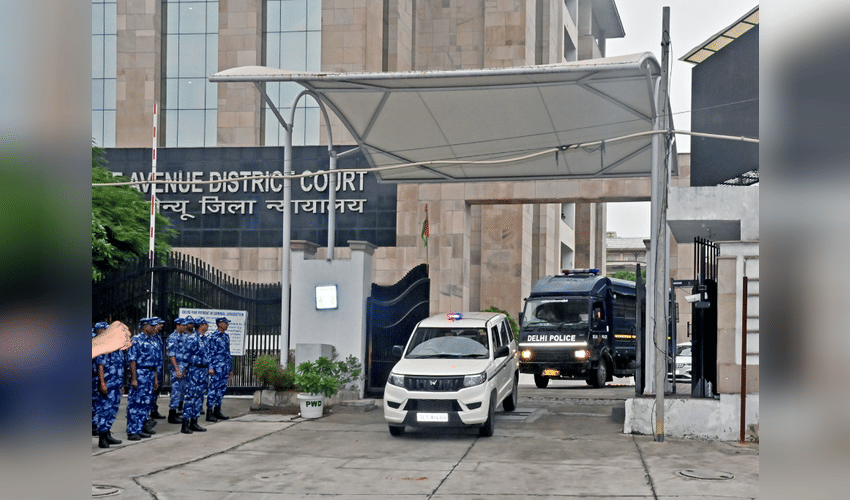

A Delhi court has granted bail to Binu Vidhyadharan, an area sales manager of a telecom company, in a SIM sale scam being investigated by the CBI, holding that further detention would serve no purpose as all relevant evidence was already with the agency. The court dismissed the CBI’s request for 14-day judicial custody and ordered Vidhyadharan’s release on a personal bond of ₹5 lakh with one surety of the same amount, subject to strict conditions.
The order was passed by Additional Chief Judicial Magistrate Jyoti Maheshwari of Rouse Avenue Courts while hearing two applications together—one by the CBI seeking custody and another by Vidhyadharan seeking bail under Section 480 of the Bharatiya Nagarik Suraksha Sanhita. Advocates for the accused included Amit Kumar, Vipin Kumar, Priyanka Singh, Arunesh Gupta, and Tarang Aggarwal, while the CBI was represented by its prosecutors.
Vidhyadharan was arrested on January 8, 2026, as part of the CBI’s Operation Chakra-V for allegedly facilitating the illegal bulk sale of SIM cards later used in cybercrimes. The investigation, initiated in December 2025, uncovered a phishing network operating around Delhi and Chandigarh that provided bulk SMS services to cybercriminals. Around 21,000 SIM cards were allegedly procured in violation of telecom regulations to enable these activities.
The CBI alleged that Vidhyadharan, while working at Vodafone, helped issue SIM cards fraudulently by using dummy individuals and falsely presenting them as employees of Lord Mahavira Services India Private Limited. Documents, including Aadhaar cards of a Bengaluru-based family, were recovered from him, which were allegedly used to complete KYC formalities for the SIM cards involved in phishing operations.
The court noted that Vidhyadharan had already been interrogated, no further recovery was needed, and all incriminating evidence was with the investigators. Even assuming the CBI’s allegations were true, the court observed that the conduct attributed to him pointed more to negligence in official duties rather than active involvement in a criminal conspiracy. It also rejected concerns that he might influence witnesses, citing lack of supporting evidence, his clean record, fixed residence, and absence of flight risk.
Citing Supreme Court rulings in P Chidambaram v. CBI and Sanjay Chandra v. CBI, the court reiterated that bail aims to ensure the accused’s presence at trial, not punitive detention. Accordingly, Vidhyadharan was granted bail on strict conditions, including cooperation with the investigation, regular court appearances, non-interference with witnesses or evidence, prior permission for travel abroad, and keeping his phone operational. The court emphasized that the order does not reflect any judgment on the merits of the case.



