



World
China's Expanding Reach Over Critics Abroad
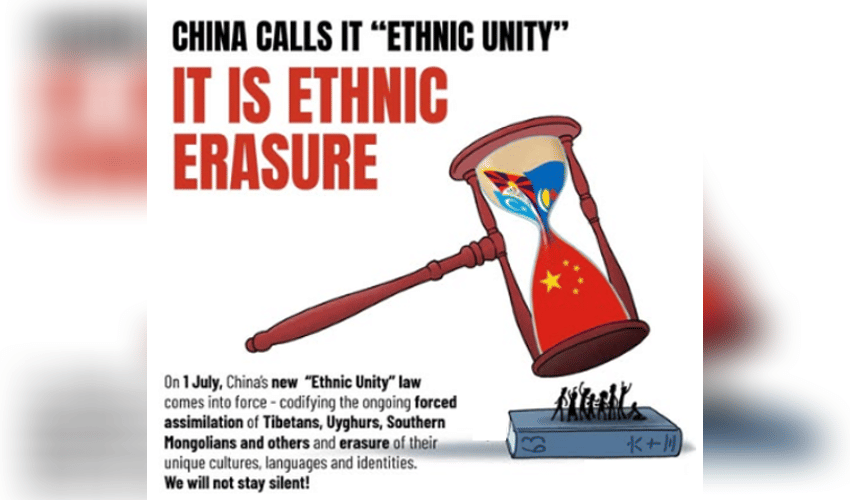

China’s Law on Promoting Ethnic Unity and Progress, passed in March 2026 and effective from July 1, 2026, promotes a shared national identity and places Mandarin at the centre of education and public life. Critics argue that it strengthens assimilation by defining acceptable identity through state-controlled ideas of “unity.” The most controversial provision is Article 63, which says people and organisations outside China can face legal responsibility for activities Beijing considers to “destroy ethnic unity” or “create ethnic division.” The article argues that the wording is deliberately broad and does not clearly distinguish peaceful advocacy from violent activity. This could potentially place Tibetan, Uyghur, Mongolian, Hong Kong, Taiwanese and other overseas activists within China’s legal reach. UN human-rights experts have warned that the provision could facilitate transnational repression.
United Nations human rights experts have already warned that Article 63 could create risks of transnational repression, because it allows authorities to prosecute people and organizations outside China for acts deemed to undermine national or ethnic unity or create ethnic division. Taiwan officials have raised similar concerns, warning that the clause could become another tool of “long-arm jurisdiction” and may be used against people Beijing labels separatists even outside mainland China. China’s Vice Justice Minister Hu Weilie has defended the overseas clause as “legitimate, lawful, necessary and feasible,” saying it targets illegal acts and will not affect normal exchanges. But the problem is not only what Beijing says the law means. The problem is how Beijing has already behaved.
The concern is not based only on the wording of the law. Critics point to China’s existing record of pursuing dissidents and minorities overseas through family intimidation, digital surveillance, threats, deportations, spyware and pressure on foreign governments. Freedom House has described China’s campaign as one of the world’s most extensive forms of transnational repression. Examples include Operation Fox Hunt, in which U.S. prosecutors documented efforts to pressure Chinese nationals abroad into returning to China, including harassment and threats against relatives. Another example is the network of alleged overseas Chinese police stations, with Safeguard Defenders reporting at least 102 such centres across 53 countries.
For Tibetans, the threat is especially significant. A 2024 report documenting testimonies from 84 Tibetan exiles in 10 countries found that 49 reported threats against relatives in Tibet, alongside allegations of spying, blackmail and intimidation. Uyghur communities have similarly faced digital surveillance, family pressure and forced returns. Article 63 could add a legal dimension by potentially portraying peaceful human-rights advocacy as an attack on “ethnic unity.”
Hong Kong provides another warning. Authorities have issued arrest warrants and large bounties against exiled activists and have used national-security powers against people living abroad. The article argues that this demonstrates how extraterritorial legal language can develop into real-world intimidation.
Universities are also vulnerable. Human Rights Watch has documented self-censorship among Chinese and Hong Kong students overseas because of fears that political activity could trigger pressure on relatives in China. The article warns that Article 63 could increase those fears, particularly around Tibet, Xinjiang, Inner Mongolia, Hong Kong, Taiwan and the Dalai Lama.The case of Zhang Yadi, a Chinese student who wrote in support of Tibet while studying in France, illustrates the potential danger. According to the article, she disappeared after returning to China in 2025 and was charged with “inciting separatism.” Her case is presented as an example of how even expressions of sympathy for minority rights can be treated as political crimes.
Article 63 potentially transforms China’s concept of “ethnic unity” into a tool for extending state pressure beyond China’s borders. Combined with existing practices of surveillance, family intimidation, overseas police networks and pressure on activists, the law could make exile less secure for Tibetans, Uyghurs, Mongols, Hong Kong activists and other critics. Its broad and ambiguous language raises serious concerns about freedom of speech, academic freedom and the ability of exiled communities to speak openly about their experiences. Democratic governments, universities and civil society therefore face the challenge of resisting such extraterritorial pressure and ensuring that leaving China does not mean carrying the fear of state retaliation into another country.



